

US, UK Officials Unveil Alliance to Combat Crypto Scam Centers and Fraud
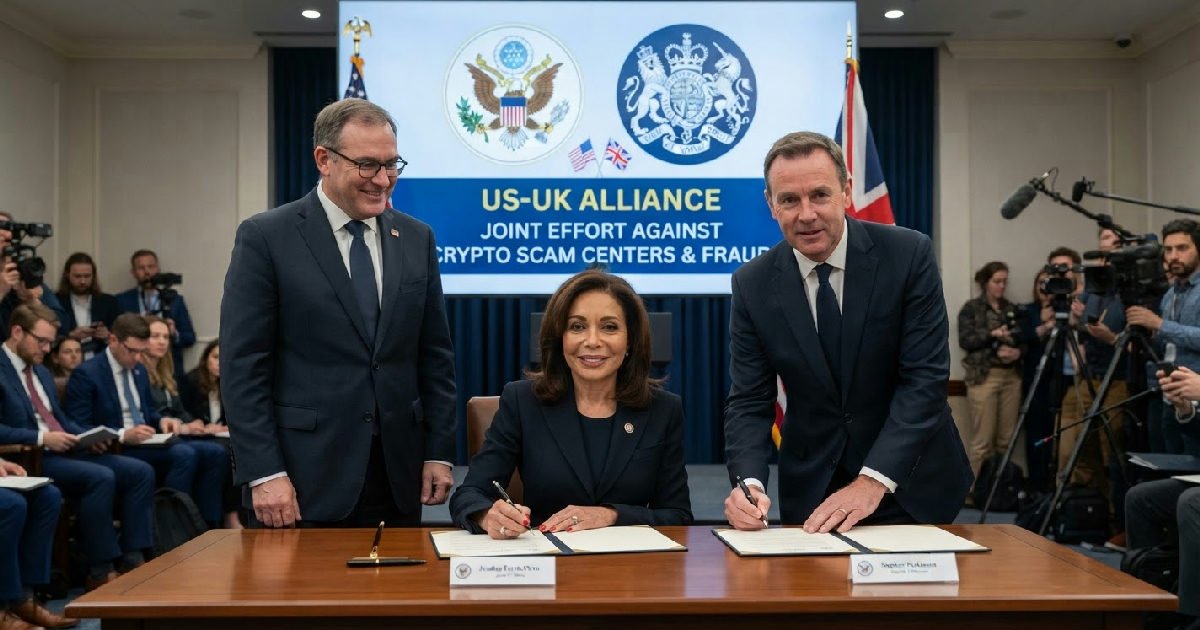
The United States and the United Kingdom have formally launched a joint law enforcement alliance, marking a significant escalation in the global fight against crypto scam centers, cryptocurrency investment fraud, and other cyber-enabled schemes. On September 3, 2026, U.S. Attorney Jeanine Ferris Pirro, Crown Prosecutor Stephen Parkinson, and National Crime Agency (NCA) Director General Graeme Biggar signed a memorandum of understanding in Washington, D.C.
This pact, described as the first international agreement of its kind, aims to dismantle global scam centers, particularly those operating in Southeast Asia. These illicit operations are reportedly siphoning an estimated $10 billion annually from American citizens alone, highlighting the urgent need for coordinated international action.
Bilateral Cooperation to Disarm Crypto Scam Centers
The newly established alliance formalizes a framework for intensive cross-border enforcement, allowing investigators from both nations to pursue parallel investigations into shared targets. They’ll also exchange critical intelligence on organized crime syndicates and jointly determine the most effective jurisdiction for prosecuting specific suspects.
The signing ceremony took place at the residence of Sir Christian Turner KCMG, His Majesty’s Ambassador to the United States. Speaking at the event, U.S. Attorney Jeanine Ferris Pirro emphasized the deep-rooted partnership, stating, “The United Kingdom is one of our oldest allies and partners.
We’ve stood side by side to bring down global threats in multiple wars, and today we commit to stand together in the war on transnational organized crime.”
Pirro further underscored the alliance’s goal: to disable “Chinese transnational organized crime networks that are operating these scam compounds and depriving our citizens of their hard earned funds, all while using human-trafficked labor to increase their profit.” This robust cooperation reflects a shared determination to tackle a complex and rapidly evolving threat landscape.
Authorities have already pinpointed several cases of mutual interest for immediate action. The agencies are also planning their first in-person disruption operation, set for early October in London, where they will collaborate with private sector partners.
Mounting Financial Toll from Crypto Investment Scams
This joint initiative comes in response to an alarming surge in cyber-enabled investment fraud losses across the United States. Data from the FBI Internet Crime Complaint Center (IC3) indicates that reported losses soared by 89%.
The figures jumped from $4.57 billion in 2023 to a staggering $8.65 billion in 2025. Cyber-enabled fraud accounted for almost 85% of all losses reported to the IC3 last year, underscoring the pervasive nature of these schemes.
U.S. Attorney Jeanine Ferris Pirro launched the Scam Center Strike Force in November 2025 to specifically counter these threats. This interagency task force targets Chinese organized crime groups accused of running scam compounds, predominantly across Southeast Asia.
The Strike Force’s investigations encompass a wide array of illicit activities, including cryptocurrency investment scams, cyber-enabled fraud, human trafficking, and money laundering. Participating agencies include the FBI, U.S. Secret Service, and Homeland Security Investigations, among others.
Federal prosecutors have increasingly focused on the digital infrastructure and cryptocurrency channels exploited by these networks. Just in July, the Department of Justice sought the forfeiture of $25 million recovered through investigations linked to fake cryptocurrency platforms and laundering operations in China, Malaysia, and Cambodia.
Since its inception in November 2025, the Scam Center Strike Force has seized over $800 million. This demonstrates the immense financial scale of these criminal enterprises and the effectiveness of coordinated enforcement efforts.
Southeast Asia’s Role in Transnational Crime Operations
Many of the sophisticated crypto scam centers targeted by this alliance are concentrated in Southeast Asia. These operations frequently involve Chinese organized crime groups that lure individuals with false promises of high-paying jobs, only to trap them in forced labor.
In April, a major enforcement action highlighted the grim realities, with U.S. authorities charging two Chinese nationals. They were accused of managing a cryptocurrency investment fraud compound in Burma and attempting to establish another in Cambodia, exemplifying the geographical reach of these networks.
These scam compounds often utilize fraudulent cryptocurrency platforms designed to display fake account balances and inflated returns. This tactic is used to persuade victims into investing even more funds, further deepening their financial losses.
Investigators have linked these deceptive methods to “pig butchering” scams, where fraudsters cultivate long-term relationships before introducing fake investment opportunities. Such tactics exploit trust to devastating effect, as seen in the broader context of digital financial transactions.
A recent international crackdown, also announced in April, resulted in 276 arrests and the disruption of at least nine scam centers. This action involved authorities from Dubai, who detained 275 individuals, and Thailand, where another suspect was apprehended.
Global Legislative and Enforcement Response Intensifies
Beyond the U.S. and UK, regional governments where these scam compounds operate are also stepping up their efforts. Myanmar’s Parliament, for instance, approved an anti-online scam bill on July 28.
The draft legislation proposes severe penalties, including prison sentences ranging from 10 years to life for operating an online scam center or committing digital currency fraud. Crucially, it also permits capital punishment in cases involving violence, torture, or unlawful detention leading to death.
International law enforcement agencies like INTERPOL have also been deeply engaged. An operation spanning from November 2025 through June 2026 led to 58 arrests across 22 countries, with both the U.S. and UK participating.
These operations scrutinized romance scams, fake crypto investments, and the elaborate financial infrastructure—including shell companies and digital wallets—used to launder illicit proceeds. Another INTERPOL-led initiative in July resulted in 5,811 arrests and blocked over 31,000 bank accounts, intercepting $293 million in illicit assets.
The new U.S.-UK agreement therefore provides a vital formal framework, streamlining what have often been disparate international efforts. It will allow for more efficient information sharing and coordinated prosecution, making it harder for these transnational criminals to operate.
The Road Ahead for International Anti-Fraud Efforts
The formalization of the U.S.-UK alliance marks a pivotal moment in the ongoing battle against sophisticated crypto and cyber-enabled fraud. This strategic partnership moves beyond ad-hoc collaborations to establish a structured, long-term approach to dismantling criminal networks.
The emphasis on shared intelligence and coordinated investigations is designed to overcome jurisdictional challenges that often plague international crime fighting. This integrated strategy should significantly enhance the ability of law enforcement to track, apprehend, and prosecute perpetrators.
The alliance’s first joint disruption event with private sector partners in London early next month will be a critical test of this new framework. Success in these initial operations could set a precedent for future multi-national efforts against financial crimes.
This enhanced cooperation sends a clear message to organized crime groups that their illicit activities will face a united front from major global powers. The continued involvement of private companies, including tech giants and cryptocurrency exchanges, remains crucial.
Ultimately, the effectiveness of this alliance will be measured by its ability to reduce victim losses and significantly disrupt the infrastructure of these scam compounds. It’s a complex undertaking, but one that both nations are committed to winning, safeguarding citizens in an increasingly digitally intertwined world.