

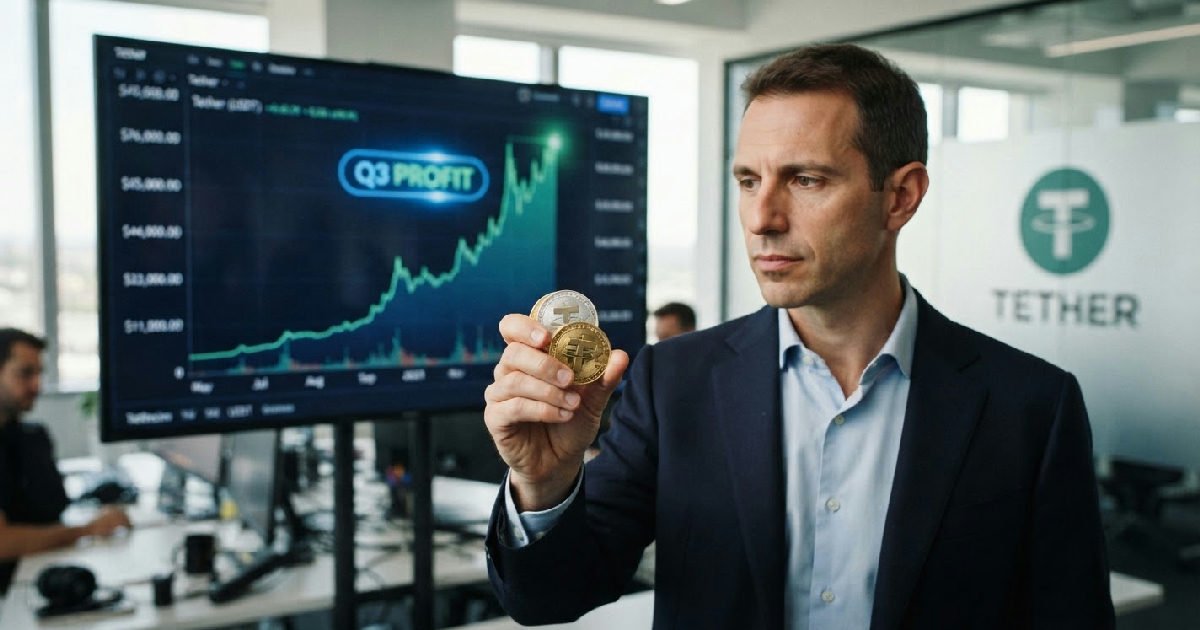
Tether boosts reserves to $3.2B after Q3 profit
Tether has solidified its position as a cornerstone of the cryptocurrency market, reporting a $1.5 billion net operating profit for the third quarter of 2023. The impressive earnings, detailed in a report published on November 2, 2023, pushed the company’s excess reserve buffer to a record $3.2 billion, underscoring the financial strength backing its widely used USDT stablecoin.
The attestation, conducted by the independent accounting firm BDO, covers the financial period ending September 30, 2023. It confirmed that Tether’s total assets of $86.3 billion comfortably exceeded its total liabilities of $83.1 billion. This surplus provides a crucial cushion against market volatility and reinforces the company’s ability to honor redemptions, a key factor for trust in the stablecoin ecosystem.
A Deeper Look at Tether Q3 Profit and Financial Health
The latest report marks Tether’s fifth consecutive profitable quarter, a streak that has allowed it to significantly bolster its reserves. The $3.2 billion in excess reserves means the company’s stablecoins are more than 102% backed by assets.
This level of over-collateralization is a strong rebuttal to long-standing questions about the sufficiency and composition of its holdings. The financial stability of major stablecoins is a constant focus for regulators, who are wary of potential systemic risks posed by the digital asset market.
In a statement accompanying the results, Tether CEO Paolo Ardoino highlighted the company’s focus on resilience. “Tether continues to prove its stability and strength, consistently achieving record-breaking profits,” Ardoino said.
“This quarter’s attestation highlights our unwavering commitment to transparency, with a 90% liquidity ratio and a $3.2 billion excess in reserves.” This continued profitability comes as global watchdogs intensify their scrutiny, with actions like the recent US targeting of Russian crypto brokers showing a clear trend toward stricter enforcement.
The growth in the reserve buffer is particularly noteworthy. It provides Tether with a substantial shock absorber, allowing it to navigate potential crises without jeopardizing the one-to-one peg of USDT to the U.S. dollar.
For traders and DeFi protocols that rely on USDT for liquidity, this robust financial backing is a critical element of market infrastructure. A well-capitalized Tether helps prevent the kind of liquidity crises that can cascade through the interconnected crypto economy.
This financial performance indicates a maturing operational model. By generating consistent profits from its reserve management, Tether can reinvest in its own stability. This self-reinforcing cycle—where profits build reserves, which in turn builds market confidence—is crucial for maintaining its leadership position against a growing field of competitors.
The company’s ability to not just maintain but grow its cushion during various market conditions is a key differentiator.
Reserve composition and a strategic shift to liquidity
A key takeaway from the Q3 report is the high quality and liquidity of Tether’s reserves. The company stated that 90% of its holdings are now in cash and cash equivalents, primarily short-term U.S. Treasury bills.
This composition is designed to ensure that assets can be quickly liquidated to meet redemption requests, even during periods of high market stress. It represents a conservative approach to reserve management that prioritizes safety and accessibility over higher-yield, riskier assets.
Furthermore, the report revealed a deliberate move to de-risk its portfolio. Tether reduced its direct exposure to secured loans by approximately $700 million during the quarter. While these loans were described as overcollateralized, they were a significant source of criticism, as they were perceived as less liquid and carrying higher counterparty risk than government debt.
This reduction signals a direct response to market feedback and regulatory pressure for greater stability.
This strategic pivot towards safer assets like T-bills is a common theme among major stablecoin issuers. The yield generated from these government securities has become a powerful engine of profitability in the current interest rate environment. By holding billions in T-bills, Tether not only enhances its stability but also creates a reliable and substantial revenue stream that fuels its operational growth and reserve buffer.
The emphasis on liquidity is a lesson learned from past crypto meltdowns, where the inability to quickly access funds led to collapses.
For a stablecoin that acts as the de facto reserve currency for much of the crypto world, the ability to process billions of dollars in redemptions without delay is not just a feature but a necessity.
The latest attestation provides a clear data point that Tether is actively managing its reserves with this priority at the forefront.
Strategic investments point to a future beyond stablecoins
Beyond its core function of managing USDT, Tether is increasingly acting like a technology-focused investment firm. The Q3 report noted that the company has allocated $500 million to a range of strategic initiatives. These ventures span several high-growth sectors, including Bitcoin mining, artificial intelligence (AI), and peer-to-peer telecommunications. This diversification shows an ambition to build a broader financial and technological ecosystem.
These investments represent a long-term vision where Tether leverages its immense capital base to foster innovation. The move into Bitcoin mining provides a direct stake in the foundational infrastructure of the cryptocurrency world.
Meanwhile, its foray into AI aligns with a major global economic trend, as seen in how AI investment fuels US economic growth. This suggests Tether sees a future intertwined with next-generation computing and data infrastructure.
CEO Paolo Ardoino framed these moves as part of a larger mission. “Our strategic investments in cutting-edge technology, from Bitcoin mining to AI infrastructure, underscore our dedication to fostering financial innovation and a decentralized future,” he stated. This strategy diversifies Tether’s business interests, creating new potential revenue streams that are independent of its stablecoin operations.
It’s a move from being a passive holder of reserves to an active participant in building future technologies.
However, this expansion is not without risk. Venturing into capital-intensive and competitive industries like Bitcoin mining and AI requires deep domain expertise and carries its own set of financial uncertainties. The company will need to balance these ambitious projects with its primary duty of safeguarding the USDT peg.
For now, these investments are funded from its profits, ensuring they do not directly encumber the reserves backing the stablecoin.
The ongoing quest for transparency and trust
For years, Tether has operated under a cloud of skepticism regarding the contents and sufficiency of its reserves. The regular publication of third-party attestations is a direct effort to dispel these doubts and provide a greater degree of transparency to the market.
While an attestation is not the same as a full, exhaustive audit, the reports from a reputable firm like BDO offer a periodic snapshot of the company’s financial position and have become a crucial tool for building confidence.
The consistency of these reports, combined with the steadily improving quality of the reserves, has helped to quiet some of the harshest critics. The clear breakdown of assets, the reduction of riskier loans, and the massive cushion of excess reserves paint a picture of a company on solid financial footing.
This is vital in an industry where the failure of one major player can trigger a domino effect, similar to how major exchange issues can cause panic, such as the events that led to a temporary halt on Binance withdrawals after a hack.
Despite this progress, calls for a complete audit are likely to persist. An audit would provide a more comprehensive and continuous examination of Tether’s finances and internal controls, offering a level of assurance that a point-in-time attestation cannot. Achieving this milestone would be a landmark moment for Tether and could set a new standard for transparency across the entire stablecoin industry.
Ultimately, the health of Tether is a barometer for the health of the broader crypto market. As the primary vehicle for liquidity on most global exchanges, USDT’s stability is non-negotiable for millions of traders.
The Q3 2023 results provide strong evidence that the company not only has the resources to back its token but is also profitable enough to continue growing its safety net, ensuring it can remain a reliable pillar of the digital economy.