

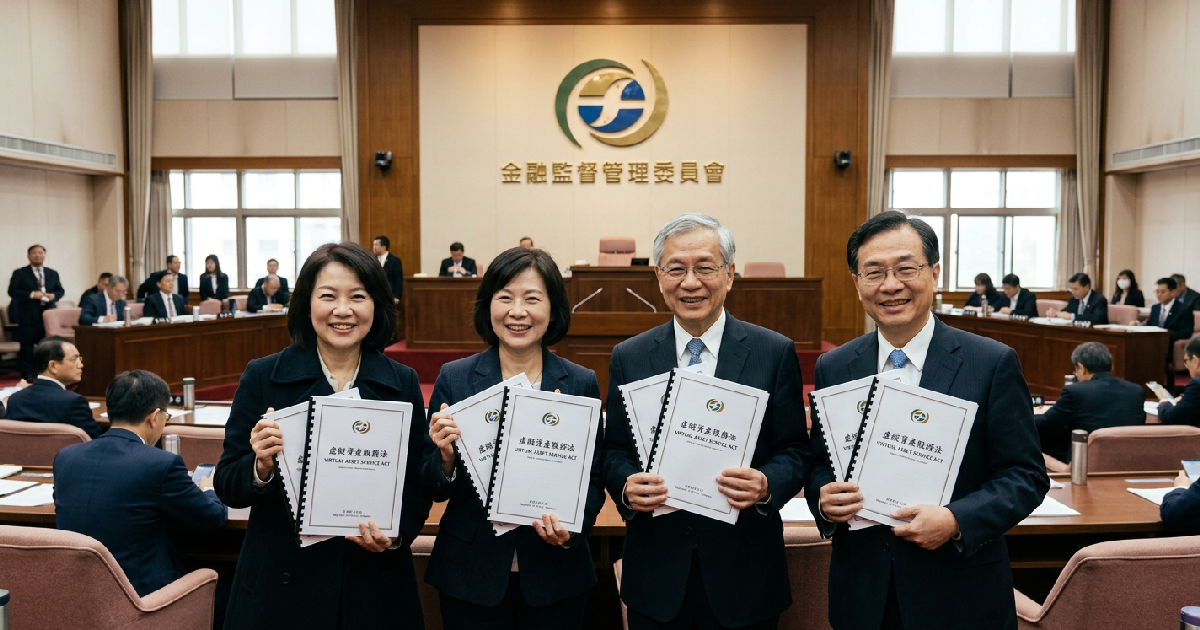
Taiwan’s Legislative Yuan passes Virtual Asset Service Act on June 30
Taiwan’s Legislative Yuan passed the Virtual Asset Service Act in its third reading on June 30, marking a critical transition for the island’s digital finance sector. The new legislation replaces the previous anti-money laundering (AML) registration regime with a mandatory prior-approval and licensing system for service providers. Following its passage, the bill has been sent to President Lai Ching-te for promulgation, a process expected to take place within 10 days.
This legislative shift moves Taiwan’s crypto oversight toward wider supervision of operations, market order, and customer protection. The Financial Supervisory Commission (FSC) now serves as the primary enforcing authority, overseeing a market that has historically relied on narrower AML declarations. And while the law solidifies the regulatory framework, the cabinet will determine the official effective date at a later time.
Mandatory licensing for virtual asset service providers
Under the Virtual Asset Service Act, virtual asset service providers (VASPs) must obtain formal approval from the FSC before they are permitted to operate in Taiwan. The act covers seven specific categories of service providers. These include cryptocurrency exchanges, trading platforms, transfer firms, custodians, underwriters, lenders, and other designated virtual asset services.
To secure a license, firms must meet stringent operational standards. The law outlines requirements for internal controls, audit systems, and cybersecurity management. Licensed operators are also obligated to implement virtual asset listing and delisting procedures, maintain financial reporting standards, and ensure the strict segregation of customer assets from company funds. These measures aim to align the domestic market with international regulatory standards utilized in Japan, South Korea, and the European Union.
Existing firms that have already completed anti-money laundering registrations will not be forced to close immediately. The FSC has established a transition period before the new licensing system fully applies. This buffer allows registered firms to continue operations while they work toward full compliance with the new standards. Companies that fail to complete the licensing process by the eventual deadline will be legally barred from continuing their virtual asset business in Taiwan.
Joint oversight for stablecoin issuers
The new legal framework places a heavy emphasis on the stability of stablecoins, requiring issuers to secure approval from both the FSC and the Central Bank of the Republic of China (Taiwan). This dual-approval process ensures that digital assets pegged to fiat currencies do not disrupt the broader financial ecosystem. Issuers are mandated to maintain full reserve backing for their tokens and must place these reserves in trust.
Audits and institutional participation
Regular audits and public disclosures regarding reserve assets are now a legal requirement for stablecoin providers. This transparency is intended to prevent liquidity issues and protect token holders. Interestingly, the FSC had previously planned a draft that would allow local banks to issue stablecoins tied to the New Taiwan dollar. Such a move would further integrate digital assets into the formal banking sector under the joint oversight of the central bank.
The FSC is expected to continue drafting authorized sub-rules in consultation with industry groups. These rules will define how licensing standards and internal controls function in practice. For traditional institutions, this clarity is vital, much like how Clarity Act advances to Senate discussions have shaped the regulatory expectations for major assets like Ethereum and Solana in other jurisdictions.
Penalties for unlicensed activity and market abuse
To enforce these new standards, the Virtual Asset Service Act introduces severe penalties for illegal operations. Individuals or firms operating an unlicensed VASP or issuing unauthorized stablecoins face up to seven years in prison. Furthermore, violators can be hit with fines reaching NT$100 million, or approximately $3.14 million. The law aims to deter the shadow market that often thrives in the absence of clear licensing rules.
Criminal penalties are even stricter for cases involving fraud or market manipulation. Offenders found guilty of these crimes face between three and 10 years of imprisonment. Financial penalties for market abuse are also scaled higher, with potential fines ranging from NT$10 million up to NT$200 million. By imposing these stakes, the Legislative Yuan intends to provide the FSC with the legal teeth necessary to maintain market integrity.
Beyond criminal prosecution, the act establishes grounds for civil liability. This ensures that customers have a formal path to seek recourse if their assets are mismanaged or lost due to internal control failures. As Brian Armstrong warns finance must move on-chain to stay relevant, Taiwan’s approach suggests that moving on-chain must be accompanied by robust legal protections for the average user.
Developing sub-rules for the 2027 timeline
The FSC is currently expected to finalize authorized sub-regulations by the end of the first quarter of 2027. This period of regulatory drafting will involve stakeholders from across the finance and technology sectors. The goal is to create a practical set of rules for personnel, internal audits, and stablecoin management that do not stifle innovation while maintaining safety.
Taiwan’s move comes at a time of significant shift in the global digital asset market. com/crypto-news/near-protocol-ondo-hyperliquid-price-surge-may-2026-analysis/”>Near Protocol and Hyperliquid surged earlier this year, regulators are increasingly focused on long-term structural stability. The Executive Yuan, which proposed the initial draft of the act on April 2, 2026, views this law as the cornerstone of Taiwan’s future digital economy, providing the legal certainty that institutional investors require to enter the space.