

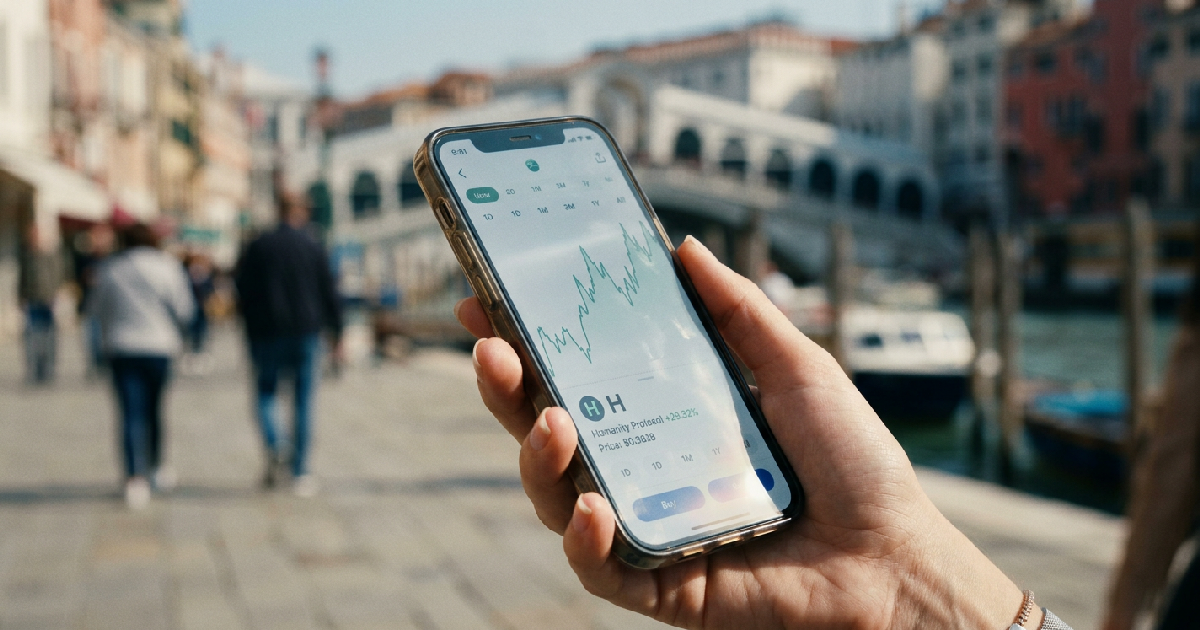
Humanity Protocol jumps 29.32% to $0.3618 on May 31, 2026
A significant crypto rally during the final weekend of May has propelled Humanity Protocol (H), Worldcoin (WLD), Artificial Superintelligence Alliance (FET), and Venice Token (VVV) to the top of the market gainers. According to data reported by Invezz on May 31, 2026, Humanity Protocol led the surge with a 29.32% jump to $0.3618, while Worldcoin climbed 16.13% to reach $0.3401. This collective movement highlights an intensifying focus on digital identity and AI-driven assets within the Web3 ecosystem.
The sudden price action for these specific tokens signals a divergent trend as investors seek out specialized utility. Humanity Protocol has now increased by 750% from its lowest level recorded earlier in 2026, with its market capitalization surpassing $1.1 billion today. This growth comes as AI and quantum tech divert capital from traditional flagship assets like Bitcoin, which has seen price pressure in recent weeks.
Analysts suggest the rally is not merely speculative but tied to fundamental milestones in the decentralized identity space. The ability to distinguish between human users and automated bots—often referred to as Sybil resistance—has become a priority for developers. This shift is particularly evident as the Clarity Act advances toward the Senate, potentially bringing new federal oversight to Major Layer 1 networks.
Humanity Protocol hits highest valuation since late 2025
Humanity Protocol (H) reached a peak of $0.40 on May 31, 2026, marking its highest price point since October 2025. The token experienced an aggressive 35.7% surge over a 24-hour period to reach a level of $0.285 following its successful mainnet launch in late April. While it touched the $0.40 mark during the weekend rally, it has since settled around the $0.36 range as trading remains volatile.
Technical data from Binance Square indicates that the Relative Strength Index (RSI) for Humanity Protocol reached 74, a level that signals strong momentum but also warns of potential exhaustion near the $0.31 resistance zone. The project has benefited from “buying the dip” behavior after an 11% jump on May 17, which followed a deeper market crash earlier in the month. The current rally reflects a sharp recovery from May 28, when the token tumbled 30% amid broader market sell-offs.
Roadmap execution and palm-scan technology drive interest
The protocol’s recent performance is largely attributed to the execution of its 2026 roadmap, specifically the rollout of Verifier Nodes. These nodes are critical for decentralizing the network’s palm-biometric identity system, which uses palm-scan verification to protect user data privacy. The project has positioned itself as the \”Trust Layer\” of the internet, attracting interest through partnerships with major technology firms.
Institutional support has also played a role in the token’s liquidity and price stability. In February 2026, the project integrated with Fireblocks, allowing more than 2,000 financial institutions to custody H tokens. This institutional infrastructure, combined with a 105.36 million token unlock in January, has shaped the token’s current market dynamics as it navigates a total supply of 10 billion tokens.
Worldcoin gains tied to OpenAI and structured user incentives
Worldcoin (WLD) saw a 16.13% increase today, trading at $0.3401 as it continues to act as a market proxy for OpenAI. Sam Altman, the CEO of OpenAI, is a co-founder of Worldcoin, and the token often rallies in tandem with developments in generative AI. Earlier on May 26, the asset recorded a sharp 22% jump, testing resistance near $0.40 while recording over $501 million in 24-hour trading volume.
User engagement within the World App has been a primary driver for recent gains. The integration of Oku Trade has introduced structured trading incentives, including weekly swap competitions with rewards of up to 100 WLD. The app has also updated its wallet interface to include a daily multiplier system for rewards, aiming to increase daily active users and retention within the biometric verification ecosystem.
Market sentiment shifts following sustained weekly growth
As of late May, Worldcoin has gained approximately 47.2% over a seven-day period. While the token remains significantly below its all-time high of $11.74, the volume-to-market-cap ratio rose to 0.374 during the peak of the rally. This indicates healthy liquid interest even as the broader market experiences shifts, similar to how tokens like Near Protocol and Ondo saw focused capital inflows during previous weeks.
The “Sam Altman effect” remains the most potent psychological catalyst for WLD. Investors tend to treat the token as a high-beta bet on the success of the broader AI sector. This was particularly evident on May 30, when the token climbed another 4.27% in less than two days, maintaining its upward trajectory despite the absence of direct project announcements during that short window.
Artificial Superintelligence Alliance and Venice Token join the rally
The Artificial Superintelligence Alliance (FET) and Venice Token (VVV) have also emerged as top gainers during this weekend window. These tokens are increasingly grouped as essential “AI infrastructure,” providing the decentralized compute and privacy-preserving models required for next-generation AI agents. Venice Token, in particular, has gained traction among developers seeking alternatives to centralized cloud AI services.
The synergy between decentralized identity and AI is becoming a dominant theme for the second quarter of 2026. As automation increases, the market is placing a premium on protocols that can verify human identity without compromising personal data. For the Artificial Superintelligence Alliance, this means establishing a transparent governance layer that can interact with the biometric networks built by Humanity Protocol and Worldcoin.
Looking ahead, the sustainability of this rally will depend on whether these projects can maintain their current user growth rates. With Humanity Protocol approaching multi-month highs and Worldcoin testing key resistance levels, the coming weeks will determine if this capital shift into specialized sub-sectors is a long-term trend or a temporary hedge against broader market stagnation.