

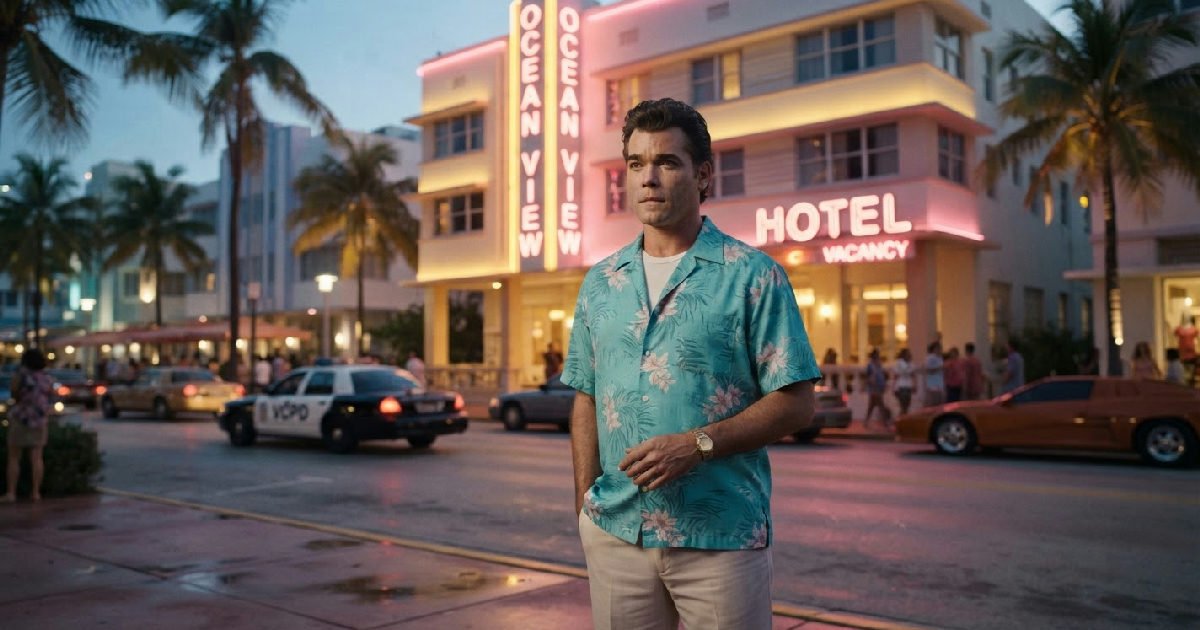
Grand Theft Auto Vice City’s Enduring Legacy Established
Twenty-four years after its initial launch, Grand Theft Auto: Vice City remains a pivotal title in gaming history, widely celebrated for cementing the core formula that would define Rockstar Games’ global success.
Released on October 29, 2002, for the PlayStation 2, this sprawling open-world adventure transported players to a vibrant, neon-drenched 1986 Vice City, a fictional metropolis heavily inspired by Miami.
Two Decades of Influence: Grand Theft Auto Vice City’s Enduring Blueprint
It introduced a voiced protagonist, Tommy Vercetti, brought to life by the legendary Ray Liotta, and blended cinematic storytelling with unparalleled player freedom, establishing a blueprint that future installments would build upon.
The game quickly achieved critical and commercial triumph, garnering “universal acclaim” with a Metacritic score of 95 out of 100 based on 62 critic reviews. It sold over 1.7 million units in its first two days in North America alone, ultimately shifting more than 17.5 million copies worldwide by July 2006.
Grand Theft Auto: Vice City was not just a hit; it was the best-selling game of 2002 in North America, signaling a new era for interactive entertainment.
Grand Theft Auto: Vice City didn’t just follow its predecessor, Grand Theft Auto III; it dramatically expanded the scope of what an open-world game could be.
Developed by Rockstar North and published by Rockstar Games, the title was a testament to ambitious game design, reportedly conceived as a mere mission pack or DLC for GTA III. Yet, within approximately a year, and with an estimated development budget of $5 million, it evolved into a standalone masterpiece.
This rapid development, coupled with a substantial $13.2 million marketing spend, underscored Rockstar’s growing confidence and vision. The game’s success demonstrated that video games could rival Hollywood blockbusters in their cultural impact and financial returns. It fused a compelling narrative with a sandbox environment, allowing players to both follow a gripping story and forge their own path through the city’s criminal underworld.
Star Power and Narrative Ambition: Crafting Tommy Vercetti
A significant innovation in Grand Theft Auto: Vice City was the introduction of a fully voiced protagonist, Tommy Vercetti. This was a challenging endeavor for Rockstar, as players needed to connect with a character who was, by design, a morally ambiguous psychopath driven by revenge. However, Ray Liotta’s iconic voice performance imbued Vercetti with a charisma that made him both despicable and strangely compelling.
Liotta’s portrayal was central to the game’s narrative depth, even if the actor himself reportedly found the recording process difficult. Director Navid Khonsari often cited Liotta’s unpredictable moods during sessions, but the end result was universally praised.
Vercetti became a tragic figure, a mobster betrayed and seeking to reclaim his lost years, transforming the game from a simple revenge story into a complex tale of redemption within a corrupt capitalist dream.
Beyond Liotta, Vice City boasted an astonishing ensemble cast that brought its vibrant world to life. Over 50 story characters were voiced by Hollywood luminaries such as Burt Reynolds as Avery Carrington, Tom Sizemore, Luis Guzmán, Gary Busey, Danny Trejo, Debbie Harry, Philip Michael Thomas, and William Fichtner.
This unprecedented level of star power further blurred the lines between gaming and cinema, lending the game an undeniable gravitas and a unique personality.
The Miami Mirage: Vice City’s Immersive 1980s World
The 1986 setting of Vice City was more than just a backdrop; it was a character in itself, meticulously crafted to evoke the excess, glamour, and grit of 1980s Miami. From the neon-drenched streets to the pastel-colored architecture and diverse districts, the city felt alive.
The game’s atmosphere was further amplified by its legendary soundtrack, featuring over 100 licensed songs from the era spread across several in-game radio stations, which quickly became iconic.
Gameplay in Vice City skillfully balanced linear mission progression with unparalleled open-world freedom. Initially, Tommy Vercetti struggles with menial tasks, but as the story unfolds, players gain control of an expanding criminal empire.
This shift from scarcity to abundance is brilliantly reflected in the game’s mechanics, allowing players to purchase and operate various businesses, including a strip club, the Malibu Club, a counterfeit printing operation, and even an ice cream van company serving as a drug front.
This business acquisition system was a pivotal element, allowing players to diversify income streams and launder illicit cash, deepening the role-playing experience. It was a precursor to the expansive empire-building mechanics seen in later titles, giving players a tangible sense of growth and power within the game world.
The ability to shape Vercetti’s empire fostered a unique connection between player agency and narrative progression, making every choice feel impactful.
Rockstar’s Signature Style: Pushing Boundaries and Budgets
The creation of Grand Theft Auto: Vice City was not without its legendary behind-the-scenes drama, reflecting Rockstar’s characteristic blend of ambition and audaciousness. One often-repeated anecdote involves a heated confrontation between Hollywood legend Burt Reynolds and Rockstar co-founder Dan Houser during a recording session. This tension, whether entirely factual or apocryphal, perfectly encapsulates the clash of creative titans that fueled the game’s development.
Rockstar’s willingness to push boundaries extended to its casting choices and narrative themes. The studio sought to create a game that was not just entertaining but also a cultural statement, a standard-bearer for video games as a serious art form.
The relatively modest $5 million development budget for Vice City stands in stark contrast to modern blockbusters, especially the rumored billion-dollar budget for Grand Theft Auto VI, highlighting the efficiency and sheer creative force behind its original production.
This era saw Rockstar Games developing a reputation for its distinct approach: massive budgets, cutting-edge technology, and a knack for attracting top-tier talent. The studio’s confidence, sometimes perceived as arrogance, was arguably essential in delivering a game of Vice City’s scope and impact. It allowed them to take risks, challenge conventions, and ultimately craft a product that transcended typical video game expectations.
A Lasting Cultural Milestone: Vice City’s Legacy in 2026
Even in 2026, Grand Theft Auto: Vice City holds a special place in the hearts of gamers and critics alike. Its enduring appeal lies in its immersive atmosphere, unforgettable characters, and a gameplay loop that remains incredibly fun.
While later GTA titles like Grand Theft Auto IV offered a more somber, realistic tone and Grand Theft Auto V delivered unparalleled graphical fidelity and scale, Vice City’s distinct charm and focused narrative continue to resonate.
The game’s tightly structured progression in its early hours, followed by an explosive expansion of freedom, is often cited as a superior design choice compared to some later installments. It makes players earn their criminal empire, deepening the sense of accomplishment.
This particular design philosophy, emphasizing progression and earned power, is a key reason why many players return to the game even decades later, sometimes through its remastered version, Grand Theft Auto: The Definitive Edition, released on November 11, 2021.
Vice City’s influence extends beyond its direct gameplay mechanics. It solidified the idea that video games could offer rich, cinematic experiences on par with films, drawing in audiences with complex characters and compelling narratives.
It also set a precedent for Rockstar’s world-building, where every detail, from incidental radio chatter to distinct district designs, contributes to a cohesive and believable fictional reality. This commitment to detail is a hallmark that continues to define the developer’s output, influencing discussions about future Grand Theft Auto settings.
The game also served as a cultural touchstone, perfectly capturing and satirizing the excesses of the 1980s. Its blend of dark humor, social commentary, and over-the-top action created a unique identity that few games have managed to replicate.
For many, Grand Theft Auto: Vice City represents a golden age of gaming, where ambition and creative freedom converged to produce a truly timeless classic that continues to influence the industry’s approach to open-world design and narrative storytelling.