

Bitcoin ETFs lose $1.28B as Fed Rate Hike Odds climb
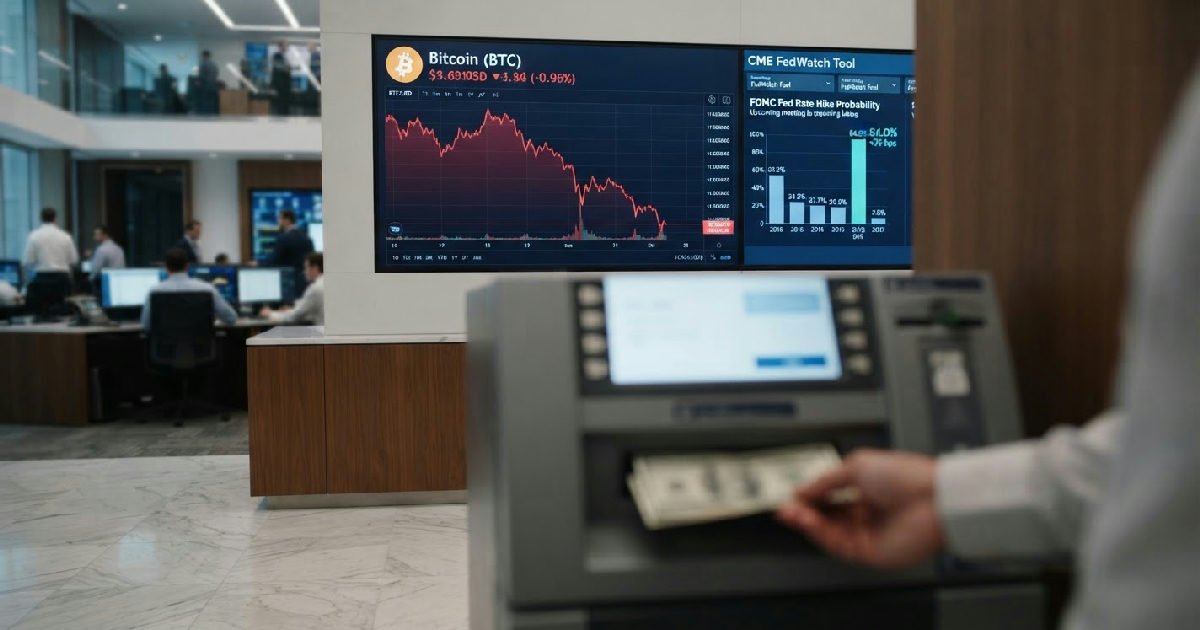
Investor confidence in cryptocurrency markets is being tested as US-based spot Bitcoin exchange-traded funds (ETFs) experienced a staggering $1.28 billion in net outflows for the week ending November 6. The massive withdrawal, the largest since late June, coincides with surging market expectations for a December interest rate hike from the Federal Reserve, which now stand at 84.4% according to the CME FedWatch tool.
This confluence of events signals a clear risk-off sentiment among institutional investors. The heavy outflows have erased all year-to-date gains for the popular investment vehicles, while the prospect of tighter monetary policy makes holding non-yielding assets like Bitcoin less attractive. The market is now looking ahead to key inflation data and the Fed’s final meeting of the year for direction.
Fed rate hike odds and a billion-dollar retreat
The scale of the recent capital flight from spot Bitcoin ETFs underscores a significant shift in institutional sentiment. The $1.28 billion withdrawal pushed the total net flows for 2026 into a deficit of approximately $914 million, according to data tracker SoSoValue. This marks a sharp reversal from the $368 million in net inflows recorded for the year just a week prior.
Leading the billion dollar exodus was BlackRock’s iShares Bitcoin Trust (IBIT), which was responsible for an overwhelming $1.209 billion of the total weekly outflow. On November 6 alone, IBIT shed $403 million. Other major funds also felt the pressure, with Fidelity’s Wise Origin Bitcoin Fund (FBTC) losing $199.87 million on November 5, its largest single-day outflow.
Grayscale’s Bitcoin Trust (GBTC), the largest fund by assets, was not spared, recording $61 million in outflows for the week. The widespread selling across multiple issuers, including Franklin Templeton and VanEck, indicates that the trend is not isolated to a single fund but reflects a broader market re-evaluation of exposure to digital assets amid growing economic uncertainty.
Why have rate hike expectations hardened?
The dramatic shift in expectations for a December rate hike is rooted in recent economic data that suggests the US economy remains resilient. The Federal Reserve, chaired by Kevin Warsh, has a dual mandate to maintain stable prices and maximize employment.
A stronger-than-expected October jobs report, which showed the creation of 165,000 new positions against a forecast of just 65,000, has fueled fears that inflation may not be cooling as quickly as desired.
At its last meeting on October 28, the Federal Open Market Committee (FOMC) held its policy rate steady in the 3.75% to 4.00% range. However, the decision was not unanimous, with two officials dissenting in favor of a hike. This division, combined with the robust labor market data, has led traders to increase their bets on further monetary tightening.
The CME FedWatch Tool, which analyzes fed funds futures contracts to predict policy changes, now shows only a 15.6% chance that the Fed will hold rates in December. Upcoming commentary from Fed officials, including Governor Christopher Waller, will be scrutinized by traders for any further clues. But for now, the market is bracing for what would be another hike in a historic cycle of tightening.
The impact on bitcoin and broader market sentiment
The dual pressures of ETF outflows and hawkish Fed policy have weighed heavily on the price of Bitcoin. A higher policy rate from the central bank increases the opportunity cost of holding assets like Bitcoin that do not provide a yield. As risk-free returns on government bonds and other fixed-income instruments rise, capital tends to flow away from more speculative investments.
This dynamic was clearly visible in the market’s reaction. The recent Bitcoin price drop reflects the broader de-risking by investors. While the S&P 500 showed some resilience, the 10-year Treasury yield has held firm near 4.9%, signaling that the cost of capital remains a primary concern for market participants.
The current environment has forced a strategic reconsideration for large investors. With volatility in US markets, some analysts are highlighting opportunities elsewhere, pointing towards potential European stock outperformance as a possible area for capital reallocation away from assets sensitive to Fed policy. For Bitcoin, the path of least resistance appears lower until the macroeconomic picture becomes clearer.
The outflows suggest that institutional players who entered the crypto space via ETFs are treating Bitcoin as a high-beta risk asset, similar to technology stocks. When market anxiety rises, these are often the first assets to be sold. This behavior links Bitcoin’s fate more closely than ever to traditional market forces.
What happens next? key data to watch
All eyes are now on the final FOMC meeting of the year, scheduled for December 8-9. The rate decision will be announced at 2:00 PM ET on December 9. Before then, a critical piece of the puzzle will be the release of the October Consumer Price Index (CPI) data.
A higher-than-expected inflation reading could all but guarantee a December rate hike, likely putting further pressure on Bitcoin and other cryptocurrencies.
Conversely, a surprisingly soft inflation report could give the Fed reason to pause, which would likely weaken the dollar and provide a tailwind for risk assets. Such a scenario could reverse the recent negative sentiment and potentially spur a recovery in ETF inflows.
Futures markets are not optimistic, however, pricing in approximately 50 basis points of further hikes through the end of 2027 with no probability assigned to a rate cut.
This places crypto investors in a familiar position: waiting on the Fed. The narrative has shifted from one of unbridled institutional adoption to a more sober assessment of Bitcoin’s role in a diversified portfolio, especially when competing with high, risk-free yields from government debt.
The institutional trade-off in a high-rate world
The launch of spot Bitcoin ETFs in January 2024 was hailed as a watershed moment for the crypto industry. It promised to open the floodgates for mainstream institutional capital by providing a regulated, accessible, and familiar investment structure. The initial inflows were strong, confirming a significant pent-up demand.
The approvals themselves followed a lengthy battle with the U.S. Securities and Exchange Commission (SEC), which was ultimately compelled to act after a landmark court ruling in favor of Grayscale Investments in August 2023.
However, the recent wave of outflows demonstrates that this new institutional demand is not unconditional. It is highly sensitive to the same macroeconomic variables that drive decisions across all asset classes. In a world where a two-year Treasury note yields around 4.5%, the case for holding a volatile, non-yielding asset requires a strong conviction in its long-term potential for price appreciation.
This period of outflows represents a maturing of the market. Bitcoin is no longer an esoteric asset operating in a silo; it is now an integrated part of the global financial landscape. For better or worse, its short-term performance is now inextricably linked to the policy decisions made by the Federal Reserve and the resulting appetite for risk among the world’s largest money managers.