

republic national distributing company bankruptcy plan faces objection
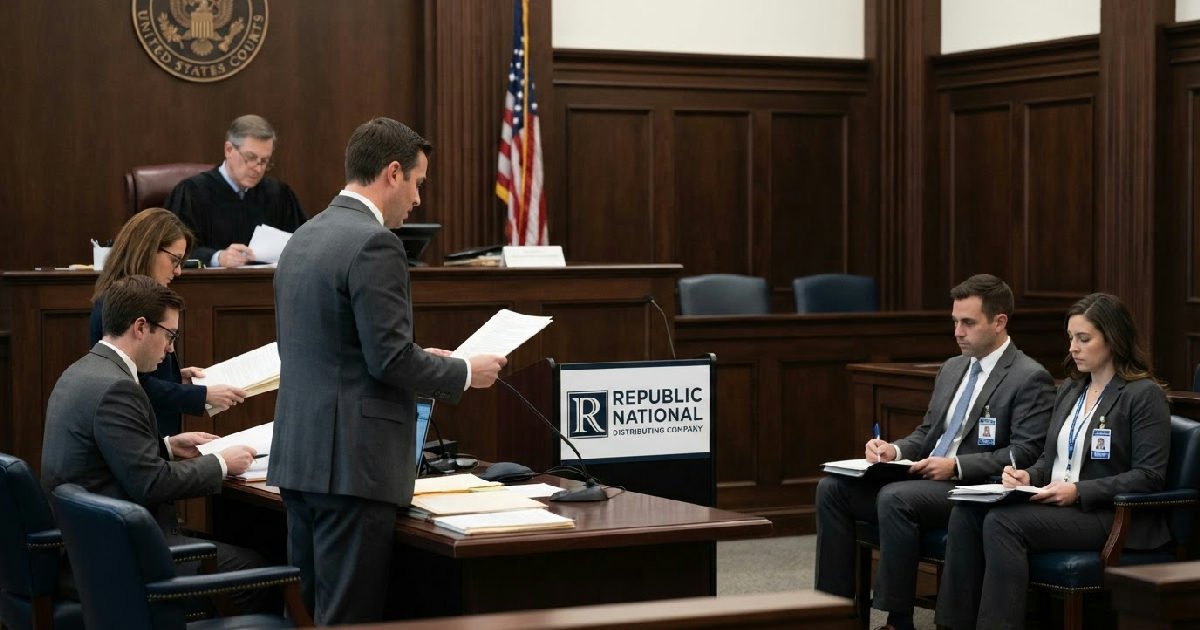
Republic National Distributing Company (RNDC), one of America’s largest liquor distributors, is pushing its Chapter 11 liquidation forward amidst a significant legal challenge. The company’s attorneys recently announced a settlement with its unsecured creditors, who hold claims totaling over $300 million. However, the proposed plan now faces a direct objection from the U.S. Trustee’s Office, a key entity overseeing bankruptcy proceedings.
This development comes as RNDC, which voluntarily filed for bankruptcy protection in July 2026, seeks court approval for its wind-down strategy. The outcome of this objection could reshape the final distributions to a wide array of creditors, from major wine and spirits suppliers to former employees. The financial distress follows an extended period of declining alcohol sales and mounting debt for the once-dominant distributor.
RNDC’s liquidation plan under scrutiny
On Tuesday, October 27, 2026, Republic National Distributing Company requested the presiding judge to approve its Chapter 11 plan. This motion follows a week of significant activity, including the settlement with unsecured creditors and the court-approved sale of RNDC’s operations in Alaska, Kentucky, and Michigan on October 22, 2026.
But the path to final approval isn’t clear. The U.S. Trustee’s Office has raised an objection, signaling potential further delays or modifications to the proposed liquidation. This federal watchdog aims to protect the integrity of the bankruptcy process and ensure fair treatment for all parties involved, particularly where significant funds are at stake.
The contested $300 million in claims
Court documents reveal that RNDC’s petition lists 30 of its largest unsecured claims, collectively exceeding $300 million. A substantial portion of this, eighteen claims, belongs to prominent wine and spirits suppliers.
Among these are major industry players like Proximo Spirits, the producer behind Jose Cuervo, Edrington, and Delicato Family Wines. Proximo Spirits alone holds the largest single unsecured debt, nearly $94 million, underscoring the deep financial ties and widespread impact of RNDC’s collapse within the beverage alcohol sector.
The unsecured creditors committee, which includes other liquor giants such as Pernod Ricard, has also been vocal. They initially argued that the released claims in the proposed settlement could be worth more than $1 billion. This divergence highlights the complex and often contentious nature of large-scale bankruptcy proceedings, where various parties vie for their share of remaining assets.
The challenging path to Republic National Distributing Company bankruptcy
RNDC’s journey into Chapter 11 protection on July 26, 2026, marked a significant moment for the U.S. beverage alcohol industry. The company, once the second-largest distributor nationwide, cited changing consumer preferences, increased operating costs, and a more difficult wholesale environment as primary drivers for its financial struggles. Post-pandemic demand erosion and a general decline in alcohol consumption severely impacted its revenue.
The company’s sales, which peaked at over $12 billion in 2022, dropped by almost 10% in 2023. This rapid decline, exacerbated by inflationary pressures and weaker consumer spending habits, proved unsustainable. It put immense pressure on RNDC’s financial stability, forcing it to confront its mounting debt obligations.
Supplier departures and market exits
A critical factor in RNDC’s unraveling was the loss of key suppliers. These departures collectively represented over $3 billion in annual revenue for the distributor in less than three years. Such a significant exodus of business partners severely undermined RNDC’s operational viability and market position.
A notable dispute involved Sazerac, which ended its distribution relationship with RNDC in early 2023. This split erupted amid litigation concerning unpaid invoices, inventory discrepancies, and contractual obligations. Sazerac reportedly alleged that RNDC had been experiencing financial difficulties since at least 2021, suggesting a longer-term pattern of distress.
Further compounding its challenges, RNDC withdrew from the lucrative California market in September 2025 following additional supplier losses, including Brown-Forman and Tito’s. While this exit was intended to prevent greater operating losses, it resulted in substantial volume and revenue losses, creating significant liquidity strain for the company.
Strategic asset divestitures prior to filing
In an effort to mitigate its financial woes, RNDC began dismantling parts of its business through strategic asset sales to competitors even before its Chapter 11 filing. These divestitures aimed to generate capital and reduce its secured debt burden.
In May 2026, Reyes Beverage Group acquired RNDC operations in eleven markets, including Arizona, Colorado, Florida, and Texas. This substantial transaction generated over $1 billion, which was crucial in paying down approximately 80% of RNDC’s outstanding secured debt. It represented a major restructuring effort to stabilize the company’s financial foundation.
Additionally, Columbia Distributing completed its acquisition of key RNDC brand distribution rights in Oregon and Washington on June 30, 2026. Smaller asset sales also occurred in Nebraska, North Dakota, and South Dakota to Quality Brands Distribution, LLC, further illustrating RNDC’s methodical approach to shedding non-core assets in the lead-up to bankruptcy.
The proposed settlement and contentious points
The settlement announced by RNDC’s attorneys aims to resolve a significant portion of its financial liabilities, particularly with unsecured creditors. The proposed plan outlines a framework for distributing remaining assets, including a $50.25 million contribution from RNDC’s ownership groups to the bankruptcy estates. It also involves a waiver of $260 million in second-lien loan claims and $47.7 million in unsecured notes.
However, the unsecured creditors committee took issue with certain aspects of the plan. They specifically challenged the reserving of $64.5 million in deferred compensation funds. These funds were intended for employees who, according to the committee, were not granted a priority claim under the bankruptcy structure.
Under the latest version of the pending deal, $47 million of these employee deferred compensation funds are now earmarked for general unsecured creditors. The remaining funds will go to the employees who participated in RNDC’s deferred compensation plans, representing a compromise reached during the complex negotiations.
Broader implications for alcohol distribution
The Republic National Distributing bankruptcy represents an unprecedented event for the U.S. alcohol distribution industry. The court filing itself noted that no distributor of RNDC’s size had previously sought Chapter 11 protection, making this case a significant precedent. The U.S. alcohol market operates under a complex three-tier system, established post-Prohibition, which dictates how alcohol moves from producers to consumers through distributors.
RNDC’s prominent role in this middle tier meant its financial struggles and subsequent liquidation had widespread ripple effects. The asset sales to companies like Reyes Beverage Group and Columbia Distributing also reflect a broader trend of consolidation within the beverage alcohol distribution landscape. Smaller regional distributors are increasingly being absorbed by larger entities, reshaping the competitive dynamics of the industry.
The proceedings continue in the U.S. Bankruptcy Court for the Southern District of Texas, Houston Division, with a combined disclosure statement and plan confirmation hearing rescheduled for October 27, 2026. While the hearing won’t finalize the liquidation or creditor recoveries, it marks a critical step towards the eventual resolution of RNDC’s massive financial challenges.
Industry observers will closely watch the outcome, as it could signal further shifts in a sector already navigating significant economic headwinds and evolving consumer behaviors. This saga underscores the vulnerability even of long-established giants in a volatile market.
The ongoing challenge of declining alcohol consumption
Beyond the immediate financial and legal intricacies, RNDC’s bankruptcy shines a light on broader shifts in consumer habits. The company explicitly cited “declining alcohol sales” as a primary reason for its distress. This trend, impacting both spirits and wine categories, suggests a more profound change than just post-pandemic adjustments.
Younger generations are reportedly drinking less alcohol, favoring low-alcohol or no-alcohol alternatives, and prioritizing wellness. This demographic shift presents a long-term challenge for the entire beverage alcohol supply chain. Distributors like RNDC, caught in the middle, bear the brunt of these evolving preferences and must adapt or face similar fates.
The increased costs of operation, coupled with this demand erosion, created a perfect storm for RNDC. Its failure serves as a stark reminder that even the most entrenched players in a highly regulated industry are not immune to market forces and changing consumer landscapes. The implications for other distributors, suppliers, and retailers are clear: innovation and agility are paramount to survival.