

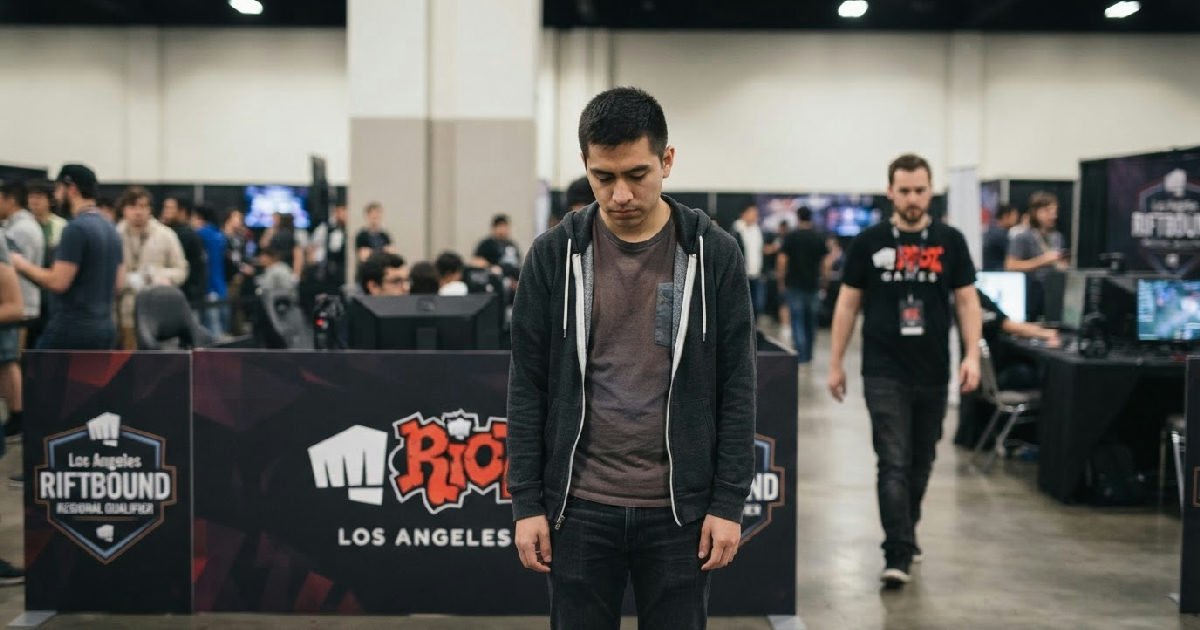
Riot Games bans Koko Lopez 26 months for deck stacking
Riot Games has sent a clear message regarding competitive integrity, levying a significant 26-month ban against professional Riftbound player Koko Lopez. The penalty stems from an incident in late September 2026, where Lopez was caught intentionally stacking his rune deck during the Los Angeles Riftbound Regional Qualifier.
This severe disciplinary action underscores Riot’s unwavering commitment to fair play in its new trading card game, Riftbound.
Koko Lopez: From Prominence to Disqualification
The decision stands out as exceptionally stringent when compared to typical punishments seen in other competitive TCGs. Players in games like Magic: The Gathering and Yu-Gi-Oh! often received lesser suspensions, sometimes even after multiple offenses. Riot’s firm stance aims to deter any player considering bending or outright breaking the rules in Riftbound competitive events.
Deception and Infraction Details
The core of the infraction involved Koko Lopez manipulating his rune deck in Riftbound, a practice commonly known as “deck stacking.” He intentionally arranged his deck to ensure he would draw a specific combination of five purple runes and one yellow rune by the third turn of a match. This calculated arrangement provided a considerable unfair advantage for his Kennen archetype.
Lopez initially attempted to conceal his actions, reportedly lying to tournament judges and claiming ignorance of the rules prohibiting deck stacking. Clips shared on October 7, 2026, from multiple matches, including streamed practice games, showed Lopez sorting his rune deck instead of shuffling. He later admitted his culpability to his team, ChallengerTCG, which subsequently removed him from their roster on the same day.
Competitive Track Record and Downfall
Before this ban, Koko Lopez was a prominent figure in the nascent Riftbound competitive circuit. His track record in 2026 was impressive, reflecting a skilled player who consistently performed at high levels. He secured first place at the CCS $25,000 Riftbound Invitational Qualifier #1 on January 31, 2026.
Lopez also followed up with a second-place finish at Qualifier #2 on March 14, 2026, and was runner-up at the Barcelona Regional Qualifier in August 2026. He placed seventh at the CCS $25,000 Showdown Series Event – Riftbound Invitational Qualifier #5 on September 19, 2026. His overall record of 36-11-3, boasting a 72.0% win rate, cemented his status as a top competitor for ChallengerTCG.
His disqualification from the Los Angeles Regional Qualifier in late September 2026 marked an abrupt and dramatic end to this successful run. Lopez is now banned until January 1, 2029, a definitive punishment from Riot Games.
Enforcing Competitive Integrity
Riot Games, known for its rigorous anti-cheat measures in titles like Valorant and League of Legends, has consistently prioritized competitive integrity. The company’s “Esports Global Code of Conduct,” updated in 2025, sets a unified standard against cheating and other forms of unsportsmanlike conduct across its entire esports ecosystem. This latest ban reinforces that mandate.
The company employs advanced anti-cheat systems such as Vanguard, which expanded to League of Legends in September 2025. These systems have been instrumental in banning hundreds of thousands of accounts for rank manipulation and boosting. Riot’s history shows a clear pattern: they don’t just ban players for using third-party software but also for any actions that undermine the competitive spirit of their games.
For Riot, the player experience, particularly in competitive settings, is paramount. This robust enforcement in Riftbound is a direct extension of that philosophy. The organization wants to ensure that results are determined purely by skill and strategy, not through illicit means.
Riftbound’s Landmark Cheating Judgment
The 26-month ban handed to Koko Lopez represents a significant moment for Riftbound and the wider trading card game landscape. Riot’s uncompromising approach sets a new benchmark for how cheating incidents should be addressed. It puts pressure on other TCG organizers to review and potentially strengthen their own anti-cheating policies.
Historically, the TCG community has wrestled with inconsistent enforcement of cheating rules. This ban from a major publisher like Riot sends a strong message that will resonate far beyond Riftbound. It affirms that admitting guilt after initial deception won’t necessarily mitigate severe consequences, emphasizing a zero-tolerance policy.
This ruling is particularly crucial for Riftbound as it seeks to establish itself in the competitive scene. A reputation for rigorous fair play can attract new players and solidify its standing as a credible alternative to long-established TCGs. Players looking for a clean, fair competitive environment will likely view Riot’s actions positively.
Understanding Riftbound’s Rune Deck Mechanics
To fully grasp the nature of Lopez’s infraction, it helps to understand Riftbound‘s unique gameplay mechanics. In the game, players manage two distinct decks: a main deck for spells and creatures, and a 12-card rune deck that functions as a resource pool. During each “Channel Phase,” players draw the top two cards from their rune deck, adding them to their available resources.
These runes provide two types of currency: Energy, which is colorless and recharges each turn, and Power, tied to specific colors like Fury or Order. Power is generated by “recycling” a rune to the bottom of the deck.
Stacking the rune deck means knowing precisely which runes will appear, allowing a player to guarantee specific power combinations at critical turns. This removes the element of chance inherent to the game’s design, providing an insurmountable advantage.
Broader Implications for Esports Integrity
Riot’s actions against Koko Lopez extend beyond just one game; they contribute to a broader push for integrity across the entire esports industry. As competitive gaming continues to grow, so does the scrutiny on fair play. This 26-month ban sets a strong example that professional players are not immune to severe penalties for cheating, regardless of their standing or prior achievements.
This incident will undoubtedly spark further discussion within player communities about what constitutes cheating and how to maintain accountability. It reinforces the idea that an ethical framework is essential for the long-term health and credibility of popular gaming titles and their associated esports ecosystems. Other developers and tournament organizers will be watching closely, potentially recalibrating their own enforcement policies in response to Riot’s clear precedent.
Ultimately, this ban safeguards the competitive spirit of Riftbound, ensuring that players who invest time and effort into legitimate strategy and skill are rewarded. It fosters a more welcoming environment for new players and reinforces trust among the existing community, a critical factor for any game seeking enduring success in the fiercely competitive TCG market. Riot’s message is unambiguous: cheaters will face significant consequences.