

US government moves $1 billion in bitcoin from bitfinex hack
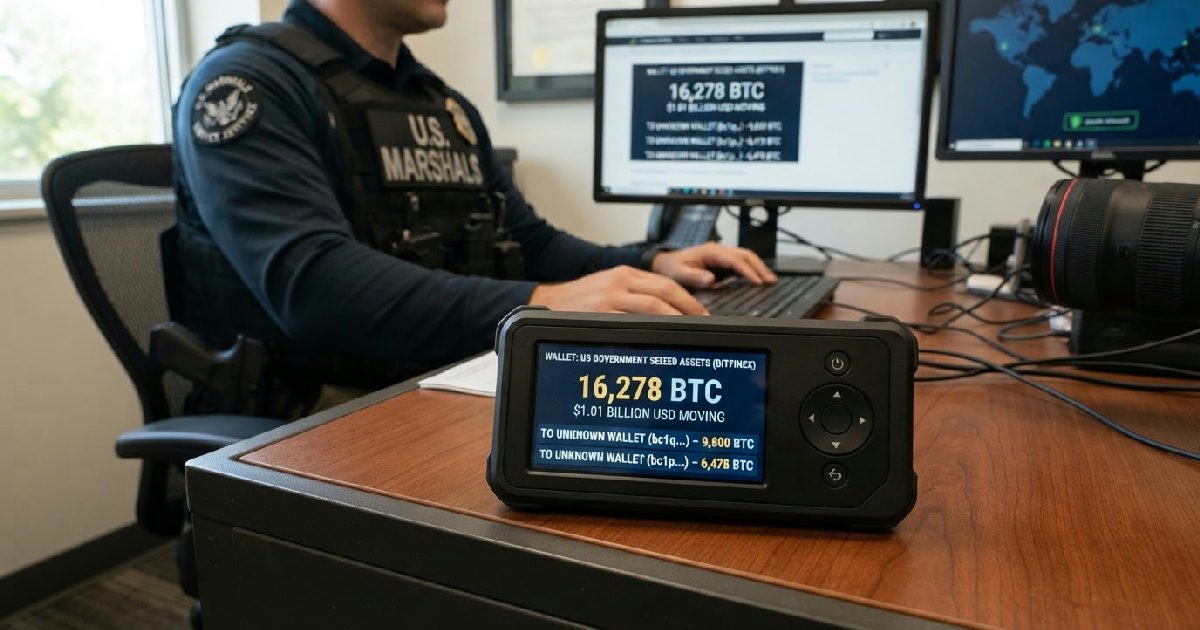
The United States government has executed a significant US government Bitcoin move, transferring approximately $1.01 billion worth of Bitcoin (BTC) linked to the 2016 Bitfinex hack, according to on-chain data. The transaction, involving 12,267.02 BTC, occurred on November 7, 2023, moving the funds from a known government-controlled wallet to new, unlabelled addresses, suggesting an internal reshuffle rather than a market sale.
This significant movement is the latest in a series of asset consolidations by U.S. authorities managing a growing trove of seized cryptocurrencies. While the transfer to non-exchange wallets has eased immediate market fears of a massive sell-off, it places a renewed focus on the government’s long-term strategy for its multi-billion dollar digital asset holdings.
Understanding the US government Bitcoin move
This billion-dollar transfer didn’t happen in isolation. It followed a flurry of activity in early October 2023, when U.S. authorities moved approximately $670 million in digital assets. Specifically, blockchain intelligence firm Arkham reported that 6,215.7 BTC, valued at $520 million, and 119 million USDT were deposited into Coinbase Prime between October 7 and early October 8, 2023.
These earlier transfers originated from wallets linked to the Bitfinex hack and other seizures. While market observers often interpret exchange deposits as a precursor to selling, experts caution that this isn’t always the case. Coinbase Prime also provides institutional-grade custody services, suggesting the government might simply be consolidating assets under a secure custodian.
Further analysis from blockchain intelligence firm Arkham highlighted another transfer on October 6, 2023. This movement involved 833.6 BTC, valued at over $71 million, which was also moved to Coinbase Prime.
This particular batch included funds from the Bitfinex case, specifically 264.86 BTC, alongside assets seized from HashFlare cases. The meticulous tracking of these funds highlights blockchain transparency and the government’s methodical approach to managing complex assets.
These ongoing transfers put a spotlight on the potential for a Bitcoin price breakout if the government were to change its holding strategy.
The long shadow of the Bitfinex hack
The assets at the center of this transfer originate from one of the most infamous thefts in crypto history. In August 2016, the Bitfinex exchange was compromised, with hackers making off with 119,756 BTC. At the time, those stolen funds were worth about $72 million.
For years, the stolen coins were tracked as they moved through a complex web of wallets designed to obscure their origin. A major breakthrough came in February 2022 when the Department of Justice (DOJ) announced it had seized over 94,000 BTC from the hack. The recovery was made possible after investigators decrypted a file controlled by Ilya Lichtenstein, a New York-based tech entrepreneur.
Ilya Lichtenstein and his wife, Heather R. Morgan, were arrested and charged with conspiracy to launder the stolen cryptocurrency. Both pleaded guilty to money laundering charges in August 2023. Lichtenstein was sentenced in November 2024 to five years in prison, with Morgan receiving 18 months.
What the on-chain data reveals
Blockchain analysis provides a clear, public record of the government’s latest move. The main transfer on November 7, 2023, saw 12,267.02 BTC leave a wallet labelled “U.S. Government: Funds Seized from Bitfinex Hack.” The transaction was split, with 6,000 BTC sent to one new address and the remaining 6,267 BTC to another.
This specific technique, moving funds to freshly created wallets instead of known exchange addresses, strongly indicates internal “wallet hygiene” or administrative organization. It’s a common practice for large holders managing significant assets to improve security and streamline accounting. Had the government intended to liquidate the assets, funds would likely have taken a more direct route to an exchange trading platform.
The total value of all recovered Bitcoin has fluctuated wildly, at one point approaching a new all-time high and providing a massive windfall for potential restitution. The meticulous tracking of these funds demonstrates the powerful capabilities of modern blockchain analytics in piercing the veil of anonymity once thought to be absolute in crypto transactions.
Uncle Sam’s crypto policy and growing hoard
The U.S. government has quietly become one of the world’s largest Bitcoin holders. Through various seizures related to the Silk Road marketplace, the Bitfinex hack, and other cybercrime cases, its total holdings are estimated to be between 323,000 BTC and 325,000 BTC. This crypto hoard is valued at roughly $27.72 billion, making federal crypto policy a subject of intense interest.
A key piece of this policy is a March 2025 executive order that established a “Strategic Bitcoin Reserve.” This directive mandates that bitcoin subject to a finalized forfeiture order should not be sold. The primary exception is for providing restitution to victims of the original crime, a crucial detail for the Bitfinex funds.
The Department of Justice (DOJ) has recommended to the courts that Bitcoin recovered from Ilya Lichtenstein be returned to Bitfinex. This would compensate the victims of the 2016 hack.
Therefore, the recent wallet movements could be an administrative step in preparation for this eventual restitution. It effectively separates these specific funds from other seized assets destined for the Strategic Bitcoin Reserve. A poorly timed government sale could trigger a widespread crypto crash sell-off, a scenario officials are likely keen to avoid.
Outlook for the seized funds
For now, the market can breathe a sigh of relief. The $1 billion in Bitcoin is not being dumped on the open market, an event that could have caused significant price volatility. Instead, the government appears to be acting as a methodical and relatively transparent custodian of the seized assets, following established internal protocols and legal frameworks.
The ultimate destination for these funds seems to be back with the victims of the hack, via the Bitfinex exchange. The timing of this restitution remains dependent on court proceedings and further administrative actions by the DOJ and the U.S. Marshals Service, the agency typically responsible for managing and auctioning seized assets. These recent transfers signal that the process is moving forward, albeit slowly.
While this particular move was not a sale, the crypto market will continue to watch the government’s vast holdings with a hawk’s eye. Any future policy shift or large-scale fund movement toward exchanges remains a key variable for traders and analysts. The U.S. government’s actions, whether through active selling or passive holding, will continue to be a powerful force in the digital asset landscape.