

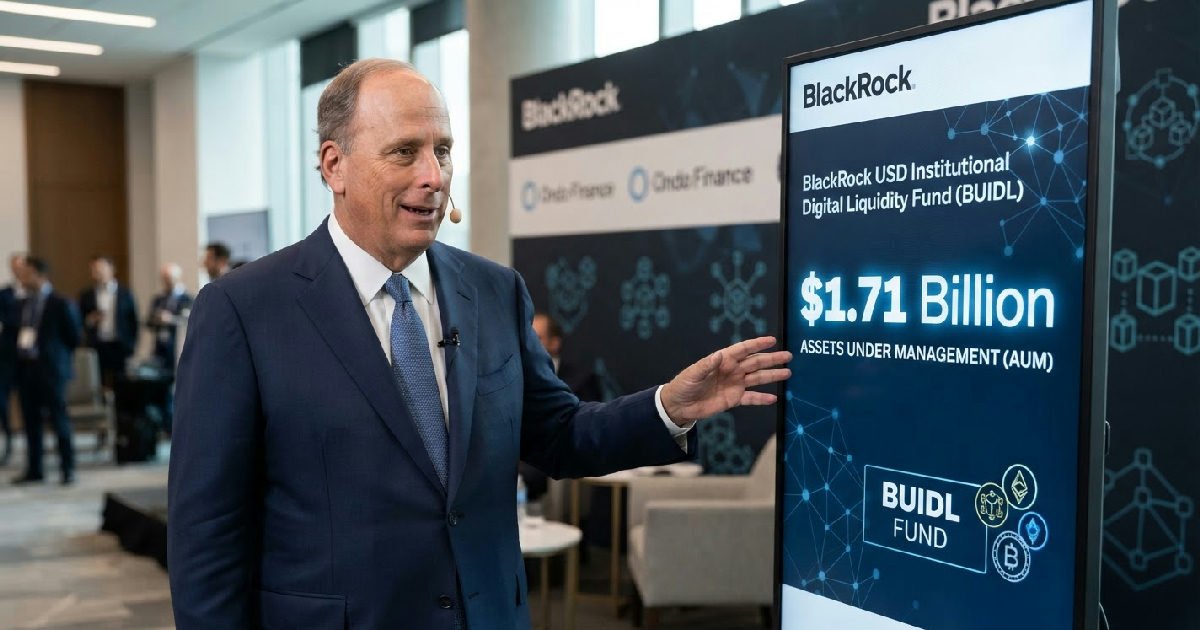
BlackRock asset tokenization fund BUIDL tops $1.7B
BlackRock’s push into asset tokenization is rapidly evolving from a strategic experiment into a core component of its digital asset strategy, with the firm’s on-chain treasury fund now commanding over $1.7 billion. This massive growth coincides with the world’s largest asset manager lending its expertise to crypto-native firms, most recently by designing model portfolios for new tokenized products launched by Ondo Finance.
The dual-pronged approach—building proprietary tokenized funds while simultaneously enabling partners—signals a significant acceleration in the convergence of traditional finance and blockchain technology. While the launch of spot Bitcoin ETFs captured headlines, BlackRock’s deeper moves into the tokenization of real-world assets (RWAs) may hold even more profound implications for the future of financial markets.
Understanding the BlackRock asset tokenization collaboration with Ondo Finance
In its latest move, BlackRock has provided the underlying portfolio strategies for three new tokenized products from Ondo Finance. These offerings allow eligible investors outside the United States to gain exposure to professionally constructed portfolios through a single blockchain token. The products include the Ondo High Income (BLKHIon), Ondo Diversified Growth (BLKDIGon), and Ondo High Growth (BLKGRWon) tokens.
It’s a critical distinction that BlackRock is not issuing these tokens itself. Instead, it has developed the investment models that Ondo implements. Ondo Finance, along with its issuance arm Ondo Global Markets, handles the entire tokenization process, manages the products, and executes the rebalancing rules programmatically via smart contracts.
This arrangement allows BlackRock to extend its portfolio construction intelligence into the digital asset ecosystem without directly managing the retail-facing token infrastructure.
The structure represents a logical next step from an exchange-traded fund (ETF). While an ETF bundles a basket of securities into a single tradable share, Ondo’s model bundles multiple tokenized securities into a single master token.
An investor simply mints or purchases one token to gain exposure to a complete, managed portfolio, sidestepping the need to buy and rebalance numerous individual assets. For example, one model portfolio allocates across fixed-income instruments like the iShares High Yield and Investment Grade Systematic Bond ETFs.
BUIDL: The engine of BlackRock’s on-chain strategy
While the Ondo partnership is significant, the most powerful evidence of BlackRock’s commitment is the explosive growth of its own native tokenized fund. The BlackRock USD Institutional Digital Liquidity Fund (BUIDL), launched on March 20, 2024, has become the dominant force in the tokenized treasury market.
After reaching $500 million in assets by July 2024, the fund has since swelled to over $1.7 billion, demonstrating powerful institutional demand.
This growth has been incredibly rapid. The fund jumped from $667 million to nearly $1.8 billion in just three weeks during a period in March 2025 and has sustained its momentum. BUIDL is designed as a stable, yield-bearing instrument for qualified investors, with a formidable minimum investment of $5 million.
It provides a stark example of how large institutions are now using blockchain for more than just speculative crypto trading, turning to it for core treasury management functions.
From launch to billions in months
BUIDL was introduced on the Ethereum blockchain as an ERC-20 token, with shares representing a stake in a fund that invests 100% of its assets in cash, U.S. Treasury bills, and repurchase agreements.
The fund aims to maintain a stable value of $1 per token, with daily accrued dividends paid out monthly to holders in the form of new BUIDL tokens. It was launched in partnership with Securitize, which acts as the tokenization platform and transfer agent.
The fund’s architecture includes a specialized redemption mechanism developed with Circle, allowing a near-instant conversion to USDC stablecoins. This feature provides a critical liquidity off-ramp, making the fund a highly flexible instrument for institutional investors managing large cash positions. This seamless integration with the existing crypto-financial infrastructure has been key to its appeal and rapid adoption.
The mechanics of a tokenized treasury fund
The entire BUIDL ecosystem was built with institutional rigor. The Bank of New York Mellon (BNY Mellon) serves as the fund’s custodian and administrator, with PricewaterhouseCoopers LLP as auditor. Access is restricted to whitelisted, KYC/AML-verified addresses, a crucial compliance feature for regulated entities. This structure allows approved investors to transfer tokens 24/7/365, a dramatic improvement over the rigid operating hours of traditional financial systems.
A consortium of leading digital asset firms, including Anchorage Digital Bank, BitGo, Coinbase, and Fireblocks, provide key infrastructure and custody solutions. This broad support allows investors to hold their BUIDL tokens in a variety of institutional-grade custody arrangements. The high entry requirements and robust compliance framework underscore that this product is tailored for the world of professional asset management, not the retail market.
Why asset tokenization matters for traditional finance
BlackRock’s foray into tokenization is driven by a desire to upgrade the underlying plumbing of financial markets. The firm has been vocal about the potential for blockchain technology to reduce settlement times, lower operational costs, and reduce friction in asset transfers.
By moving assets like Treasury funds onto blockchain rails, processes that traditionally take one or more business days (T+1) can occur nearly instantaneously, at any time of day or night.
This efficiency unlocks capital that would otherwise be tied up in settlement, improves risk management, and enables new, more automated financial products. The programmatic nature of smart contracts allows for compliance rules and dividend distributions to be executed automatically, reducing the potential for human error and administrative overhead.
BUIDL’s success is a proof of concept for this vision, showing that a tokenized version of a traditional asset can offer superior utility and attract significant capital.
Broader implications for the financial industry
BlackRock’s assertive moves are sending ripples across the asset management industry. Having already established a dominant position following the successful launch of Bitcoin ETFs, the firm is now setting the pace in the tokenization of traditional assets. Its success with BUIDL creates competitive pressure on other financial giants to develop their own RWA strategies or risk being left behind.
The momentum is shifting the perception of blockchain from a platform for speculative assets to essential infrastructure for the future of finance. As more real-world value moves on-chain, it builds a foundation for a more interconnected and efficient global financial system. The lines between traditional finance and digital assets are blurring, with BlackRock positioning itself as a key architect of this new landscape.
Ultimately, BlackRock is pursuing a comprehensive digital asset strategy. It’s not just offering access to Bitcoin but is actively using blockchain to reinvent core financial products. By building its own tokenized funds and empowering partners like Ondo Finance, the asset manager is ensuring it will be a central player as more of the world’s financial assets inevitably move onto the blockchain.