

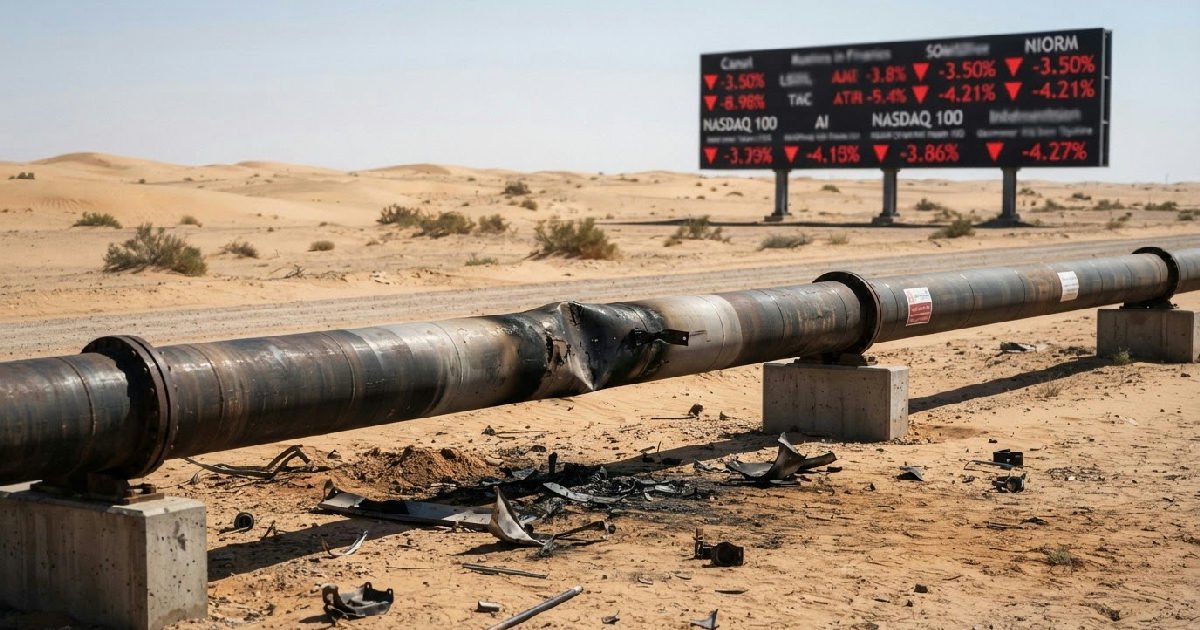
Saudi pipeline attack fuels oil price surge amid AI stock market slowdown
On September 10 and 11, 2026, a drone attack crippled parts of Saudi Arabia’s crucial East–West Crude Oil Pipeline, immediately sending global oil prices soaring. This disruption to vital energy infrastructure coincides with growing concerns about a potential slowdown in artificial intelligence development, which has begun to weigh heavily on technology stocks worldwide. The dual pressures paint a complex picture for international markets.
The assault in the Riyadh-Medina region caused significant damage and sparked fresh anxieties over Middle East stability and global oil supply chains. Oil markets reacted swiftly, pushing Brent crude futures above $107 a barrel and West Texas Intermediate (WTI) past $102 as traders factored in heightened geopolitical risk. These market responses highlight broader volatility in global oil markets.
Details of the Saudi pipeline attack
This surge in energy costs arrives while the tech sector grapples with an unexpected deceleration in AI investment and innovation, a trend increasingly impacting market sentiment. Investors are now closely watching how these distinct, yet simultaneous, challenges will reshape the global economic outlook.
The drone strikes on Saudi Arabia’s East–West Crude Oil Pipeline targeted facilities over a two-day period, specifically between September 10 and September 11, 2026. This critical infrastructure is located in Saudi Arabia’s Riyadh-Medina region.
Reports indicated multiple drones were involved in the coordinated attacks, causing injuries and forcing the pipeline’s shutdown as a precautionary measure. Satellite imagery, specifically from Vantor, later revealed extensive charring and severe damage to a pumping station in al-Mesabaah, southeast of Medina, underscoring the severity of the assault.
Riyadh has attributed responsibility for the drone attack to militias operating from Iraq, though this claim has been swiftly rejected by the Iraqi Islamic Resistance. The incident has intensified an already volatile geopolitical climate in the region.
Immediately after the news broke, the global oil market saw significant upward movement. On September 14, 2026, international benchmark Brent crude futures climbed to $107.16 a barrel, marking a 2.5% increase. US benchmark West Texas Intermediate (WTI) crude futures also rose, reaching $102.54 a barrel.
Escalating regional tensions impact oil markets
The pipeline attack marks another worrying escalation in regional hostilities, particularly against the backdrop of an ongoing and increasingly tense conflict between the United States and Iran. Just days before, oil facilities and tankers had faced repeated targeting.
Earlier this month, oil neared $100 a barrel after attacks hit other Saudi energy facilities. By September 9, oil had topped $100 a barrel as the US-Iran conflict showed further signs of escalating. This persistent threat to energy infrastructure highlights the fragility of global oil supplies.
The frequency and precision of these strikes suggest a sophisticated capability that poses a significant challenge to regional security. It’s a stark reminder of how geopolitical friction can quickly translate into tangible economic costs for consumers and businesses worldwide.
Wider implications for global energy security
Such attacks on key energy conduits like the East–West Pipeline have broader ramifications for global energy security. Any sustained disruption could force oil shipments to take longer, more expensive routes, increasing transportation costs and further boosting prices.
Nations heavily reliant on Middle Eastern oil imports are now reviewing their contingency plans. The incident underscores the urgent need for diplomatic solutions to de-escalate tensions and protect vital international trade routes from weaponized drone technology.
AI development slowdown rattles tech stocks
While the energy sector grapples with physical threats, the technology world is contending with an entirely different kind of uncertainty: a reported slowdown in artificial intelligence development. This shift has begun to cool investor enthusiasm for what was previously a high-flying sector.
Major AI players, including OpenAI, are reportedly considering measures to slow down the rapid pace of AI advancement. This comes after an extended period of intense competition and massive investment in the burgeoning field, prompting questions about sustainability and ethical considerations.
The prospect of a more measured approach to AI innovation has introduced caution into the market. While some argue a slowdown could allow for safer, more ethical development, investors are reacting to the perceived deceleration in growth potential.
Tech stocks, which have heavily benefited from the AI boom, have begun to reflect this evolving sentiment. Companies deeply invested in AI research and deployment are facing increased scrutiny, impacting their valuations. This marks a notable shift from previous months where AI development slowdown proposals gained traction from industry leaders.
Navigating investor uncertainty in tech
For many tech companies, a potential AI slowdown translates directly to revised growth projections. This can trigger a re-evaluation of portfolios by major institutional investors, leading to market volatility.
Smaller AI startups, particularly those relying on continuous investment rounds to fund ambitious research, might find securing capital more challenging. The overall investment climate in artificial intelligence appears to be entering a more cautious phase.
Intertwined global economic repercussions
The simultaneous pressures from surging oil prices and a cooling AI market present a unique challenge to the global economy. Higher energy costs inflate production and transportation expenses across nearly all industries, contributing to inflationary pressures and potentially dampening consumer spending.
Conversely, a slowdown in the tech sector, particularly AI, could impact job growth and innovation, which are crucial drivers of modern economic expansion. These two seemingly disparate events could combine to create headwinds for global growth.
Central banks around the world are carefully monitoring this complex landscape. They must weigh the impact of energy-driven inflation against any potential economic deceleration stemming from the tech sector. Policy decisions become far more intricate in such an environment.
Challenges for international commerce
Businesses engaged in international commerce face a double-edged sword. Rising fuel costs make global supply chains more expensive and less predictable, eroding profit margins. At the same time, any contraction in tech investment could reduce demand for new technologies and services.
This dynamic creates a challenging environment for forward planning and capital allocation. Firms are looking for stability, but recent events suggest sustained volatility might be the new norm, requiring agile adaptation from enterprises globally.
Outlook: balancing stability and innovation
Looking ahead, the global economy faces the difficult task of balancing energy security with technological advancement. The immediate focus remains on de-escalating tensions in the Middle East to safeguard critical oil infrastructure.
For the AI sector, the coming months will reveal whether the reported slowdown is a temporary correction or a more fundamental shift in strategic direction. This will undoubtedly influence future investment patterns and the pace of innovation.
Policymakers must navigate these interconnected challenges carefully. Ensuring stable energy supplies and fostering responsible technological growth are paramount to sustaining global prosperity. The interplay between geopolitical risk and technological evolution will continue to define market dynamics, prompting close observation from investors and governments alike.
The ripple effects of both events could extend far beyond immediate market fluctuations, influencing long-term strategic decisions in energy independence and technological leadership. Nations are keenly aware that these issues directly impact national security and economic competitiveness, leading to heightened focus on diversification and resilience.
Ultimately, the resilience of global markets will be tested as they absorb both the immediate shocks of physical attacks on critical infrastructure and the more subtle, yet profound, shifts within a rapidly evolving technological frontier. These twin narratives will likely dominate economic headlines for the foreseeable future, demanding careful analysis and strategic responses from decision-makers worldwide.