

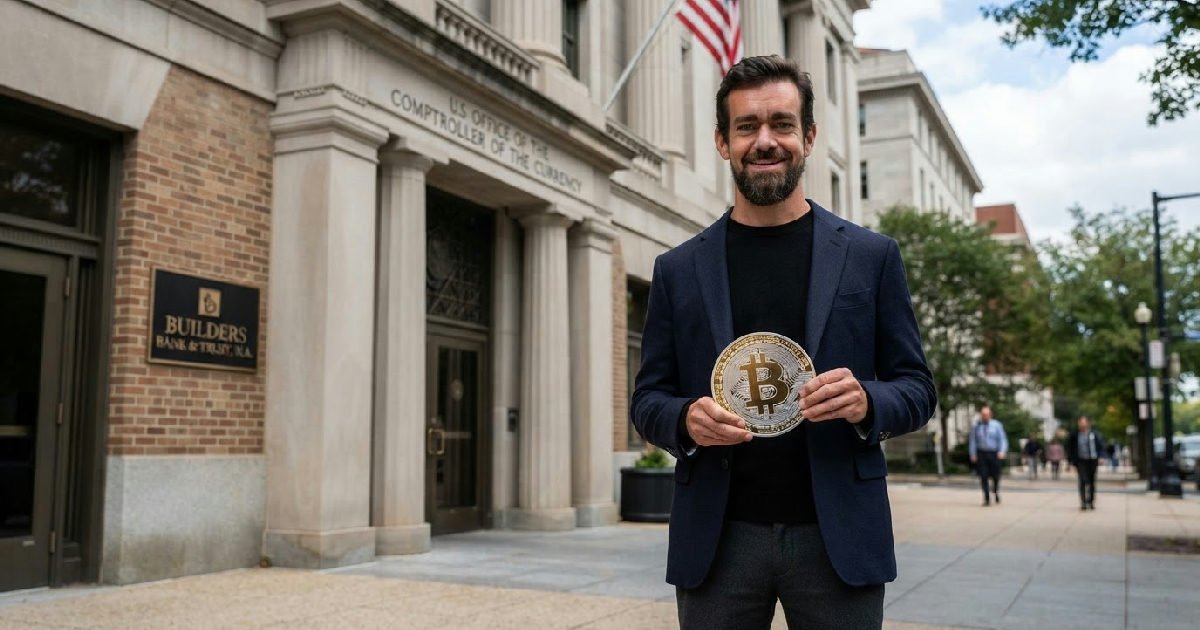
Block Seeks OCC Nod for Crypto Custody Bank
Block, Inc. applied to the U.S. OCC on 2026-09-08 to establish Builders Bank & Trust, N.A., a new crypto custody bank. , the financial technology company led by Jack Dorsey, formally applied to the U.S. Office of the Comptroller of the Currency (OCC) on 2026-09-08.
The firm aims to establish Builders Bank & Trust, N.A., an uninsured national trust bank designed specifically for Bitcoin and stablecoin custody operations. This move signals Block’s intent to bring its digital asset services under direct federal supervision.
The proposed institution would provide crucial custody and fiduciary services for digital assets. It would operate without traditional banking functions, such as accepting deposits or issuing loans. This distinct structure offers Block a consistent national regulatory framework for activities the company already provides, aligning with broader efforts by fintechs like Revolut’s stablecoin plans.
Block’s crypto custody bank application
Should the OCC approve this Block OCC application, it would mark a significant step for the company. It would streamline oversight for Block’s expanding digital asset business. The application underscores a strategic effort to integrate crypto services into the regulated financial system.
Block’s filing with the OCC aims to establish a federally regulated digital asset custody bank. This new entity would support the company’s broader vision of economic empowerment. It seeks to bring Bitcoin custody operations into a single, OCC-supervised federal banking system through a trust structure.
The application reflects a strategic effort to unify supervision for Block’s activities. Currently, many digital asset operations are overseen by a patchwork of state licenses. A national trust charter would replace this with a more consistent federal framework, particularly as Block’s operations scale.
This consistency is crucial for long-term stability and growth in the digital asset sector. It provides a clearer pathway for innovation. Firms can then operate with reduced regulatory ambiguity.
Builders Bank’s Distinct Custody Model
Builders Bank & Trust, N.A. would function distinctly from traditional commercial banks. It’s conceived as an uninsured, non-deposit-taking national trust bank. Its sole focus would be on providing custody and fiduciary services for digital assets, specifically Bitcoin and stablecoins.
This specialized structure allows digital asset companies to conduct approved custody and trust activities under federal supervision. They can do this without the extensive regulatory burden tied to operating a conventional retail bank. The model isolates crypto custody from other, more speculative financial activities.
It also offers a clear benefit to customers seeking secure storage for their digital holdings. The federal oversight could instill greater confidence. This would potentially attract a wider range of institutional clients.
Leadership Under Lee Woolley
Lee Woolley, currently Block’s Digital Asset Strategy Lead, is slated to become President and CEO of Builders Bank. Woolley brings substantial experience, with over two decades in banking and financial services. He previously led Treasury Department Federal Credit Union.
Woolley also held senior banking leadership roles at Northern Trust and BNY Mellon. He stated that Builders Bank is “well positioned to support Block’s broader vision of economic empowerment.” This leadership choice emphasizes the project’s serious financial backing.
He added, “We look forward to working with the OCC as we pursue a charter designed to support the secure custody of assets for Block and its customers.” This quote highlights Block’s commitment to regulatory collaboration. His background suggests a focus on established banking principles within the crypto space. It signals a move towards institutional-grade crypto services.
Federal Charters Attract Crypto Firms
Block’s pursuit of a federal charter aligns with a wider industry movement. Numerous cryptocurrency and fintech companies are increasingly seeking federal banking supervision for their digital asset businesses. This trend reflects a desire for legitimacy and clearer regulatory guidelines. The sector hopes to mature under established financial oversight.
Comptroller Jonathan Gould indicated in August that digital asset companies, if engaging in legally permissible activities, should access the U.S. national banking system. The OCC received 40 de novo charter applications over an 18-month period. This included several applications for national trust banks from crypto firms. The appetite for formal banking structures is evident.
The regulator noted 13 pending digital asset licensing applications at that time. Companies such as Payward, Revolut, and World Liberty Financial were among those actively pursuing federal approvals. This signifies a growing push for mainstream integration by crypto entities. It suggests a future where digital assets are more deeply embedded in traditional finance. Bitcoin market trends continue to influence these strategic decisions.
OCC’s Evolving Stance on Digital Assets
The OCC has notably increased its use of national trust charters for digital asset businesses since late 2025. This period saw conditional approvals for firms like Ripple, Circle, Paxos, BitGo, and Fidelity Digital Assets in December 2025. Other applicants followed throughout 2026, demonstrating an accelerating pace of regulatory engagement.
Conditional approval represents an interim stage in the charter process. Applicants must fulfill organizational requirements and meet specific conditions. These often involve capital, governance, compliance systems, and operational readiness before full authorization is granted. This rigorous process aims to ensure stability and consumer protection.
Circle, a prominent stablecoin issuer, moved past this conditional stage. It received final OCC approval in July to establish Circle National Trust. This federally supervised trust bank now provides digital asset custody services to Circle, its affiliates, and a select group of institutional customers. This provides a blueprint for other aspiring crypto banks.
Recent Approvals and Pending Applications
Similarly, Kraken parent company Payward is pursuing its own charter. Its proposed Payward National Trust Company would offer federally regulated digital asset custody. This would be for institutional customers, again, without accepting deposits or issuing conventional loans. The model emphasizes focused services.
Revolut moved further through the process last week, receiving conditional OCC approval. This allows it to establish Revolut Bank US, N.A. The fintech plans to base the proposed bank in Stamford, Connecticut, with a $95 million initial capital injection.
Revolut anticipates launching the bank in the first half of 2027. However, it still requires Federal Deposit Insurance Corporation and Federal Reserve clearances. Final OCC authorization is also pending. Its services are set to include checking accounts, cards, installment loans, foreign exchange products, and a stablecoin.
Mounting Regulatory Scrutiny and Challenges
Despite the influx of applications, some companies face extended regulatory reviews. Zerohash, for example, submitted a second national trust bank application in August. This followed the OCC’s return of its initial filing, indicating the detailed scrutiny involved. The revised application proposes a narrower set of trust activities.
The OCC considers public comments during its review process. It can request additional information, impose conditions, or ultimately approve or reject an application. Zerohash’s revised application had not received a definitive outcome as of late August. This highlights the unpredictable nature of these processes.
World Liberty Financial, a crypto venture reportedly backed by President Donald Trump’s family, secured preliminary conditional approval on August 14. This was for World Liberty Trust Company, National Association. The institution plans to issue and redeem the USD1 stablecoin.
It also aims to manage its reserves and provide digital asset custody services. World Liberty must meet the OCC’s conditions, including maintaining at least $20 million in eligible capital, before commencing operations. This approval has drawn political scrutiny due to the Trump family’s reported ties.
Political and Banking Sector Pushback
Lawmakers have raised questions regarding potential conflicts of interest surrounding the company. These concerns also extend to its regulatory dealings with the administration. An entity affiliated with the Trump family reportedly owns 38% of WLTC Holdings, the holding company behind the proposed bank.
A group backed by Sheikh Tahnoon bin Zayed Al Nahyan of Abu Dhabi and co-investors reportedly controls a 49% stake. This ownership structure has amplified calls for transparency and heightened regulatory oversight. It emphasizes the need for clear ethical boundaries in this emerging financial sector.
Broader scrutiny of crypto trust charters isn’t limited to World Liberty. Senator Elizabeth Warren earlier this year questioned the OCC’s authority. She argued that certain approved activities might exceed the limits set by the National Bank Act.
Traditional banking groups, such as the Bank Policy Institute, have also raised objections. They have considered legal challenges to the OCC’s approach. However, no lawsuit had been filed as of July. This highlights a simmering tension between traditional and digital finance.
Outlook for Block and Digital Asset Oversight
Block’s application for Builders Bank & Trust, N.A. remains under active review by the OCC. The proposed bank will not commence operations unless the regulator grants its approval. Furthermore, Block must complete all necessary requirements to operate under federal supervision. The process is lengthy and multi-faceted.
This application signifies Block’s commitment to robust and regulated digital asset services. It aims to provide greater clarity and security for Bitcoin and stablecoin holders. The outcome will likely influence how other major fintechs approach federal oversight in the future. Institutional engagement, including from BlackRock’s Bitcoin ETF, underscores this trend. It sets a precedent for regulated crypto custody.
The move also highlights a broader maturation of the crypto industry. Companies are seeking integration into traditional financial infrastructures. They are doing so through regulated entities, moving beyond the fragmented and often uncertain regulatory landscape that once characterized the sector. Jack Dorsey’s Block appears keen to lead this charge towards a more formalized crypto economy.
What this actually means for Block’s customers is a potentially more secure and trusted environment for their digital assets. Federal supervision provides a layer of protection and legitimacy. It could attract more mainstream investors previously wary of unregulated crypto services. It also ensures Block’s operations are held to high compliance standards.