

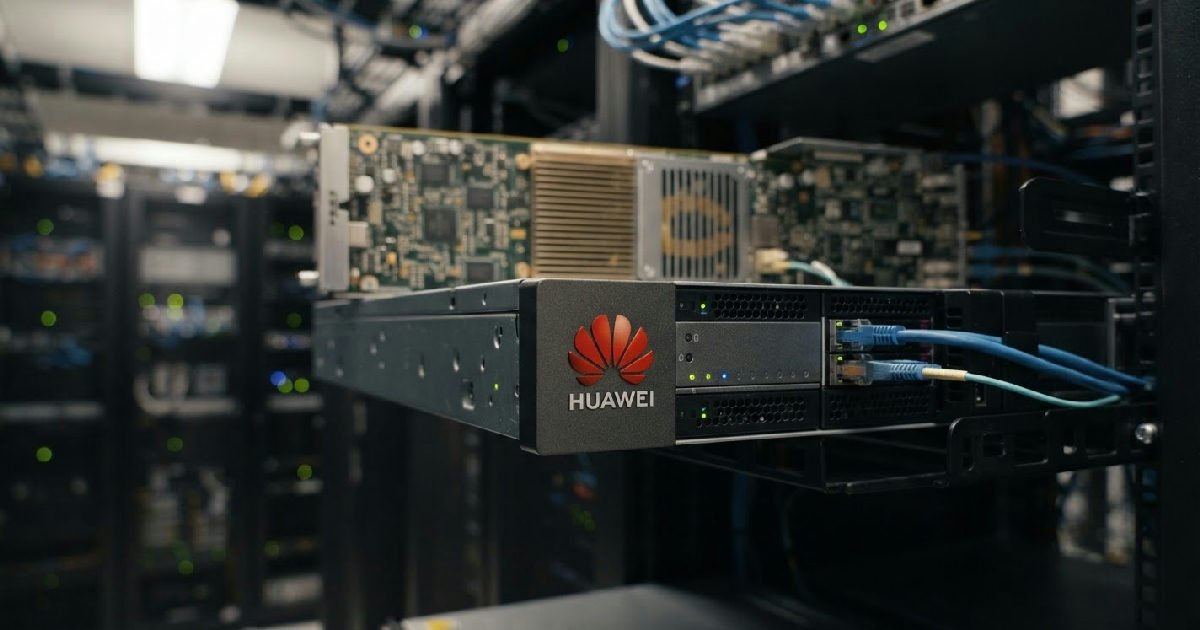
Huawei spearheads Chinas high stakes drive for advanced chip sovereignty
Huawei spearheads Chinas massive and determined push to manufacture its own advanced chips, a high-stakes campaign for technological sovereignty accelerated by punishing US sanctions. The initiative aims to break China’s dependence on foreign technology and build a self-reliant semiconductor industry, a direct counter to American efforts to curb its technological ascent.
This national effort represents one of Beijing’s most critical strategic priorities, signaling a fundamental rewiring of the global technology supply chain. Faced with escalating export controls from Washington, China has marshaled its resources to overcome significant technological hurdles and create a domestic ecosystem capable of producing the sophisticated semiconductors that power everything from smartphones to artificial intelligence.
The catalyst: How US sanctions ignited Huawei spearheads Chinas resolve
The drive for semiconductor independence isn’t new, but it gained unprecedented urgency after the United States imposed stringent export controls. These measures effectively cut off Huawei and other Chinese tech firms from accessing advanced chips designed or manufactured using American technology. The sanctions were designed to slow China’s progress in strategic sectors, including 5G and AI.
Instead of crippling the industry, the restrictions acted as a powerful catalyst. They exposed China’s vulnerability and transformed the long-term goal of self-sufficiency into an immediate national security imperative. Beijing responded by committing resources to the effort, viewing the struggle for chip independence as a cornerstone of its broader geopolitical competition with the US.
This national initiative, part of broader Chinese economic strategies, aims to bolster China’s technological sovereignty and reduce its reliance on foreign technology.
This state-directed push has put Huawei, a company that has been in the crosshairs of US regulators for years, at the very forefront of the counter-offensive. The company’s survival became directly linked to its ability to source or create high-end chips without relying on its former global partners. It became the focal point for a national mobilization of talent and capital.
The result is a whole-of-nation approach aimed at closing the gap with global leaders. This involves not just designing chips but mastering the entire production process, a monumental task that requires overcoming decades of established global supply chain dynamics and technological expertise.
Huawei’s pivotal role in the national strategy
As a national tech champion with deep expertise in telecommunications and electronics, Huawei was uniquely positioned to lead China’s charge. The company has reportedly been instrumental in coordinating a network of domestic suppliers and research institutions to build a production line free from foreign technology. This involves a painstaking process of replacing foreign components, software, and manufacturing equipment with homegrown alternatives.
Huawei’s role extends beyond its own product needs. It has effectively become the anchor for a burgeoning domestic semiconductor supply chain. By providing a large, stable source of demand for nascent Chinese chip equipment and material suppliers, it helps these smaller companies grow, improve their technology, and achieve economies of scale. This creates a feedback loop that strengthens the entire ecosystem.
This strategy is a direct departure from the globalized model that dominated the industry for decades, where design, manufacturing, and assembly were spread across different countries. China, with Huawei at the helm, is attempting to vertically integrate a significant portion of this complex process within its own borders.
The goal is to ensure that its technological future cannot be dictated by geopolitical pressures from other nations.
The push is also creating broader dynamics within the global technology sector. The ongoing semiconductor industry evolution continues as China seeks to advance its capabilities.
The monumental challenge of self-sufficiency
Despite significant national commitment, achieving true semiconductor independence remains a formidable challenge. The industry is built on decades of cumulative knowledge and a deeply interconnected global network of highly specialized companies. Replicating this intricate value chain within national borders presents a task of staggering complexity and cost.
Navigating industry complexities
Efforts to strengthen domestic capabilities require sustained investment and innovation across various technological domains. Building alternatives for components within this intricate supply web is a deliberate and challenging process. The broader tech decoupling is affecting numerous industries, with China asserting greater control over its digital platforms, impacting everything from hardware development to online content censorship.
Global implications of a bifurcated tech world
China’s pursuit of chip sovereignty has profound implications for the global economy and international relations. If successful, it could lead to the emergence of a parallel technology stack, effectively splitting the world into two competing technological spheres: one led by the United States and its allies, and another centered around China.
This bifurcation would create immense challenges for multinational corporations, who would have to navigate different technical standards, supply chains, and regulatory environments. It could stifle innovation by reducing global collaboration and forcing companies to duplicate research and development efforts for different markets. The era of a single, integrated global tech ecosystem could come to an end.
For consumers, a split could mean less choice and higher prices as economies of scale are reduced. The seamless interoperability of devices and services we’ve come to expect could be threatened. A device built for one ecosystem may not work seamlessly, or at all, in the other. This fracture would represent a significant reversal of the globalization trends that have defined the past three decades.
The geopolitical stakes are equally high. Technological leadership is intrinsically linked to economic influence and military power. China’s ability to produce its own advanced semiconductors would significantly enhance its strategic autonomy, reducing the leverage of US sanctions and allowing it to project its technological influence globally. The race for chip dominance is a central theater in the broader US-China rivalry.
The long road ahead
While China has demonstrated progress in its initiatives, the path to full semiconductor self-sufficiency is long and fraught with obstacles. Achieving its goals will require sustained effort across all aspects of chip manufacturing, particularly at the cutting edge.
The effort will require sustained, unprecedented levels of investment in research and development, as well as a massive push to cultivate domestic talent in science and engineering. Success is not guaranteed, and there will likely be setbacks along the way. However, the political will in Beijing is resolute, viewing this as a non-negotiable goal for the nation’s future.
The world is watching closely. The outcome of China’s semiconductor push, driven by national champions like Huawei, will not only determine the future of the company but also shape the technological and geopolitical landscape for decades to come. It marks a pivotal moment in the global tech order, with shockwaves that will be felt across every industry that relies on the power of the microchip.