

Legend of Zelda brain teaser recreates Tears of the Kingdom side quest
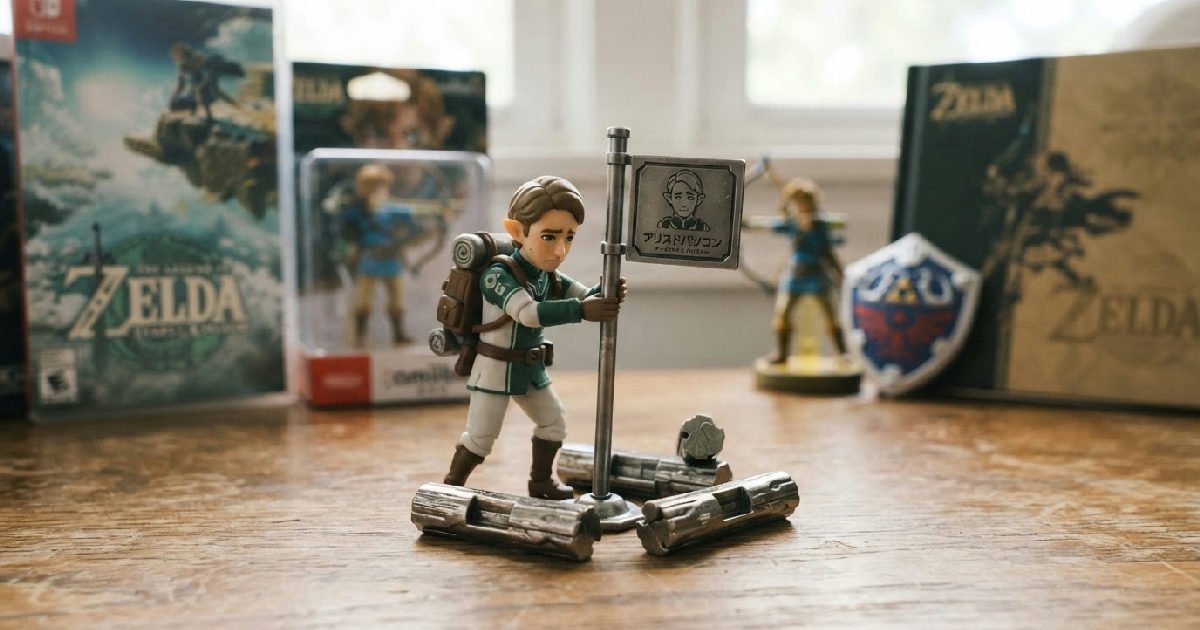
The Legend of Zelda Addison Sign Hanayama Metal Brain Teaser is a new real-world puzzle inspired by Tears of the Kingdom’s side quests.
This challenging metal puzzle, officially described as “worthy of a level 6” by its product page, tasks fans with recreating the iconic President Hudson sign stabilization mission.
A Legend of Zelda brain teaser: Hyrule’s signs
This recently available collectible allows enthusiasts to engage with a beloved aspect of the Nintendo Switch title outside the digital realm. It comes complete with a metal sign, a miniature Addison figure, and precisely four metal logs, all designed to replicate the in-game objective of keeping President Hudson’s larger-than-life head from toppling.
Fans of The Legend of Zelda: Tears of the Kingdom will immediately recognize the premise behind this unique brain teaser. The game, developed by Nintendo EPD and initially released on May 12, 2023, captivated players with its expansive Hyrule and innovative gameplay mechanics, including the Ultrahand ability.
This power let Link manipulate objects to construct imaginative solutions to environmental puzzles and combat scenarios. Addison, a dedicated employee of Hudson Construction, often stood precariously beside massive wooden cutouts of President Hudson, pleading for Link’s help to keep them upright.
The in-game task, one of the game’s 139 side quests, required players to use their creativity and the Ultrahand ability to strategically brace the signs. These moments offered charming, often humorous, diversions from the main story, solidifying Addison’s role as a memorable minor character.
the Ultrahand mechanic’s legacy
The Ultrahand ability became a cornerstone of Tears of the Kingdom‘s gameplay, offering players unprecedented freedom in problem-solving. It allowed for complex contraptions to be built, from simple bridges to elaborate flying machines, fostering a strong sense of player agency.
The President Hudson sign quest, while seemingly minor, perfectly showcased the versatility and fun of this mechanic. Players couldn’t just rely on brute force; they needed ingenuity and a keen understanding of physics to prevent the signs from collapsing, often in amusing ways.
unpacking the physical puzzle components
The Hanayama Metal Brain Teaser translates this digital challenge into a tangible, tactile experience. Unlike the limitless resources available in Hyrule, the physical puzzle provides a limited set of components: a sturdy metal sign, a miniature Addison figure, and precisely four metal logs.
This constraint forces a very specific, non-obvious solution, elevating the challenge significantly beyond merely “sticking massive boards” as one might in the game. It’s a deliberate design choice that targets the puzzle-solving core of the original quest, making it a true test of player ingenuity.
Upon successful completion, the brain teaser transforms into a stable display piece, featuring the standing President Hudson sign alongside Addison. It provides a satisfying physical reward for overcoming its “level 6” difficulty, a rating that suggests a considerable challenge for enthusiasts.
a true test for puzzle enthusiasts
The “level 6” designation isn’t just marketing; it suggests a complex and intricate solution is required. Hanayama, known for its challenging metal puzzles, often rates its brain teasers on a scale that indicates increasing difficulty.
This makes the Legend of Zelda brain teaser an appealing prospect for seasoned puzzle solvers. It demands patience, spatial reasoning, and a methodical approach, much like some of the more complex shrines and puzzles found within the game itself.
the enduring appeal of tears of the kingdom
The Legend of Zelda: Tears of the Kingdom wasn’t just a commercial success; it was a critical darling. IGN, a prominent gaming publication, bestowed a rare “perfect 10 out of 10” rating upon its initial release, cementing its status as a masterpiece.
The game’s expanded world, innovative mechanics, and compelling narrative contributed to widespread critical acclaim. Japanese magazine Famitsu and UK-based Edge also awarded it perfect scores, highlighting its universal appeal and groundbreaking design.
Commercially, the game shattered records, selling over 10 million copies worldwide within its first three days. By December 2025, it had sold 22.40 million units globally, making it the Nintendo Switch’s eighth-bestselling game and a significant cultural phenomenon that continues to resonate with players.
critical reception and commercial triumph
The game’s success wasn’t limited to sales charts. It was lauded for its sheer scale and the freedom it offered players, building upon the foundations laid by its predecessor, Breath of the Wild. The world of Hyrule felt more alive and interactive than ever before.
Even an enhanced version released for the Nintendo Switch 2 in June 2025, while not adding new side quests, underscored the game’s longevity and continued relevance. Its impact even extended to broader economic indicators, contributing to increased consumer spending in Japan’s semi-durable goods sector.
expanding the zelda merchandising universe
The President Hudson sign brain teaser is just one example of the vast array of merchandise inspired by The Legend of Zelda franchise. The Bepuzzled brand itself offers other Zelda-themed puzzles, including intricate designs of the Hyrule Crest and the iconic Master Sword.
Beyond puzzles, fans can find a seemingly endless supply of collectibles, ranging from books and manga like The Legend of Zelda: Hyrule Historia and the Legendary Edition Manga Box Set, to intricate figures and home decor. This robust merchandising strategy speaks to the franchise’s enduring popularity.
From Link amiibo figures to 1,000-piece Hyrule Map jigsaw puzzles and even vinyl soundtracks like Hero of Time: Music From Ocarina of Time, there’s a tangible connection for almost every aspect of the games. This allows fans to extend their appreciation for Hyrule far beyond their screens, just as new game updates keep digital worlds fresh.
why side quests resonate with players
While epic main storylines often grab headlines, it’s often the smaller, more whimsical side quests that leave a lasting impression on players. The Addison sign quest in Tears of the Kingdom is a prime example.
These optional challenges often inject humor, provide character depth, or simply offer a relaxing change of pace. They allow players to explore the game world at their leisure and contribute to a deeper sense of immersion and accomplishment, making the world feel richer.
The repetition of helping Addison, combined with his earnest pleas and the quirky nature of President Hudson’s giant visage, created a memorable and comforting routine for many players. It was a low-stakes task that provided consistent, satisfying micro-rewards, reinforcing the game’s overall charm.
the future of zelda-inspired collectibles
The success of the President Hudson brain teaser suggests a growing appetite for physical adaptations of specific, memorable in-game moments. It moves beyond generic merchandise to focus on niche fan experiences, offering a deeper connection to the games’ most beloved elements.
This trend could pave the way for other companies to explore similar interactive collectibles, translating unique gameplay mechanics or beloved character interactions into real-world items. It caters to a dedicated fanbase looking for more than just static display pieces.
As the Legend of Zelda franchise continues to evolve, with new titles and potentially new mechanics, the opportunities for creative merchandise will only grow. Fans can likely anticipate even more innovative and interactive ways to celebrate their favorite aspects of Hyrule in the years to come.