

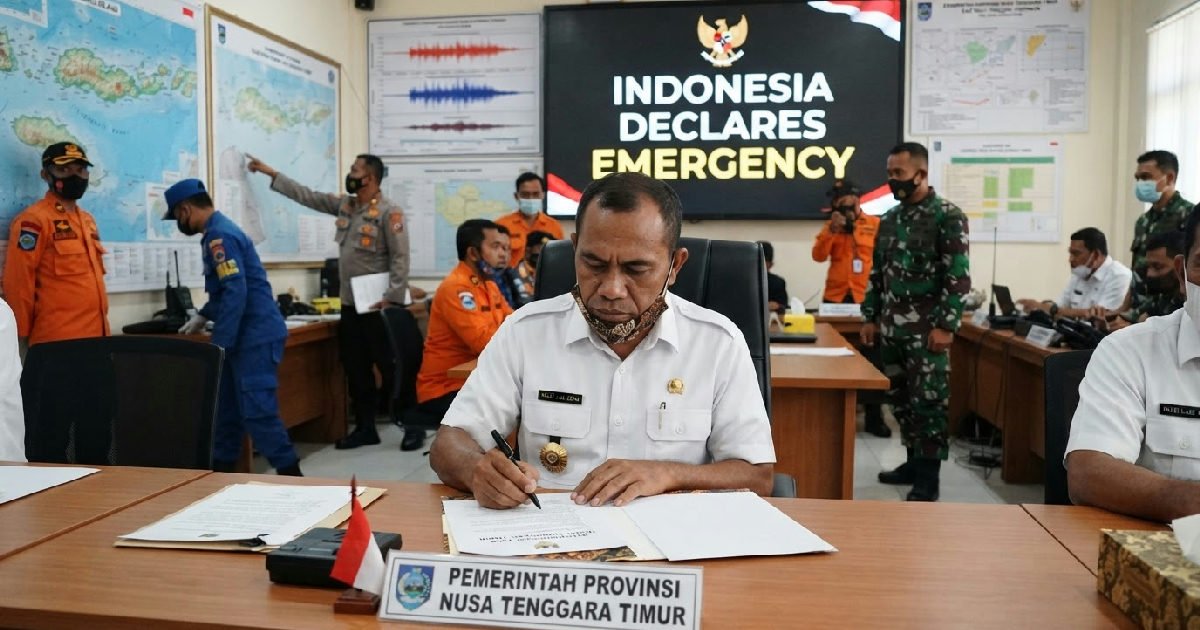
Indonesia declares emergency after 7.7 quake kills dozens
Indonesian authorities have declared a 14-day emergency response period in East Nusa Tenggara province after a powerful 7.7 magnitude earthquake struck off the coast of Flores Island on Saturday, August 15, 2026. The disaster killed at least 51 people, injured 113 others, and triggered widespread destruction across the region.
East Nusa Tenggara Governor Melki Laka Lena signed the emergency decree to accelerate search and rescue operations. This critical status remains in place until August 28, 2026, amid rising concerns over local reconstruction funding. Rebuilding after such disasters often echoes global debates regarding private executive compensation.
Devastation spreads across East Nusa Tenggara
The shallow earthquake struck shortly before 5:00 a.m. local time, with its epicenter located 68 kilometers north-northwest of Ende. The U.S. Geological Survey recorded the tremor at a depth of 10 kilometers. Tremors instantly pancaked homes, schools, and government buildings across multiple districts.
A relentless sequence of 341 aftershocks followed the main event, terrorising survivors. The strongest of these secondary tremors reached a magnitude of 6.2, according to local seismologists. These continuous vibrations have severely compromised the structural integrity of remaining buildings.
Landslides triggered by the intense shaking blocked vital roads throughout the region. The Trans-Flores Highway, a crucial 700-kilometer paved mountain route, remains completely cut off by heavy debris. This blockage has isolated entire villages from incoming rescue convoys and heavy machinery.
The destruction has isolated communities that already had limited access to emergency medical resources. Local rescue teams are attempting to reach these cut-off zones using alternative paths. However, the steep terrain and unstable soil continue to pose severe risks to responders.
Casualties rise as search operations continue
The official death toll has reached 51, while 113 residents suffered various injuries. Search and rescue personnel fear more victims remain trapped beneath heavy concrete rubble. Many of the casualties occurred in the hard-hit Manggarai Regency of Flores Island.
Landslides also claimed lives, with teams recovering 16 bodies from a single buried village. Dozens of seriously injured people are currently receiving emergency treatment in local hospitals. Doctors are working under difficult conditions to manage the influx of traumatized patients.
Meanwhile, almost 6,000 residents have fled their homes to escape the threat of collapsing structures. These displaced families are now seeking shelter in temporary camps across Sikka, Nagekeo, and Selayar districts. Another 2,000 people reportedly managed to evacuate independently.
Local volunteer groups are setting up community kitchens to feed the growing number of evacuees. Sanitation remains a primary concern as clean water supplies run low in several camps. International aid organizations are currently assessing where to direct clean water reserves.
Indonesia emergency response efforts and logistics
The central government has mobilised extensive resources to address the unfolding humanitarian crisis. President Prabowo Subianto ordered immediate on-site assessments and called for tight cooperation between rescue agencies. The National Disaster Management Agency, known as BNPB, is leading the operation.
BNPB chief Lt. Gen. Suharyanto confirmed that teams have dispatched 27 tons of emergency relief. These shipments include tents, clean water, and medical supplies to the worst-hit zones. However, widespread power outages continue to hamper distribution efforts in remote areas.
Local logistics networks also face significant structural damage that slows down distribution. State-owned energy firm Pertamina reported that while 32 gas stations are operational, 20 others remain closed. Officials are prioritizing power restoration to get fuel infrastructure back online.
Flight cancellations have further complicated the rapid transport of emergency personnel and medical supplies. Several regional airports suspended operations immediately after the quake due to safety concerns. Engineers are currently inspecting runways for hidden structural damage before reopening them.
Tsunami warnings and coastal evacuations
Immediately following the main tremor, authorities issued a tsunami warning, causing panic among coastal populations. The warning was lifted after the Meteorology, Climatology and Geophysics Agency determined there was no ongoing threat. However, some minor localized tsunami waves did hit several coastal areas.
The highest wave reached 1.61 meters in Riung, located in the Ngada regency. Other coastal regions, including Maurole in Ende Regency, recorded smaller waves of nearly one meter. These sudden waves caused minor damage to fishing vessels anchored near the shore.
Historical context of seismic activity
Indonesia regularly experiences severe tectonic activity due to its geographical position. The country sits directly on the active Pacific Ring of Fire. This horseshoe-shaped zone is defined by converging tectonic plates and frequent volcanic eruptions.
The complex convergence of the Indo-Australian, Pacific, and Eurasian plates causes high seismic activity. Over 3,000 natural disasters strike the archipelago annually, making preparedness essential. Some of these events have historically caused catastrophic loss of life and property.
The devastating 2004 Indian Ocean tsunami remains the nation’s most tragic modern disaster. That catastrophe prompted major reforms, leading to the creation of the BNPB in 2008. Since then, the agency has coordinated responses to events like the 2018 Lombok earthquakes.
Lessons from the 2018 Sulawesi earthquake also shaped how the nation handles foreign aid. Officials now prioritize local coordination and deploy specialized rapid-response teams immediately. These systems are being tested as the Flores Island recovery efforts expand.
Long road to recovery for local communities
Initial emergency operations will focus on immediate survival and stabilizing the disaster zone. However, the long-term reconstruction of East Nusa Tenggara will require extensive financial investment. Rebuilding schools, clinics, and government offices will take many months.
Regional leaders emphasize that restoring the local agricultural economy is also vital. The prolonged closure of roads and markets threatens the livelihoods of rural farmers. Sustained national support will be crucial to prevent prolonged economic stagnation.
For now, emergency teams continue to clear debris and search the ruins. Residents remain on high alert as weak aftershocks still vibrate through the ground. The immediate priority is ensuring every displaced family has access to safe shelter.
Psychological support services are also being deployed to help children process the trauma. Many young survivors are afraid to enter any standing buildings after the violent tremors. Community leaders are organizing safe outdoor spaces for therapeutic play and learning.