

2026 Fantasy Football Tight End Strategies: Identifying Elite Talent and Draft Values
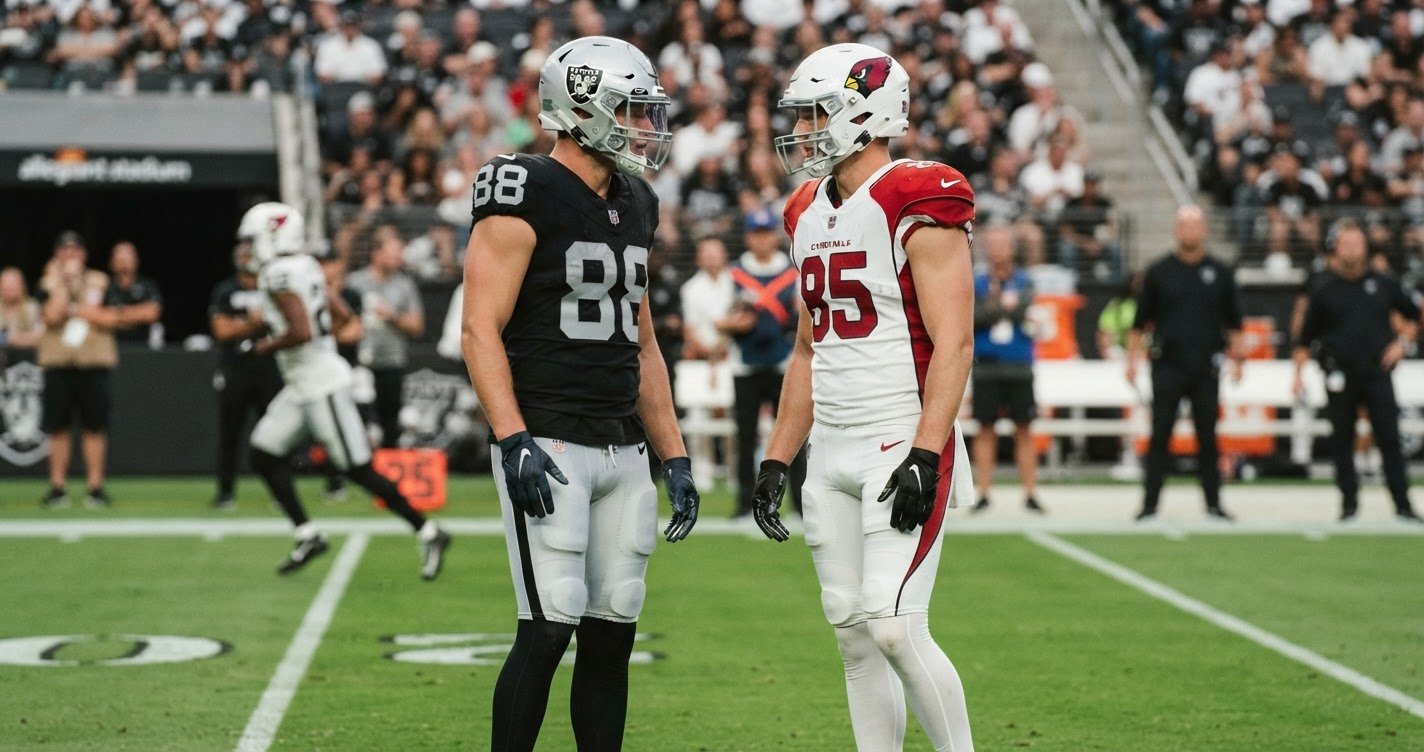
The 2026 fantasy football season ushers in a pivotal era for the tight end position, presenting managers with both high-end talent and strategic dilemmas. Las Vegas Raiders tight end Brock Bowers and Arizona Cardinals counterpart Trey McBride headline a top tier poised to dominate, forcing tough draft day decisions.
Experts are currently labeling these two as the “Godzilla and Kong” of the position, suggesting their impact could be game-changing for fantasy rosters. But beyond these clear-cut superstars, the landscape quickly thins out, challenging fantasy managers to assess risk and find value.
Navigating the 2026 Fantasy Football Tight End Landscape
The inherent scarcity at tight end means securing a top-tier performer can provide a significant weekly advantage. Unlike positions where multiple players can often deliver similar output, finding a truly elite tight end offers a unique edge.
This positional dynamic means fantasy managers are often chasing a top three or four ceiling more fiercely than for any other position. After that top echelon, the production difference between the remaining TE1s becomes notably minimal.
The Elite Tier: Bowers and McBride Lead the Way
Brock Bowers, the dynamic tight end for the Las Vegas Raiders, consistently ranks as a top-tier option. Some analysts even see him as a strong candidate to finish as the overall TE1, especially considering he was the highest-scoring tight end in fantasy just two years ago.
Trey McBride of the Arizona Cardinals dominated the position in 2025, racking up an astounding 315.9 PPR points. He outscored the TE2 by over 105 PPR points that year, averaging a remarkable 6.2 fantasy points per game more.
McBride’s usage was extraordinary; he ran 156 more pass routes, received 39 more targets, and saw 48 more first-read targets than any other tight end in 2025. This historic volume underscores his pivotal role in the Cardinals’ offense.
Strategic Approaches for Drafting Tight Ends
Drafting a tight end in 2026 offers varied pathways to success, allowing fantasy managers to adapt to their league’s flow. Some may opt for an early investment in an elite option, while others might prefer to target mid-round value or even punt the position entirely until later rounds.
Taking an early shot on a player like Brock Bowers or Trey McBride can provide a significant positional advantage. Both are expected to be worthy of early-round draft capital, a strategy that aims to secure consistent high-end production at a volatile spot.
Top-Tier Talent Shapes Tight End Rankings for 2026
The consensus among fantasy football experts solidifies a clear hierarchy at the tight end position for 2026. While exact placements can fluctuate, a consistent core of top players emerges as the season approaches, often organized into distinct tiers.
Tier 1: Elite Superstars
Brock Bowers of the Las Vegas Raiders consistently ranks as a top-tier tight end. Many experts consider him a strong candidate to finish as the overall TE1, especially given his performance as the highest-scoring tight end in fantasy just two years ago.
Trey McBride of the Arizona Cardinals is also a consensus Tier 1 tight end. He dominated the position in 2025, scoring an impressive 315.9 PPR points and outscoring the TE2 by over 105 PPR points. McBride averaged 6.2 fantasy points per game more than the next best.
His usage was exceptional in 2025; McBride ran 156 more pass routes, received 39 more targets, and saw 48 more first-read targets than any other tight end. This extraordinary volume highlights his crucial role within the Cardinals’ offensive scheme.
Tier 2: Rising Stars and Reliable Starters
Colston Loveland, tight end for the Chicago Bears, is frequently mentioned as a high-upside player who could challenge Tier 1 status. He broke out late in his rookie season, finishing as TE4 in the second half of last season.
Tyler Warren of the Indianapolis Colts also showed elite upside as a rookie, solidifying his position as a strong Tier 2 option. Sam LaPorta, a Detroit Lions standout, is considered an established weekly starter and a compelling midrange choice, scoring approximately 240 points in 2024 as the TE1.
Tucker Kraft, Green Bay Packers tight end, presents a strong value pick, particularly if his Average Draft Position (ADP) remains in the sixth or seventh round. He averaged 14.0 points per game and was the overall TE1 on a per-game basis before his Week 9 ACL tear last season.
Kraft demonstrated elite efficiency with a 99th-percentile YPRR (2.33) and 100th-percentile YAC per reception. Harold Fannin Jr., playing for the Cleveland Browns, delivered a solid rookie campaign, finishing as TE5 with 72 catches, 731 yards, and six touchdowns.
Kyle Pitts of the Atlanta Falcons also finished as the overall TE2 last year and is being drafted around the eighth round on average, presenting potential value. Dalton Kincaid, tight end for the Buffalo Bills, has TE1 upside if he can maintain his health.
Kincaid leads all qualifying tight ends in target rate at 24.9% and ranks second in yards after the catch per reception with 6.6. He also boasts 2.12 yards per route run, showcasing his on-field efficiency when active.
However, Kincaid missed five games and played only 37.6% of offensive snaps on average across 12 appearances in 2025 due to a PCL tear, following a collarbone injury in 2024. His injury history remains a concern for fantasy managers looking for consistent production.
Tier 3 and Beyond: Late-Round Options and Deep Bench
This tier includes players who can provide solid production or act as valuable streamers, though they may carry more risk. Travis Kelce of the Kansas City Chiefs was quietly third in PPR points last year but is not considered the fantasy force he once was.
George Kittle, tight end for the San Francisco 49ers, averaged 12.8 points per game (TE2 per game) in 10 games before tearing his Achilles in January. His recovery from this significant injury is the main concern for his 2026 outlook.
Mark Andrews of the Baltimore Ravens has been hampered by nagging injuries, leading to him ranking 35th out of 50 qualifying tight ends in yards per route run in 2025. Dallas Goedert of the Philadelphia Eagles finished TE3 last season with 11 touchdowns.
Goedert has finished as a top-13 tight end per game in PPR for seven straight seasons, highlighting his consistent floor. Isaiah Likely of the New York Giants is a popular breakout pick, especially given his potential to become a significant number two target getter in New York.
Hunter Henry of the New England Patriots finished as TE9 in 2025, catching 60 of 87 targets for 768 yards and seven touchdowns. Juwan Johnson, tight end for the New Orleans Saints, finished as TE10 in half-point PPR scoring last season.
Identifying Tight End Draft Fades and Risks
While the allure of high-ceiling players is strong, successful fantasy managers also recognize when to avoid overvalued assets. Several tight ends are being flagged by experts as potential “fades” due to various red flags, ranging from high ADP to injury concerns.
Despite his stellar 2025 production, Trey McBride is a notable fade candidate for some experts, particularly at his current high ADP. The argument is that only a historic season of over 315.9 PPR points can justify a first or second-round price tag for a tight end.
McBride’s high usage in 2025, which saw him run 156 more pass routes and receive significantly more targets than any other tight end, is viewed with skepticism for its sustainability. With quarterback play in Arizona still uncertain, and considering the extreme volume required to justify his current price tag, some experts are wary.
Travis Kelce of the Kansas City Chiefs was quietly third in PPR points last year but is not considered the fantasy force he once was. Hunter Henry of the New England Patriots finished as TE9 in 2025, catching 60 of 87 targets for 768 yards and seven touchdowns.
Even players like Tucker Kraft and Sam LaPorta, who appear on top rankings lists, are identified as fades by some experts. Jake Ferguson of the Dallas Cowboys is also listed as a fade.
This highlights the differing opinions and the importance of weighing all available information when making draft decisions, much like assessing high-stakes situations in other competitive realms. For instance, LGD’s TaiLung match-fixing denial shows how quickly a player’s perceived value can shift under scrutiny.
Unearthing Valuable Sleepers for Your Roster
Smart fantasy managers know that finding hidden gems later in the draft can be just as crucial as securing early-round studs. This season, Dallas Goedert of the Philadelphia Eagles is emerging as a prime sleeper candidate, offering significant upside relative to his potential draft cost.
Dallas Goedert finished TE3 last season with 11 touchdowns. He has consistently finished as a top-13 tight end per game in PPR for seven straight seasons, making him a compelling sleeper option. While his touchdowns per target might regress, Goedert’s consistent production history suggests he remains a valuable pick.
The Impact of Tight End Premium Leagues
For those in leagues that utilize TE Premium scoring, the value proposition for tight ends shifts dramatically. In this format, tight end receptions are worth double, fundamentally altering draft strategy and player valuations.
This boosted scoring makes drafting tight ends in the first and second rounds far more common and justifiable. The additional points significantly elevate the weekly output of top tight ends, making them equivalent to elite wide receivers.
In TE Premium leagues last season, top tight ends like Trey McBride, Brock Bowers, and George Kittle saw a significant boost in their points per game. These enhanced outputs push them into the same conversation as top-tier wide receivers in terms of overall fantasy value.
The enhanced value in TE Premium leagues also highlights the positional scarcity more acutely, as the scoring difference between the top tight ends and those further down the rankings becomes even more pronounced. This gap can often be wider than the point difference seen among top wide receivers.
In TE Premium formats, with tight end receptions worth double, drafting players in Round 1 and 2 becomes common. This shift recognizes the elevated importance of top-tier tight ends in this scoring system.
Much like understanding broad market shifts can inform investment decisions, such as anticipating Bitcoin volatility, recognizing how scoring changes impact player values is crucial for fantasy success.