

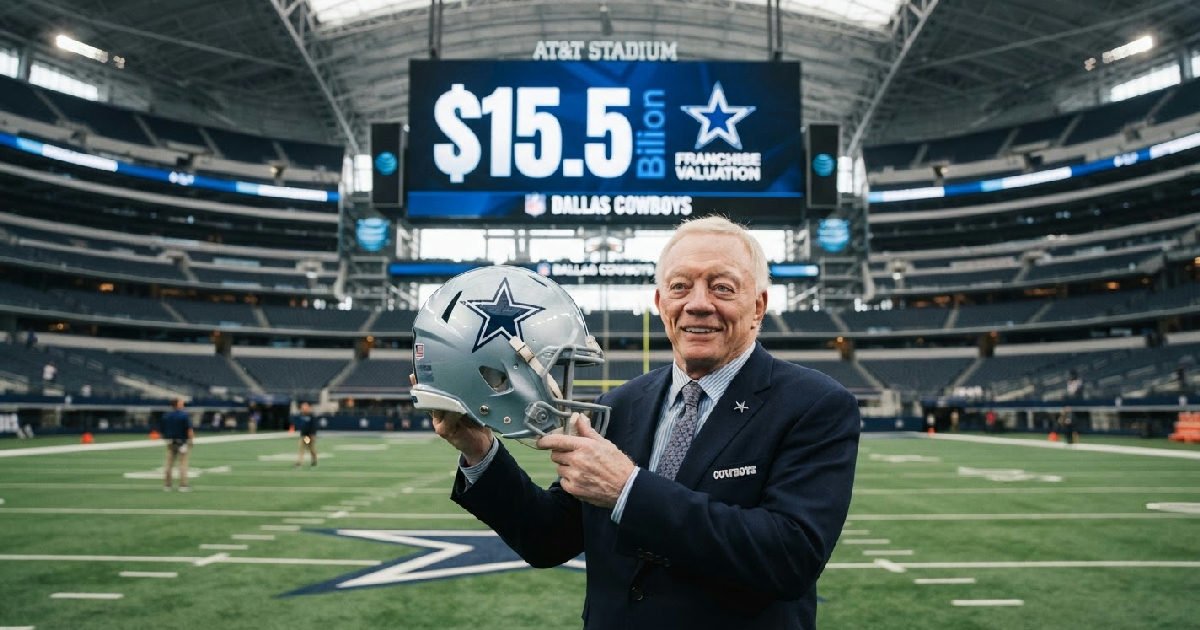
Dallas Cowboys Valued at $15.5 Billion, Cementing Financial Dominance
The Dallas Cowboys, led by long-time owner Jerry Jones, have once again solidified their position as the most valuable franchise in sports, with Sportico pegging their worth at an astounding $15.5 billion. This latest valuation, released on Wednesday, August 12, 2026, positions the iconic NFL team significantly ahead of all competitors, both within American football and globally.
This staggering figure represents not just a testament to the Cowboys’ enduring brand power, but also highlights the robust financial health of the National Football League itself. It’s a valuation that underscores the potent combination of market reach, shrewd business operations, and a loyal fanbase that has defined Jones’ tenure for decades.
Unprecedented Financial Dominance for Dallas Cowboys
Sportico’s recent assessment places the Dallas Cowboys well beyond their closest rivals. The Los Angeles Rams claim the second spot, valued at $12.7 billion, followed by the New York Giants at $12 billion. Rounding out the top five are the New England Patriots at $10.4 billion and the New York Jets with a $10.35 billion valuation.
The Cowboys’ $15.5 billion figure marks a substantial 21% increase from their $12.8 billion valuation by Sportico in the previous year, 2025. This consistent growth indicates a robust financial trajectory, further distancing them from the pack despite fierce competition in major markets and reinforcing their leading position in overall sports franchise value.
NFL’s impressive surge in team values
This growth isn’t just confined to the top of the league; it reflects a broader trend across the entire NFL. The average NFL team is now worth an impressive $9.34 billion, a remarkable 31% jump from the previous year’s average of $7.13 billion. This represents the largest annual surge since Sportico began tracking NFL valuations in 2020.
The league’s 32 teams collectively command an approximate value of $299 billion. This figure includes associated real estate and businesses, pointing to the immense economic footprint of professional football. The overall health of the NFL, fueled by massive media rights deals and growing fan engagement, clearly contributes to the individual success of its marquee franchises.
The Jones Business Empire and the Cowboys’ Value
Jerry Jones initially acquired the Dallas Cowboys in 1989 for a mere $150 million, a purchase that now stands as one of the most astute investments in sports history. Sportico’s valuation methodology extends beyond just the team itself, encompassing the franchise’s enterprise value, team-related businesses, and any real estate holdings tied to ownership.
This includes significant properties and ventures connected to the Cowboys. These range from cutting-edge practice facilities and venue interests to extensive nearby developments. It also factors in separate business entities like Blue Star Land’s real estate joint ventures and Jones’ stake in Legends, a prominent sports hospitality and experiences company.
Revenue and operating income lead the league
The financial muscle of the Cowboys is strikingly evident in their revenue figures. The franchise generated $1.3 billion in revenue over the past year, a figure that trails only Real Madrid among sports teams worldwide. Their estimated Earnings Before Interest, Taxes, Depreciation, and Amortization (EBITDA) sits at an impressive $510 million.
This EBITDA is more than double that of the second-place Los Angeles Rams, underscoring the Cowboys’ unparalleled profitability. Furthermore, their local revenue streams are nearly 70% higher than the Rams, demonstrating their superior ability to monetize their brand directly with fans.
Performance Versus Profit: A Curious Contradiction
Despite the Dallas Cowboys’ overwhelming financial success, their on-field performance has presented a stark contrast. The team hasn’t reached a Super Bowl in three decades, and they’ve managed only four playoff victories this century. This disconnect between immense valuation and championship drought is somewhat unique in professional sports.
It highlights the powerful influence of brand recognition, a vast national fanbase, and strong business acumen. For many franchises, consistent winning is paramount to sustained financial growth, but the Cowboys seem to defy this convention, maintaining their elite value regardless of recent playoff results.
Broader Trends in Sports Franchise Valuations
The Cowboys’ towering valuation isn’t an isolated event; it reflects a broader trend of escalating corporate valuations across professional sports. This surge is largely driven by global appeal, lucrative media rights, and expanding ancillary business opportunities. Another major valuation source, Forbes, also consistently ranks the Cowboys at the top.
Forbes valued the Dallas Cowboys at $13 billion in its 2025 list of NFL team valuations, published on August 28, 2025. That analysis cemented them as the most valuable NFL team for the 19th consecutive year and the most valuable sports franchise in the world since 2016.
Forbes’ consistent high rankings
Forbes’ 2025 report estimated the Cowboys’ revenue for the 2024 season at $1.2 billion, with an operating income of $629 million. That same list placed the Los Angeles Rams at $10.5 billion and the New York Giants at $10.1 billion, both also surpassing the $10 billion mark.
For the first time ever, all 32 NFL teams were worth at least $5 billion in Forbes’ 2025 ranking. This widespread financial boom benefits all franchises, but particularly those with established brands like the Cowboys. The overall investment inflows into sports underscore this sector’s burgeoning financial appeal.
The Investment Appeal of American Sports Teams
The robust Dallas Cowboys valuation underscores the growing investment appeal of American sports teams. These franchises increasingly operate as multifaceted entertainment companies with diverse revenue streams. Owning a team offers not only significant returns but also considerable prestige and influence for investors.
This is evident in other recent high-profile transactions, such as the sale of the Los Angeles Lakers. Mark Walter sold the NBA franchise for an NBA-record $12 billion this year to Josh Kushner and Bob Iger, having only purchased it for $10 billion just last year. This demonstrates the rapid appreciation of premium sports assets, showcasing how traditional financial analysis is increasingly applied to sports.
Beyond the balance sheet: brand power and fan loyalty
While financial metrics are crucial, the Dallas Cowboys’ valuation also speaks volumes about their unparalleled brand power. Their designation as “America’s Team” isn’t just a marketing slogan; it translates into massive merchandise sales, television ratings, and fan engagement across the country. This loyalty provides a stable foundation for revenue generation.
Unlike a traditional corporation, sports franchises with deep cultural roots often maintain their value, even during periods of varying on-field success. It’s a unique asset class that combines entertainment, emotion, and hard business principles. Looking at the wider economy, significant capital is being deployed across various sectors, from infrastructure fund investments to emerging technologies.
What’s Next for the Dallas Cowboys Empire?
With their valuation continuing to climb, the Dallas Cowboys and Jerry Jones face ongoing scrutiny over their quest for another Super Bowl title. The financial resources are clearly there to invest in top talent and facilities. But money alone doesn’t guarantee championships; strategic decisions and on-field execution remain critical.
The challenge for the franchise remains translating this immense financial power into sustained on-field success. Their valuation ensures they’ll remain a dominant force off the field, but fans eagerly await the day their financial prowess is matched by a return to championship glory. Continued growth in this sector shows no signs of slowing, promising even higher valuations in the future.