

Greg Rusedski issues grave warning over Jack Draper’s injury crisis and US Open fate
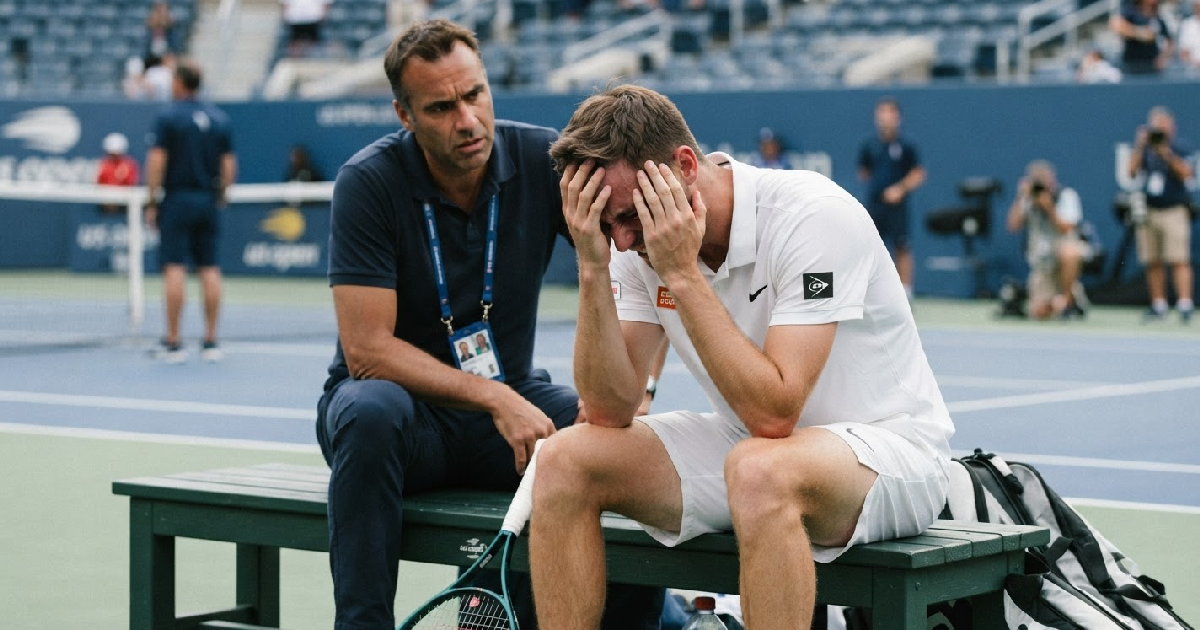
British tennis star Jack Alexander Draper’s ongoing battle with injuries has drawn a grave prognosis from former British No. 1 Greg Rusedski, who declared there’s “0% chance” the 24-year-old will compete at the upcoming US Open. Draper’s latest setback, an emotional first-round exit at the Canadian Open in Montreal, has amplified long-standing worries about his career trajectory.
Since Wimbledon last year, Draper has been struggling with a persistent string of physical ailments, including issues with his arm, knee, and shoulder, severely limiting him to just 15 matches. His visible distress during his defeat to Terence Atmane underscored the toll these recurring problems are taking.
Rusedski sees no US Open for Draper
On his podcast, “Off Court with Greg Rusedski,” the former world No. 4 offered a blunt assessment of Jack Draper’s prospects for Flushing Meadows. Rusedski meticulously observed Draper’s performance during his Canadian Open match, particularly scrutinising his serve speed, a crucial indicator of arm health.
He noted a concerning and telling progression in the velocity of Draper’s serve against Atmane. While the first set saw his maximum serve speed at 200 km/h (124 mph), it actually *increased* to 210 km/h (130 mph) in the second set, before plummeting to a mere 177 km/h (108 mph) by the final set.
This erratic decline within a single match paints a stark picture of his physical state.
Serving struggles highlight broader physical issues
Rusedski emphasised that in the demanding world of men’s tennis, a powerful and consistent serve is absolutely non-negotiable for top players. He pointed out that while Draper boasts impressive groundstrokes, returns, movement, and touch, these core strengths are severely compromised if he can’t serve effectively.
“You put one hand behind the back if you’re not able to serve properly,” Rusedski explained, underscoring the fundamental problem plaguing Draper. This detailed analysis suggests that a quick recovery before the US Open is highly improbable.
Draper’s persistent injury cycle continues
Jack Draper’s current woes are unfortunately part of a prolonged and debilitating pattern that has consistently plagued his career since mid-2025. He’s been battling bone bruising in his left serving arm for well over a year, an injury that is notoriously difficult to both diagnose and heal.
This particular issue forced him to withdraw from the 2025 US Open before the second round, effectively ending his season prematurely and keeping him out of the Australian swing at the beginning of 2026.
On top of that, a knee injury forced his retirement from the Barcelona Open in April 2026 against Tomas Martin Etcheverry, leading him to miss several clay-court tournaments, including the French Open.
Career milestones overshadowed by physical setbacks
Draper, who achieved a career-high ATP singles ranking of World No. 4 in June 2025 after winning his first Masters 1000 title at Indian Wells and reaching the US Open semi-finals in 2024, has seen his ranking plummet. His current ATP ranking is World No. 147 as of August 2026, a significant fall for a player once considered a future Grand Slam champion.
His withdrawal from Wimbledon in June 2026 due to a recurrence of his arm injury, and then the Washington Open (Mubadala DC Open) in July, underscore the chronic nature of his physical problems. These repeated absences prevent him from building momentum and threaten his ability to compete consistently at the elite level of the sport.
A global search for a long-term solution
Rusedski believes Draper and his team need to cast a wider net in their search for a permanent solution to these lingering issues. He suggested exploring global specialists, referencing figures like Dr. Muller-Wohlfahrt, who famously aided athletes like Usain Bolt and was a go-to expert during Rusedski’s own playing days.
The former world No. 4 argued that if Draper’s current medical team isn’t finding definitive answers, then a more adventurous approach is necessary. Draper has reportedly tried changing rackets and strings, but the core issue remains unresolved, leading Rusedski to feel “really, really bad” for the immensely talented young player.
This situation highlights the immense pressure on athletes to perform, often pushing their bodies to breaking point. Draper himself admitted he pushed his body too hard trying to keep pace with the likes of Carlos Alcaraz and Jannik Sinner, a common pitfall for ambitious young players.
An injury prevention expert, Stephen Smith, has warned that Draper’s recurring knee tendon issues and accumulated overload could potentially shorten his career.
Small signs of resilience amidst mounting challenges
Despite the overwhelming negativity surrounding his injury status, Jack Draper has shown some encouraging resilience. The day after his emotional Canadian Open defeat, he was notably spotted practicing on the courts in Montreal.
He’s also received a wildcard to play in the Cincinnati Open next week, another ATP Masters 1000 tournament, indicating a strong desire to remain active and find his form. This push for recovery and competitive play, however, will face significant hurdles if his arm doesn’t fully recover and stabilise.
Looking ahead to the US Open, even if he doesn’t make the singles main draw directly, Draper is scheduled to play mixed doubles with Jessica Pegula. This commitment suggests he’s still aiming to be involved in the major, but his singles prospects remain highly uncertain.
An uncertain future for British tennis’s bright hope
Jack Draper’s talent is undeniable; Rusedski himself has called him “too great a player to miss” and believes a fit Draper is “capable of winning a Slam.” His journey from a promising junior to a former world No. 4 and Indian Wells champion highlights his immense potential in a brutally competitive sport.
However, the chronic nature of his injuries poses a serious threat to realizing that potential. The critical challenge now isn’t just treating individual ailments, but finding a comprehensive, long-term protocol that allows his body to withstand the relentless rigours of top-level tennis.
Without such a solution, British tennis could see one of its brightest prospects struggling to sustain a consistent career. For more insights on players navigating tough tournament conditions, read about Aryna Sabalenka embracing challenging Canadian Open conditions.