

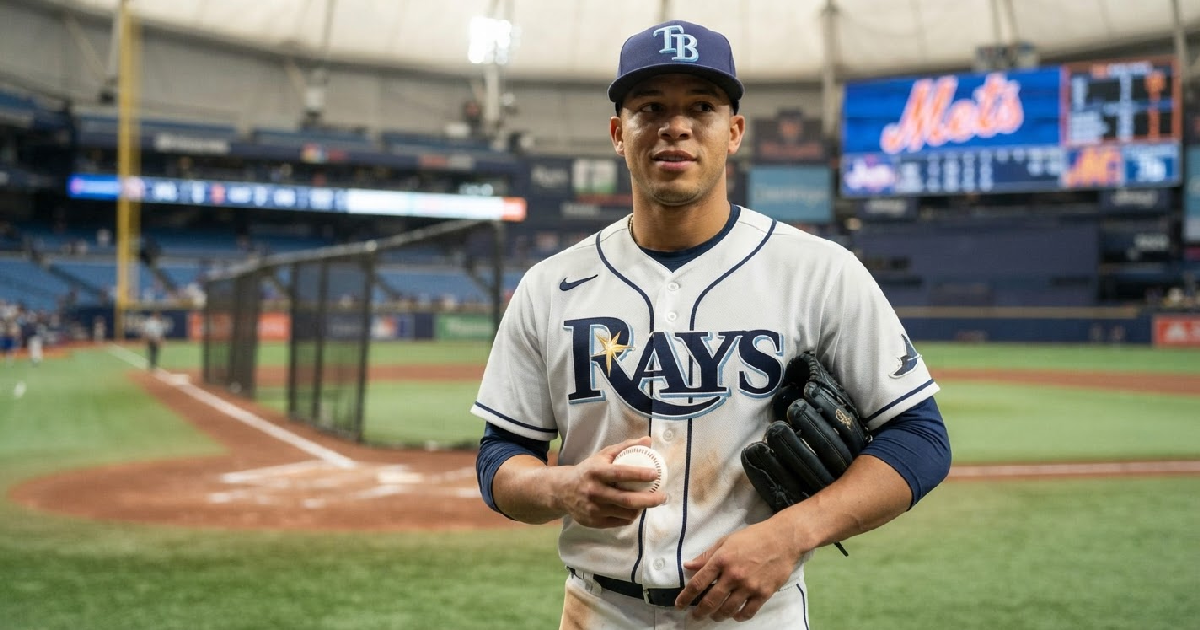
Rays acquire Freddy Peralta from Mets in deadline move for AL East contention
The Tampa Bay Rays have officially acquired right-handed starting pitcher Freddy Peralta from the New York Mets. This significant move, reported on August 2, 2026, arrives just hours before the August 3rd MLB trade deadline. The Rays aim to solidify their position at the top of the American League East standings.
This transaction underscores the Mets’ ongoing strategy to offload key assets. New York is continuing its sell-off as the deadline looms. Peralta’s departure signals the club’s firm commitment to rebuilding.
Tampa Bay bolsters pitching for pennant race
The Rays’ acquisition of Freddy Peralta clearly signals their intent to strengthen the pitching staff. Tampa Bay is working hard to maintain its lead in the American League East. This trade provides another arm for their rotation.
As of Sunday’s games, the Rays hold a 3½-game lead over the New York Yankees in the AL East. Adding a proven, albeit struggling, pitcher like Peralta shows a decisive effort to protect that margin. It’s a strategic move to help them secure a postseason berth.
Peralta joins the Rays’ competitive environment
Peralta, 30, was a starting pitcher for the Mets and has been described in reports as a “disappointing” performer for them this season. He now joins a contending Tampa Bay team known for its ability to maximize pitcher performance. The Rays often revitalize careers with their analytical approach.
His move to Tampa Bay places him in a highly competitive situation, with the team’s immediate goal being to sustain its current success. Peralta’s contribution will be critical, particularly as the Rays enter the demanding final stretch of the season. They need him to return to his previous form.
The righty finished fifth in the National League Cy Young voting just last year, in 2025. This pedigree suggests he has the capability to be a frontline starter when he’s at his best. The Rays are betting on that potential.
He’ll join a rotation that already includes Shane McClanahan, Drew Rasmussen, Nick Martinez, and Griffin Jax. Peralta offers durability, consistently taking the ball every fifth day without incident. This consistency is invaluable for a team pushing for the playoffs.
Analyzing Peralta’s 2026 struggles with the Mets
Peralta’s 2026 season with the Mets has been a significant step down from his established performance. His current ERA stands at 4.99 and his WHIP is 1.48, over 113.2 innings pitched. These numbers represent his worst season since 2019.
During that 2019 season, he was not yet an established big-league pitcher. His current statistics, including 48 walks and 113 strikeouts, indicate a genuine dip in form. Reports suggest this isn’t a case of bad luck; the underlying metrics justify the poor performance.
For the Rays, this acquisition is a calculated risk. They’re banking on their coaching staff and environment to help Peralta rediscover the form that made him a Cy Young contender. It’s a move typical of Tampa Bay’s resourcefulness.
Mets continue asset sell-off ahead of deadline
The New York Mets are actively selling off players as the August 3rd MLB trade deadline approaches. This transaction, sending Freddy Peralta to the Rays, is entirely consistent with their clear strategy. The team aims to retool its roster for future seasons.
Peralta’s trade is expected to be just the first in a series of moves for New York. Rental starter Clay Holmes and rental lefty Brooks Raley are almost certain to be traded next. Both are attractive pieces for contending teams.
Beyond those two, non-rental pitchers Huascar Brazoban and Luke Weaver could also find new homes. While a Francisco Lindor trade is considered highly unlikely at this point, it’s not entirely impossible. The Mets are truly committed to reshaping their roster.
Details of the return package for New York
For their part in the deal, the New York Mets will receive a package of three minor-league players. Minor-league outfielder Aidan Smith, infielder Emilien Pitre, and right-handed pitcher Gary Gill Hill are headed to New York. This infusion of young talent will bolster their farm system.
This type of move is common for teams embracing a rebuild, where future potential is prioritized over current major league roster spots. Many teams make other deadline deals focused on acquiring prospects. These types of transactions are often the foundation for future success.
While these prospects aren’t household names, they represent valuable assets for the Mets. Their development will be crucial to the organization’s long-term strategy. It reflects the shift from an immediate contender to a team focused on growth.
Strategic divergence in MLB trade market
This Freddy Peralta trade highlights distinct organizational priorities for both clubs as the deadline approaches. The Tampa Bay Rays are clearly focused on securing a deep playoff run this year. Conversely, the Mets are prioritizing long-term rebuilding efforts and future competitiveness.
It’s a classic deadline scenario: a buyer looking to push for a championship, and a seller offloading veterans for youth. This strategic divergence is a hallmark of the MLB trade season. It offers a glimpse into the different phases of team construction.
Rays’ push for AL East dominance
Adding a starting pitcher like Peralta demonstrates the Rays’ commitment to winning their division. It reinforces their competitive mindset in a tough AL East race, where every game counts. This strategic investment shows they are serious about their playoff aspirations.
The Rays have a reputation for identifying undervalued talent and helping them thrive. Their ability to do this consistently makes them a formidable opponent in the AL East. They’ll be counting on Peralta to contribute immediately.
The move also reflects a broader trend among contenders to upgrade their rosters significantly before the August 3rd deadline. The market for starting pitching remains a key area of focus for many teams, influencing the pitching trade market as a whole. Other teams will now react to this move.
Implications for team building strategies
The Rays’ move for Peralta is designed for immediate competitive impact, a strategy they often employ. He represents a reinforcement for their current title aspirations in a tight division race. Tampa Bay frequently makes such strategic, short-term additions to maximize their contending windows.
This acquisition is about adding depth and experience to their pitching rotation during a critical period. They need reliable arms to navigate the remaining schedule and the postseason. Peralta provides that veteran presence.
For the Mets, this deal further cements their rebuilding phase, signaling a clear shift in organizational philosophy. They are shedding current roster pieces for future considerations, focusing on their minor league pipeline. Their focus remains on developing talent for sustained success, even if it means short-term struggles.
Teams often have urgent team needs that drive such transactions, whether it’s for immediate help or future prospects. The Mets are clearly looking ahead, stockpiling youth. This approach requires patience but can yield significant rewards down the line.
The differing approaches of these two franchises are clear at this year’s trade deadline, illustrating the varied paths to building a competitive team in Major League Baseball. One is buying for the present, while the other is selling for tomorrow. Both are making decisions that align with their stated objectives, hoping for a payoff.
Outlook for the Rays’ AL East campaign
With Freddy Peralta now in their rotation, the Tampa Bay Rays are signaling serious intent to clinch the AL East title. His veteran presence and proven ability could be a significant boost if he regains his form. The goal is to provide stability in the starting five.
The Rays are banking on their player development system to help Peralta adjust and improve. Their track record with pitchers suggests this is a reasonable gamble. A revitalized Peralta makes their rotation much deeper for a playoff push.
This trade underscores the intense competition within the American League East, where every advantage is critical. The Yankees are close behind, making every game and every pitching performance pivotal. The Rays are clearly not taking their lead for granted.
Mets look to the future after deadline moves
The departure of Freddy Peralta is a clear indicator of the New York Mets’ commitment to a long-term rebuild. By acquiring minor-league talent, they are investing in the organization’s future. This strategy positions them for sustained competitiveness in coming years.
The upcoming trades of other veterans like Clay Holmes and Brooks Raley will further solidify this direction. New York will continue to accumulate prospects. This process requires patience from the fan base but is designed for a stronger foundation.
The Mets’ actions at this trade deadline are a stark contrast to their previous spending sprees. They are now prioritizing younger, controllable talent over expensive, short-term solutions. It marks a significant philosophical shift for the franchise.