

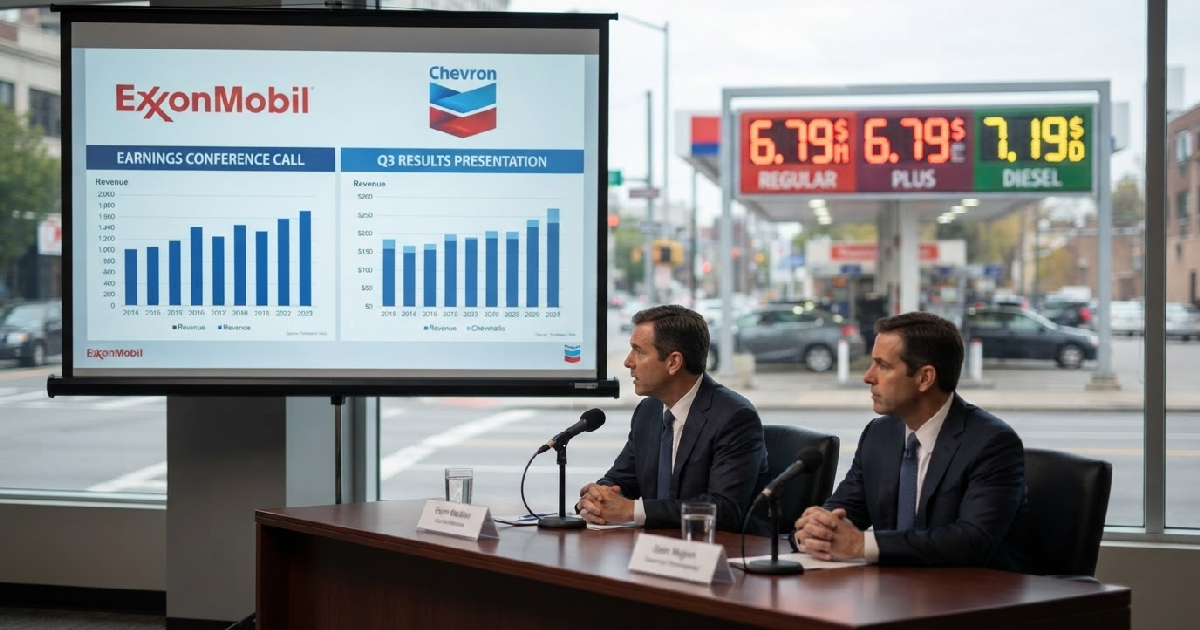
ExxonMobil, Chevron warn high fuel prices to persist as war hits refining
Oil giants ExxonMobil and Chevron have issued a stark warning: high global fuel prices are set to endure, even if crude oil costs decline. These companies indicated that ongoing international conflicts continue to severely hamper global refining capacity. The warnings came during their second-quarter 2026 earnings calls, held between July 29 and July 31, 2026.
This critical assessment from two of the world’s largest energy producers highlights a fundamental shift in market dynamics. It suggests the issue isn’t solely about the supply of raw crude. Instead, it underscores challenges in processing that crude into usable gasoline, diesel, and jet fuel.
Energy giants warn of enduring fuel costs
ExxonMobil and Chevron’s recent warnings outline a challenging future for motorists and industries worldwide. Their Q2 earnings calls provided a platform for leadership to articulate the forces at play. These companies, deeply embedded in every facet of the energy supply chain, offer a detailed perspective on current bottlenecks.
The core problem lies not in crude oil availability, but in the limited capacity to refine it into finished products. Geopolitical conflicts have affected refining infrastructure, both through physical damage and by disrupting logistics and investment. This imbalance keeps refined product prices elevated, even if raw crude costs decrease.
Global refining capacity faces pressure
Worldwide refining capacity has struggled to keep pace with demand, a situation worsened by recent global events. Many refineries operate at or near maximum output, leaving little margin for error or unexpected disruptions. When conflicts arise, they often impact energy infrastructure, taking vital processing facilities offline.
This means that even with increased crude oil supplies, the infrastructure needed to convert that crude into usable fuels simply isn’t there in sufficient quantity. Building new refineries or expanding existing ones is a multi-year, multi-billion-dollar endeavor. This offers no immediate solution to the current product shortfall.
Geopolitical events disrupt oil markets
Ongoing wars, specifically referenced by ExxonMobil and Chevron, profoundly destabilise the global energy market. These conflicts interrupt shipping lanes, endanger personnel, and create significant uncertainty for long-term investments. Such an environment makes it difficult to undertake the massive capital projects required to expand refining capabilities.
Disruptions in key oil-producing or transit regions inevitably ripple worldwide. Sanctions, trade embargoes, and heightened security risks all contribute to higher operating costs and reduced output. These factors directly influence the price consumers pay at the pump, far removed from the initial conflict zones.
Iran’s role in market dynamics
The ongoing geopolitical conflict involving Iran has been a significant factor contributing to sustained high fuel prices. Iran plays a major role in the Middle East, a region central to global oil production and transit. Disruptions there inevitably affect both crude supply and the intricate network of refining operations.
These tensions contribute to a volatile environment for major energy companies. This further constrains the investment and operational stability required to maintain and expand refining infrastructure. Global economic anxieties are also underscored by events like US Treasury interventions in the yen market.
Economic impact on consumers and businesses
The implications of persistently high fuel prices extend far beyond individual motorists. Every sector of the global economy relies on affordable energy, from manufacturing and agriculture to transportation and retail. Increased operational costs often transfer to consumers through higher prices for goods and services.
This inflationary pressure can hinder economic growth and diminish purchasing power. Central banks around the world are already grappling with inflation, and enduring high energy costs make their task considerably harder. It represents a direct hit to household budgets and a drag on overall economic recovery efforts post-pandemic.
Supply chain pressures escalate
Supply chains, still recovering from the shocks of the last few years, now face renewed strain from elevated fuel costs. Shipping goods by land, sea, or air becomes more expensive, leading to delays and further price increases. Companies must either absorb these costs or pass them on, complicating inventory management and logistical planning.
This situation can lead to shortages of various products, intensifying the inflationary cycle. The interconnectedness of global trade means that a refining bottleneck in one part of the world can have a domino effect on industries thousands of miles away. Mitigating this economic fallout requires a sophisticated response from governments and private entities.
Oil majors navigate complex industry challenges
Executives at companies like ExxonMobil and Chevron operate within intricate market forces. Darren Woods serves as CEO of ExxonMobil, while Michael Wirth is Chevron’s CEO. These companies are active participants, balancing shareholder expectations with the need for long-term strategic investments.
They operate in an increasingly volatile geopolitical landscape. This delicate balance demands constant adaptation to shifting global conditions. These companies must ensure a reliable supply despite significant obstacles.
Strategic responses to market volatility
Oil majors are exploring various strategies in response to these pressures. This includes optimising existing refinery operations to maximise output and efficiency. They are also investing in technologies that can enhance processing capabilities.
Some companies are diversifying their energy portfolios, moving into renewable energy sources. However, these are long-term propositions, not quick fixes for immediate challenges. Short-term solutions might involve re-routing crude supplies to less constrained refineries or increasing refined product imports, though these options often come with higher costs and logistical complexities.
The future of global fuel markets
The outlook for global fuel prices remains challenging, as indicated by the warnings from ExxonMobil and Chevron. Without a significant de-escalation of the ongoing conflicts or a rapid expansion of refining capacity—both unlikely in the immediate future—consumers should prepare for continued elevated costs at the pump. The structural issues affecting refining are too deeply entrenched for quick resolution.
Analysts are closely watching geopolitical developments, particularly in key oil-producing regions. Any further escalation could worsen the situation, while diplomatic breakthroughs might offer some relief. For now, the energy market appears set for a period of sustained volatility and high prices, driven by the intricate interplay of supply, demand, and geopolitical instability.