

Coca-Cola Beats Q2 Earnings, Raises Full-Year Outlook on Strong Beverage Demand
Atlanta-based beverage giant The Coca-Cola Company (NYSE: KO) announced stronger-than-expected second-quarter 2026 financial results on Tuesday, July 28, 2026, before the New York Stock Exchange opened. The company surpassed Wall Street’s revenue and earnings per share (EPS) estimates, subsequently raising its full-year guidance amidst surging demand for its diverse beverage portfolio.
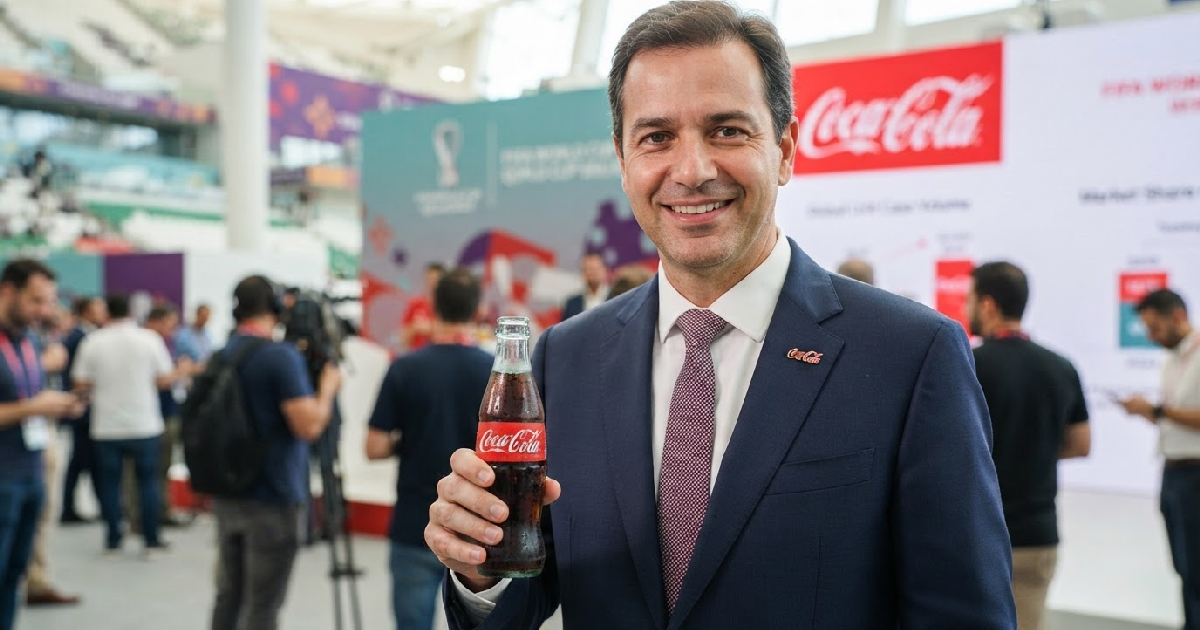
This strong performance included a significant boost from its FIFA World Cup sponsorship. CEO Henrique Braun noted the company’s ability to navigate a “dynamic” consumer environment, crediting powerful brands and strategic execution for gaining value share. Shares of Coca-Cola reacted positively to the announcement, climbing 4.2% in premarket trading.
Coca-Cola’s strong Q2 2026 financial performance
The Coca-Cola Company posted net revenues of $13.38 billion for the second quarter of 2026, marking a 7% year-over-year increase. This figure comfortably surpassed analysts’ consensus estimates, which ranged from $13.10 billion (Zacks Investment Research) to $13.13 billion (Bloomberg).
Its adjusted revenue, reported at $13.37 billion, also exceeded Street forecasts of $13.05 billion or $13.16 billion. The company’s Earnings Per Share (EPS) grew 16% to $1.03 for the quarter.
Key revenue and earnings figures
Comparable EPS (Non-GAAP) increased by 11% to $0.97, outperforming analysts’ consensus estimates of $0.92 to $0.93 by 4%. These robust Coca-Cola earnings highlight the company’s ability to consistently exceed market expectations.
The strong performance resulted in operating income rising 9% to $4.67 billion. Comparable Currency Neutral Operating Income (Non-GAAP) also saw a healthy increase of 6%.
Organic growth and improved margins
Organic revenues, a non-GAAP measure that excludes acquisitions, divestitures, and currency fluctuations, grew 6% during the quarter. This growth stemmed from a 4% increase in concentrate sales and a 2% rise in price/mix, reflecting effective pricing strategies.
The operating margin improved to 34.9% from 34.1% in the prior year, indicating enhanced profitability and operational efficiency. The comparable operating margin (Non-GAAP) also increased to 35.6% from 34.7%, further underscoring its financial health.
Global demand fuels beverage growth
A key driver of Coca-Cola’s strong second-quarter results was significant demand across its product lines, partly boosted by its global FIFA World Cup sponsorship. Global unit case volume grew 5%.
This growth demonstrates sustained consumer interest in its offerings. Notably, innovation also contributed to this 5% volume expansion.
FIFA World Cup impact
The FIFA World Cup campaign proved especially effective, generating immense media buzz and driving volume increases for core brands. A media blitz tied to the event generated 9 billion views for Coca-Cola brands on social media.
This outreach was supported by over 2,500 content creators. Coca-Cola’s namesake soda saw its volume increase by 5% and Powerade climbed an impressive 8%, partly attributed to the tournament’s marketing.
Category-specific volume increases
Beyond the flagship brands, several segments posted strong performances. The water, sports, coffee, and tea segment emerged as the top performer, recording a 6% volume growth.
Within this division, all categories except coffee saw their volume increase during the quarter. Sparkling soft drinks reported a solid 4% volume growth, boosted by the core soda and its line extensions.
Coca-Cola Zero Sugar experienced a significant 16% volume climb, indicating strong consumer adoption of sugar-free options. Diet Coke, known as Coca-Cola Light in some markets, also saw robust growth, with its volume increasing by 7%. The juice, value-added dairy, and plant-based beverage division posted 2% volume growth.
Strategic resilience amidst economic challenges
Coca-Cola’s strong performance stands out against a backdrop of wider economic pressures impacting consumer spending. CEO Henrique Braun acknowledged the “dynamic” consumer environment, a sentiment echoed by rival PepsiCo earlier in the quarter.
PepsiCo had reported tighter shopper budgets in the second quarter, leading to weaker sales for its snacks and drinks in the U.S. market. Global oil prices have seen dramatic swings, partly due to the U.S. war with Iran, which has led many consumers to temper their discretionary spending.
North American market strength
In Coke’s home market, the national average gas price hit a four-year high of $4.56 per gallon in late May. Despite these challenges, Coca-Cola’s results indicate that consumers haven’t cut back on its beverages.
Even in North America, a critical market that accounted for approximately 40% of total sales last quarter, volume grew 3%. This resilience underscores the power of Coca-Cola’s brand and its effective market strategies, including pricing actions and offering smaller pack sizes for cost-conscious consumers.
Raised full-year outlook and investor confidence
Following its impressive second-quarter results, The Coca-Cola Company has confidently raised its full-year 2026 financial outlook. The company now expects organic revenue growth to be approximately 5%, an increase from its prior forecast of 4% to 5%.
This revised projection reflects management’s optimism about sustained demand and effective operational strategies throughout the year. Similarly, the full-year outlook for comparable earnings per share (EPS) growth has been upgraded.
Market reaction and future prospects
Coca-Cola now anticipates comparable EPS growth of 9% to 10%, up from its earlier range of 8% to 9%. These raised forecasts signal strong confidence from the company’s leadership in its ability to navigate market conditions and continue delivering shareholder value.
Investors reacted favorably to the earnings announcement and the boosted guidance. Shares of Coca-Cola rose 4.2% in premarket trading immediately after the news broke. By 07:50 GMT, the KO stock was up 2.21% at $84.07.
Sustained market share gains and innovation
Beyond the headline financial results, Coca-Cola also reported gaining value share in total nonalcoholic ready-to-drink (NARTD) beverages. This demonstrates its continued ability to capture a larger portion of consumer spending in a highly competitive sector.
This market share expansion often reflects effective product innovation, strong brand loyalty, and superior distribution networks. The company leverages powerful brands and its system to gain value share, delivering revenue, profit, and earnings growth.
Innovation played a crucial role in the company’s overall volume growth. Coca-Cola has been successful in introducing new products and line extensions that meet changing consumer tastes. This strategic responsiveness to consumer demands helps reinforce its market leadership and positions it for continued success.