

Joe Root’s Unbeaten 99 Levels England-India ODI Series
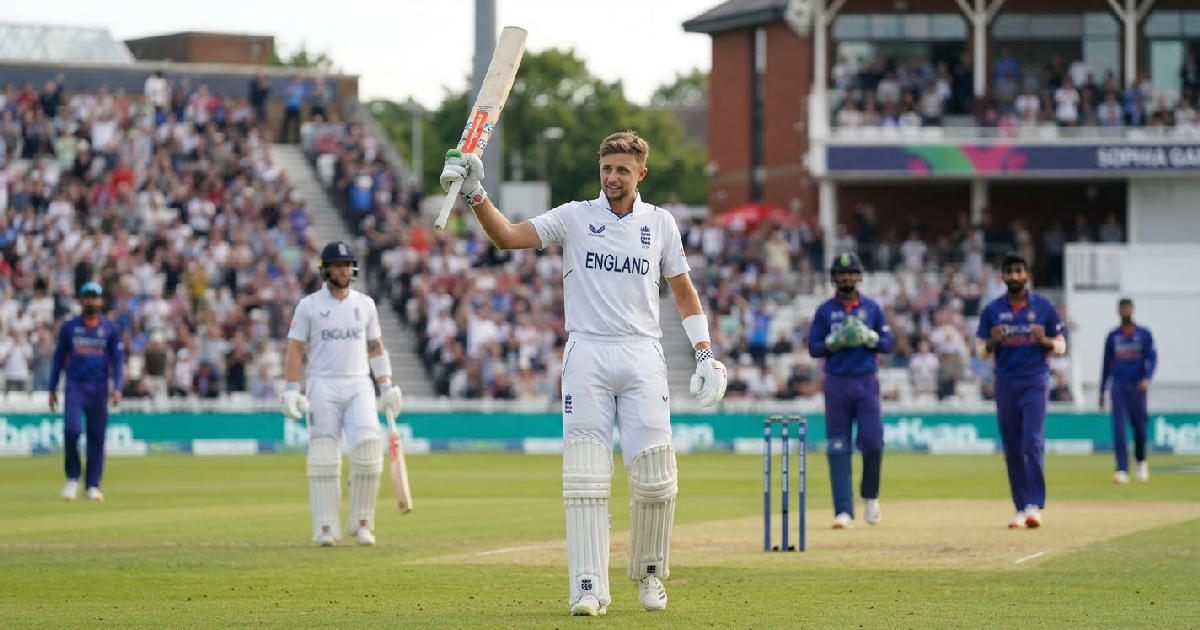
Joe Root delivered a masterful performance at Sophia Gardens on Thursday, July 16, 2026, scoring an unbeaten 99 runs that propelled England to a vital four-wicket victory over India. This decisive win in Cardiff leveled the three-match One-Day International (ODI) series at 1-1, setting up a thrilling winner-takes-all decider.
Root’s composure under pressure ensured England successfully chased India’s total of 233 with 35 balls to spare. His innings has set the stage for a high-stakes finale.
Root anchors decisive England chase
England’s pursuit of 234 began disastrously, immediately putting immense pressure on their middle order. Opener Ben Duckett was dismissed by Jasprit Bumrah on the very first delivery of the innings, caught behind by stand-in wicketkeeper Ishan Kishan. This early setback sent a ripple of anxiety through the English camp.
The team’s woes deepened when Jacob Bethell followed quickly for just 4 runs. Prasidh Krishna found extra bounce, catching the left-hander’s bat face as he attempted to leave the ball. This left England reeling at 53 for 3, a precarious position against a potent Indian bowling attack.
Root’s composure and key partnerships
But it was Joe Root, arriving at the crease just one ball into the chase, who steadfastly rebuilt the innings. He navigated the early storm with characteristic composure, weathering an aggressive spell from the Indian fast bowlers. His calm approach was a stark contrast to the initial flurry of wickets.
Root found crucial support from Sam Curran, who made 22 runs, and Will Jacks, who contributed 30 runs, forging vital partnerships that chipped away at India’s total. A 41-run stand with Curran settled nerves, even if they frayed slightly when Curran was caught behind off Shivam Dube.
The biggest alliance was a 72-run stand with Jacks for the sixth wicket, a crucial partnership in the middle overs. These partnerships allowed Root to dictate the pace of the chase and maintain control.
Near-century milestone and series implications
Root’s 99 not out came off 133 balls, featuring nine boundaries. He reached his fifty from 76 deliveries, then continued to accumulate runs steadily, guiding England towards the target. This gritty innings marked his 67th fifty-plus score in ODIs and his fifth successive half-century in the format.
He ultimately fell just short of his 21st ODI century, but the personal milestone seemed secondary to the team’s success. Root shared an unfinished 38-run stand with Gus Atkinson, who remained 23 not out. It was Atkinson who pulled behind square with three runs needed, confirming the four-wicket win with 35 balls remaining.
This decisive victory injects significant drama into the series, setting up a thrilling finale.
India’s batting crumbles despite strong starts
India’s innings had promised more than its final total of 233, thanks to solid contributions from Virat Kohli and Shreyas Iyer. Kohli, walking out to a rousing ovation, looked in imperious touch, scoring a fluent 65 runs from 66 balls. His innings included eight fours, reflecting his aggressive yet controlled style.
Iyer joined Kohli to forge a crucial 67-run partnership for the fourth wicket, stabilising India after early losses. Iyer’s own gritty knock yielded 66 runs off 71 balls, featuring five fours and two sixes. These two were India’s only batters to make contributions of note.
Top-order struggles and late collapse
Despite these efforts, India’s top-order struggled to convert starts. Captain Shubman Gill, fresh from an unbeaten 80 in the first ODI, made 31 before falling to Gus Atkinson. Veteran opener Rohit Sharma struggled significantly for timing, eventually making a laboured 26 runs from 47 balls before being caught out by a top-edged sweep.
India’s middle and lower order then experienced a dramatic collapse. They lost their last seven wickets for just 55 runs, a significant factor in their below-par total. This late slump undermined the platform set by Kohli and Iyer, proving costly in the end.
England’s bowling performance sets the tone
England’s bowling attack played a pivotal role in restricting India to a chaseable total. Jofra Archer, returning to form, proved instrumental with the ball, claiming three crucial wickets for 47 runs from his spell. His performance was particularly impactful in the final five overs of his quota.
Archer delivered a crucial blow by dismissing Virat Kohli with a delivery that nipped away, taking a leading edge down to Adil Rashid at deep third. He then followed up by removing Axar Patel and Shivam Dube in quick succession, disrupting India’s momentum entirely. His disciplined first set in the Powerplay yielded no wickets for just 24 runs.
Atkinson’s all-round contribution
Gus Atkinson also impressed, securing three wickets for 50 runs from his spell, including the key scalp of Shubman Gill. Sam Curran contributed one wicket for 23 runs, and Will Jacks chipped in with one for 21.
Saqib Mahmood, another change to the XI, picked up two wickets for 52 runs, including Washington Sundar. England’s bowlers maintained pressure throughout, capitalising on India’s missteps and preventing any significant late-innings acceleration.
Captaincy, team dynamics, and strategic calls
The second ODI also brought England’s limited-overs captain Harry Brook under renewed scrutiny. His run-a-ball 16 was a struggle, described as potentially worse than his 21 off 9 in a Test chase at Trent Bridge. He appeared uncomfortable, taking blows to the abdomen and helmet before falling to Gurnoor Brar.
Brook’s aggressive but undisciplined approach stood in stark contrast to Root’s composed innings. This performance, coupled with reports of a “recent dodgy disciplinary record” that reportedly saw him overlooked for interim Test captaincy in June 2026, adds to the ongoing narrative of pressure and expectations faced by high-profile athletes.
Broader team instability and strategic choices
The broader context surrounding English cricket has been turbulent, marked by leadership changes and “vacancies and uncertainty.” Joe Root himself had an interim return as Test captain in June 2026, filling in after Ben Stokes and Gus Atkinson were sidelined due to an ECB investigation. This backdrop makes Root’s consistent performances even more vital for the team’s stability and direction.
Captain Brook’s decision to bowl first in the day-nighter was a tactical one, rooted in recent history at Sophia Gardens. The last three ODIs played at the venue were all won by the team chasing. This strategic choice ultimately paid off, primarily thanks to Root’s anchoring role and the bowlers’ ability to restrict India.
Similar pressures affect leaders across sports, where tactical decisions can be critical.
High stakes at Lord’s for series decider
The series now heads to the iconic Lord’s Cricket Ground on Sunday for a thrilling winner-takes-all third and final ODI. This dramatic turn of events, sparked by England’s come-from-behind victory in Cardiff, ensures a high-stakes encounter for both teams. A series victory would be a significant morale booster.
This winner-takes-all scenario creates intense anticipation, much like other crucial sporting showdowns, including high-profile boxing bouts where every move counts. For India, the match may mark a significant moment beyond the series result alone. Unconfirmed reports suggest the Lord’s ODI is likely to be the last for their veteran batsman Rohit Sharma.
Should these reports prove true, a strong performance from India would be a fitting send-off for the experienced player.
Looking ahead to the final clash
India will undoubtedly regroup, needing their top order to convert starts into substantial scores and their bowlers to contain England’s middle order more effectively. Jasprit Bumrah and Prasidh Krishna showed flashes of brilliance but will need consistent support from their spin attack.
England, bolstered by Joe Root’s unwavering form and Jofra Archer’s impactful return to wicket-taking ways, will aim to carry this momentum into the decider. The team will look to solidify their batting, avoiding the early collapses seen in Cardiff, and continue their disciplined bowling.
The outcome at Lord’s will not only decide the series champion but also offer crucial insights into both teams’ current form, strategic depth, and leadership under pressure.