

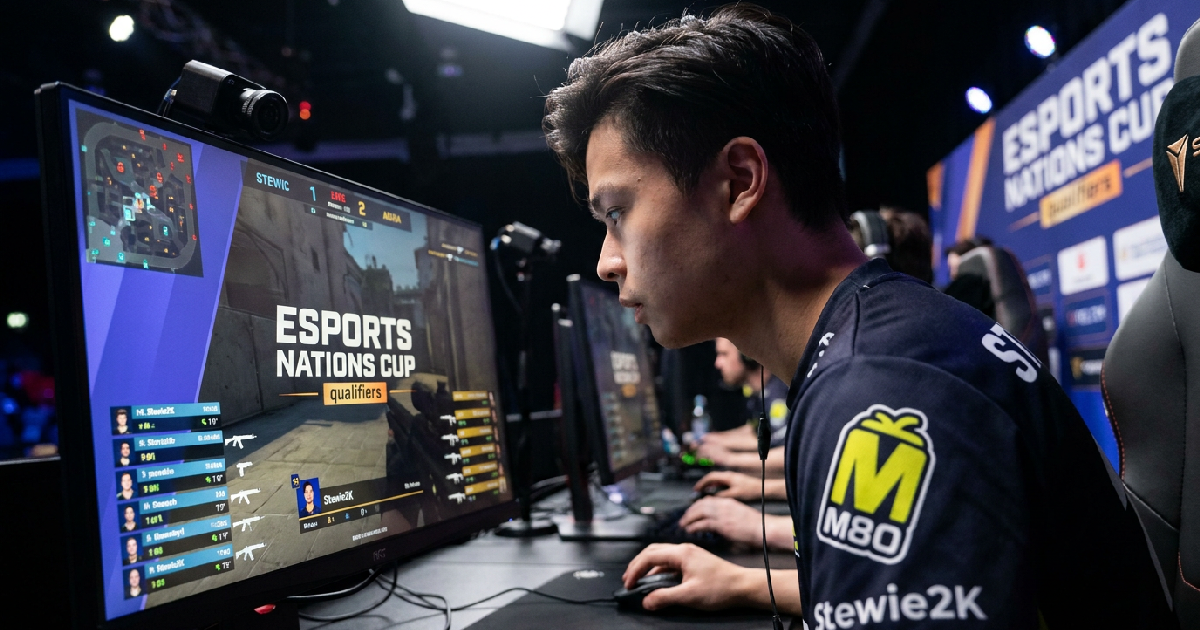
Esports Nations Cup qualifiers begin for North American CS2 teams
North American Counter-Strike 2 (CS2) fans are turning their attention to the Esports Nations Cup (ENC) US and Canadian Open Qualifiers, set to begin tomorrow, July 15, 2026. This initial stage will see prominent players, including veterans like Jacky “Stewie2K” Yip, compete to secure a highly sought-after spot for their nation in the global tournament.
Ultimately, these qualifiers pave the way for national teams to reach the main event in Riyadh, Saudi Arabia, later this year.
Road to Riyadh: North American CS2 teams begin qualification
One team from the United States and one from Canada will advance from these open qualifiers to the eight-team North American Closed Qualifier. This regional phase will then determine which three North American countries will earn berths at the prestigious ENC 2026, where national pride and a significant prize pool await.
The journey to the Esports Nations Cup main event in Riyadh involves a comprehensive qualification structure for North American contenders. The US and Canadian Open Qualifiers, which begin tomorrow at 05:00 PM EDT, represent the first hurdle for aspiring national teams.
These initial competitions, conducted on FACEIT, are part of a broader schedule of national qualifiers running from July 6-16, 2026. Regional qualifiers will quickly follow, taking place from July 17-19, further narrowing the field.
The North American Closed Qualifier stage is crucial, as it will determine which three of the eight participating countries will proceed to the global finals. The nations vying for these spots include the United States, Canada, Mexico, Guatemala, Panama, Dominican Republic, Costa Rica, and Puerto Rico.
ENC 2026 main event details
The main ENC 2026 tournament, hosted in Riyadh from November 10-15, promises to be a major international spectacle for competitive gaming. The Counter-Strike 2 component alone features an impressive prize pool of $1,320,000.
The tournament format is set to host 24 national teams, beginning with a Best-of-1 (Bo1) round-robin group stage across four groups of six teams. Following this, a 16-team single-elimination playoff bracket will ensue, featuring Best-of-3 matches, all culminating in a climactic Best-of-5 Grand Final.
Organized by the Esports World Cup Foundation (EWCF), the Esports Nations Cup is designed to bring national pride to the forefront of competitive gaming. The ENC 2026 will feature 16 different game titles, spanning team-based and solo-player formats, including popular titles like League of Legends, VALORANT, and Dota 2.
USA qualifier rosters: M80 and a star-studded mixteam
The United States qualifier has attracted notable rosters, creatively assembled under the ENC’s team composition rules. These rules dictate that teams can only feature a maximum of three players from any one Valve Regional Standings (VRS)-ranked team.
A leading contender is “STARS AND STRIPES,” built around the core of M80, currently the top-ranked North American team on the VRS. The roster includes Michael “Swisher” Schmid, Mason “Lake” Sanderson, and Joshua “JBa” Barutt from M80, joined by Josh “oSee” Ohm (NRG) and Adam “Grizz” Golden (Marsborne). Rory “dephh” Jackson, M80’s coach, will serve as their coach.
Another intriguing mixteam participating in the Esports Nations Cup qualifiers is “Stewie2K and steel’s Team (‘Without a Roof’).” This lineup features Counter-Strike veterans Jacky “Stewie2K” Yip, Timothy “autimatic” Ta, and Tyler “Skadoodle” Latham. Justin “FaNg” Coakley joins on a trial basis, with Josh “steel” Nissan standing in for Brehze.
Strategic impact of mixed rosters
The three-player rule is more than a mere technicality; it’s a strategic element shaping team construction for the ENC. This approach actively encourages top players and organizations to form novel combinations, fostering unique synergies not typically seen in regular competitive seasons.
For players, it presents an invaluable opportunity to collaborate with different teammates, test their adaptability, and showcase individual skills on a broader stage while representing their home nation. This dynamic also creates a more open and unpredictable competitive landscape, preventing any single dominant team from simply entering its entire established roster.
Canadian qualifier sees limited turnout
The Canadian qualifier for the Esports Nations Cup has experienced a more limited turnout, with only six teams signing up. While fewer in number, the competition remains an essential step for Canadian representation on the global stage.
The outcome will still determine Canada’s single entry into the North American Closed Qualifier. This demonstrates the varied stages of development for Counter-Strike 2 scenes across the North American region.
Future outlook for North American CS2
The launch of these Esports Nations Cup qualifiers carries significant weight for the North American CS2 ecosystem. It offers a unique platform for players who may not always be in the spotlight of major commercial leagues to represent their country, providing exposure and experience against diverse international playstyles.
The prestige associated with national representation can’t be understated, often providing a distinct motivation for players compared to club-based tournaments. This could elevate the intensity and passion of the matches, potentially drawing in new audiences to the competitive CS2 scene.
The collaboration between bodies like the United States Esports Federation and USA Esports, a non-profit 501(c)(3) organization, is central to the ENC’s mission. These federations play a critical role in organizing national qualifiers, identifying talent, and ensuring representation on the global stage, supporting the overall growth of esports.
Success at the Esports Nations Cup could significantly boost a country’s standing in the global CS2 hierarchy and inspire a new generation of players. It also underlines the growing institutionalization of esports, with events like the ENC mirroring traditional sports federations and national teams to build a sustainable framework for global esports development.