

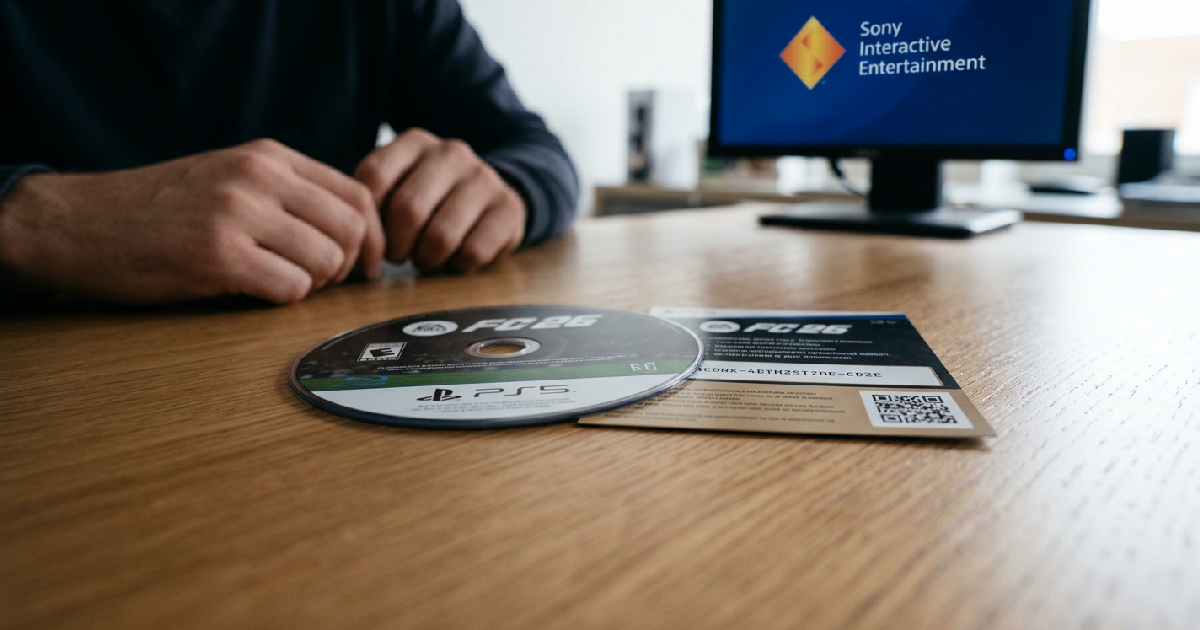
Sony Interactive Entertainment confirms end to physical PlayStation games by January 2028
Sony Interactive Entertainment will officially discontinue physical disc production for all new PlayStation games starting in January 2028. Senior Director of Content Communications Sid Shuman confirmed the transition on the PlayStation Blog, noting that the move aligns with shifting trends where digital media consumption now significantly outpaces physical disc sales.
The decision marks a definitive end-date for a decades-long reliance on optical media, though Sony clarified that the change will not affect games already released on disc or those scheduled for launch prior to the January 2028 cutoff.
The transition follows a massive shift in console purchasing habits revealed in official financial data. In the fourth quarter of fiscal year 2025, digital sales for PlayStation reached 85%, leaving physical copies with just a 15% share of total full game sales. During this three-month period, digital game revenues hit $1.5 billion, while physical sales accounted for $109 million. These figures represent the highest digital sales ratio Sony has recorded since launching the PlayStation 4 in 2013, when digital purchases made up only 13% of the market.
Structural changes indicate a digital-first strategy
Sony has already begun dismantling the infrastructure required to support physical media. A manufacturing facility that previously handled PlayStation disc orders is being repurposed, with its 300 staff members retrained to produce optical microlenses. This factory historically produced roughly 600,000 discs per year, with PlayStation orders typically accounting for half of that volume. By winding down these operations 18 months ahead of the 2028 deadline, Sony is allowing its partners time to adjust to a landscape without “blue boxes” on retail shelves.
The financial incentives for this pivot are clear. According to Kantan Games CEO Serkan Toto, publishers earn approximately $70 on a first-party digital game sold for $70, compared to roughly $45.50 for a physical copy sold at retail. For third-party titles, the margin remains higher in the digital space even after platform fees. This move toward digital-only distribution effectively grants Sony total control over pricing and availability, eliminating the traditional second-hand market and trade-in options that previously competed with direct digital sales.
Digital sales growth across major titles
Recent game performance data underscores why Sony and its partners are moving away from physical media. In the early months of 2026, major releases have shown a heavy lean toward digital storefronts:
- EA Sports FC 26: 88% digital vs. 12% physical.
- 007 First Light: 79% digital vs. 21% physical.
- Crimson Desert: 80.1% digital vs. 19.9% physical.
- Resident Evil Requiem: 72.2% digital vs. 27.8% physical.
- Ghost of Yotei: 64.6% digital vs. 35.4% physical.
Third-party publishers are reporting similar trends. Capcom noted that 93% of its total game sales were digital in early 2026, a sharp increase from 75% just a few years earlier. Electronic Arts (EA) reported that full-game downloads accounted for $528 million in revenue, dwarfing the $81 million generated by “packaged goods.”
com/game-news/gta-6-release-date-confirmed-take-two-nov-2026-update/”>Grand Theft Auto 6 will still be a signifier for the future of physical media at retail, many publishers are already opting for digital-only releases or “code-in-a-box” editions.
Hardware shifts and the PlayStation 6 outlook
The timing of the 2028 production halt has led industry analysts to speculate that the next-generation PlayStation 6 (PS6) will launch as a fully digital ecosystem. While Sony has not confirmed a release date for a new flagship console, many expect it to arrive between 2026 and 2030. Mat Piscatella, Senior Director at Circana, noted that the console audience is becoming “older and more affluent,” while younger players are increasingly choosing mobile and PC platforms. This demographic shift makes the high-priced, digital-only hardware model more viable for the platform holder.
Sony’s recent hardware releases have already paved the way for this transition. The PlayStation 5 Pro, which launched on November 7, 2024, for $699.99 USD, is sold as a discless unit by default, though it supports an optional, separate disc drive. This follows the precedents set by the PS5 Slim and the original PS5 Digital Edition. By separating the disc drive from the core console package, Sony is moving toward a business model focused on community engagement and digital services rather than hardware-centric retail.
Preservation concerns and the end of ownership
The shift away from discs has sparked significant debate regarding consumer rights and game preservation. In an all-digital future, consumers essentially purchase a license to access content rather than owning a physical object they can sell or lend to friends. There are also looming concerns about digital library longevity. Reports indicate that Sony’s terms and conditions allow inactive PlayStation Network accounts to be closed after 36 months, which could lead to the loss of all digital purchases associated with that account.
Furthermore, Sony is actively closing the doors on its legacy digital infrastructure. The company confirmed it will shutter the digital storefronts for the PlayStation 3 and PlayStation Vita by July 2027. This move, combined with the discontinuation of Blu-Ray disc production by Sony Japan in early 2025, suggests a broader corporate effort to move the entire entertainment ecosystem away from optical media.
While companies like Nintendo are expected to support physical media into the 2030s, Sony’s January 2028 deadline signals that for PlayStation players, the era of the disc is effectively ending. com/crypto-news/brian-armstrong-finance-move-on-chain-warning/”>finance must move on-chain and digital formats to maintain long-term efficiency.