

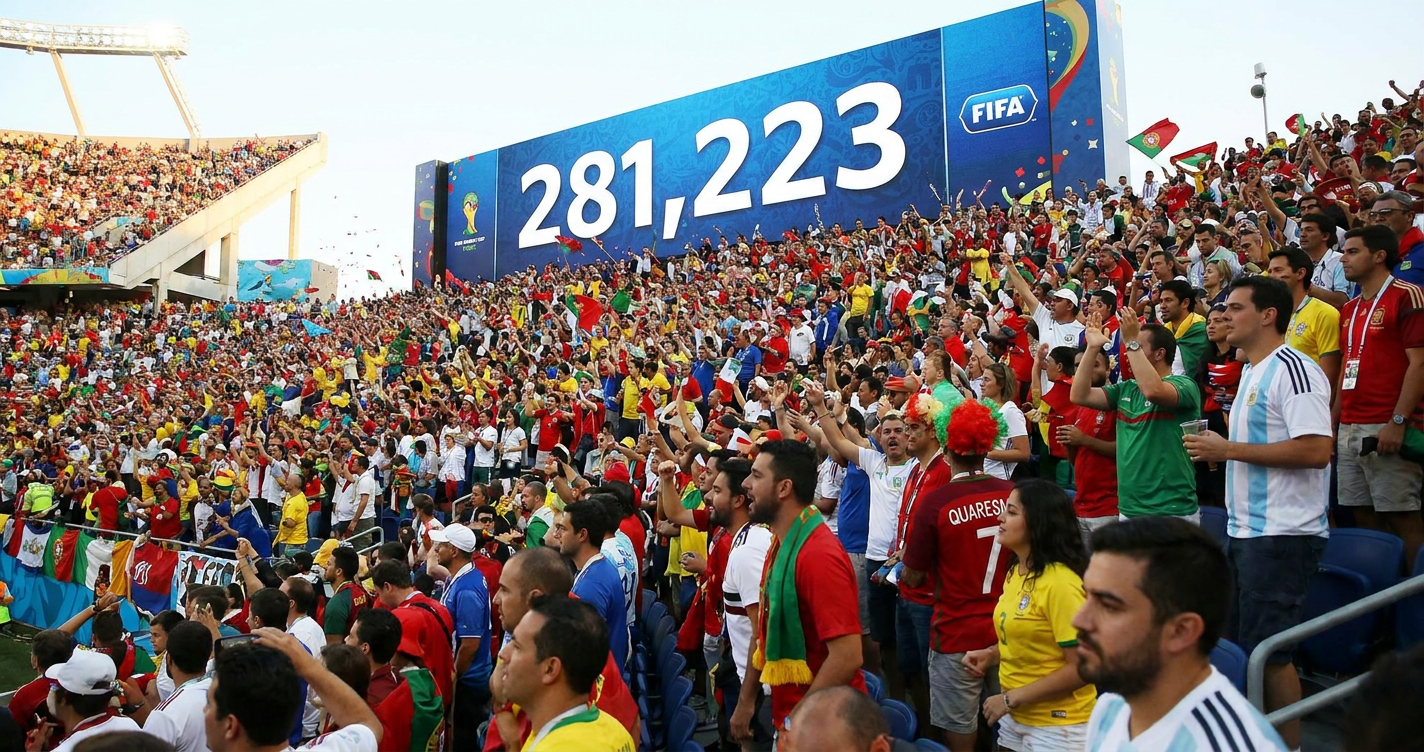
FIFA confirms 281,223 spectators shatter World Cup single-day record
The 2026 World Cup has officially shattered long-standing tournament attendance records, according to the latest data released by FIFA and host broadcasters on June 20, 2026. A staggering 281,223 fans attended four matches this past Tuesday in the USA, Canada, and Mexico, eclipsing the previous single-day high set during the 1994 tournament.
That 32-year-old record of 277,070 also took place across four matches in the United States, but the expanded stadium capacities of the 2026 host cities have pushed the figures into uncharted territory.
The record-breaking day was fueled by high-stakes encounters across North America, led by the France vs. Senegal clash which drew 80,545 supporters. Other significant contributions to the tally included Argentina vs. Algeria with 69,045 fans, a packed house of 68,527 for Austria vs. Jordan, and the 63,106 who watched Iraq play Norway.
Managing player fatigue in the expanded 48-team format
Tournament organizers confirm that the 2026 iteration is now on a definitive pace to surpass the cumulative attendance record of 3.5 million, a benchmark that has stood since the 1994 World Cup.
Average attendance for the competition currently sits at 65,483 per match, reflecting the immense scale of the 48-team format. While the logistics of such a massive event remain a primary concern for local authorities, the commercial success is undeniable.
This surge in interest mirrors the broader trend of high-stakes live events, much like the hype surrounding major digital releases like the impending arrival of Grand Theft Auto 6 which dominates the entertainment sector.
Former Portugal international Ricardo Quaresma, speaking at a PUMA launch event for the national team’s kit, emphasized the physical toll the new format takes on athletes. With 104 matches scheduled throughout the tournament, depth has become the most valuable currency for competing nations.
Quaresma noted that the intensity of modern football, combined with an additional game required to reach the final, makes it nearly impossible for a single player to feature for every minute.
The veteran winger told Sky Sports that football is now so dynamic that it is no longer about a single star, but about having multiple high-quality options in every position. He argued that managers must embrace a heavy rotation policy to sustain performance levels through the knockout rounds.
This tactical shift is already visible in the way major European powers are managing their “wonderkids” and aging veterans alike.
Spain winger Lamine Yamal provided a concrete example of this cautious approach following Spain’s goalless draw with Cape Verde. Despite fan clamour for him to start, Lamine Yamal was restricted to just 20 minutes off the bench.
The young star admitted he is still in a “process of adaptation” and stated that it is currently unnecessary for him to play a full 90-minute shift, even as he prepares for Spain’s next game against Saudi Arabia this Sunday.
Upcoming fixtures and group stage developments
As the group stages intensify, several nations are facing pivotal moments in their respective campaigns. Haiti is preparing for a high-profile Group C opener against Scotland on Saturday evening in Boston, which translates to a 2 AM UK time kickoff on Sunday. The Caribbean nation faces a daunting path forward, with subsequent matches scheduled against footballing giants Brazil and Morocco.
In other developments, Cape Verde will look to build on their impressive draw against Spain when they face Uruguay in Miami on Sunday. Portugal is also finalized for their opening encounter against Congo this Wednesday. These matches are being played against a backdrop of global interest that transcends the pitch, similar to how star-studded punditry panels are drawing record television audiences in the United States.
Broadcasting and the fan experience across three nations
The tri-nation hosting duties between the USA, Canada, and Mexico have presented unique broadcasting challenges, but Sky Sports and other global outlets are reporting record-breaking engagement. The diversity of the host cities—ranging from Toronto to Mexico City—has allowed for a cultural tapestry that FIFA believes is driving the record ticket sales.
However, the sheer sprawl of the tournament has also sparked discussions regarding travel sustainability and fan costs.
Logistical preparations have been under intense scrutiny, particularly regarding the movement of fans across international borders. While high attendance numbers are a boon for the hosts, they also strain local infrastructure. This focus on operational efficiency is a common theme in the modern era, reminiscent of how global industries are prioritising supply chain resiliency to handle large-scale demand during periods of extreme pressure.
The forward-looking outlook for the rest of the tournament remains focused on whether the knockout stages can maintain this momentum.
With ticket demand still outstripping supply and Neymar reportedly continuing his recovery in a dedicated facility to be ready for the later rounds, the 2026 World Cup is poised to be the most commercially successful sporting event in history. Fans should expect further record-breaking announcements as the tournament progresses toward the final in July.