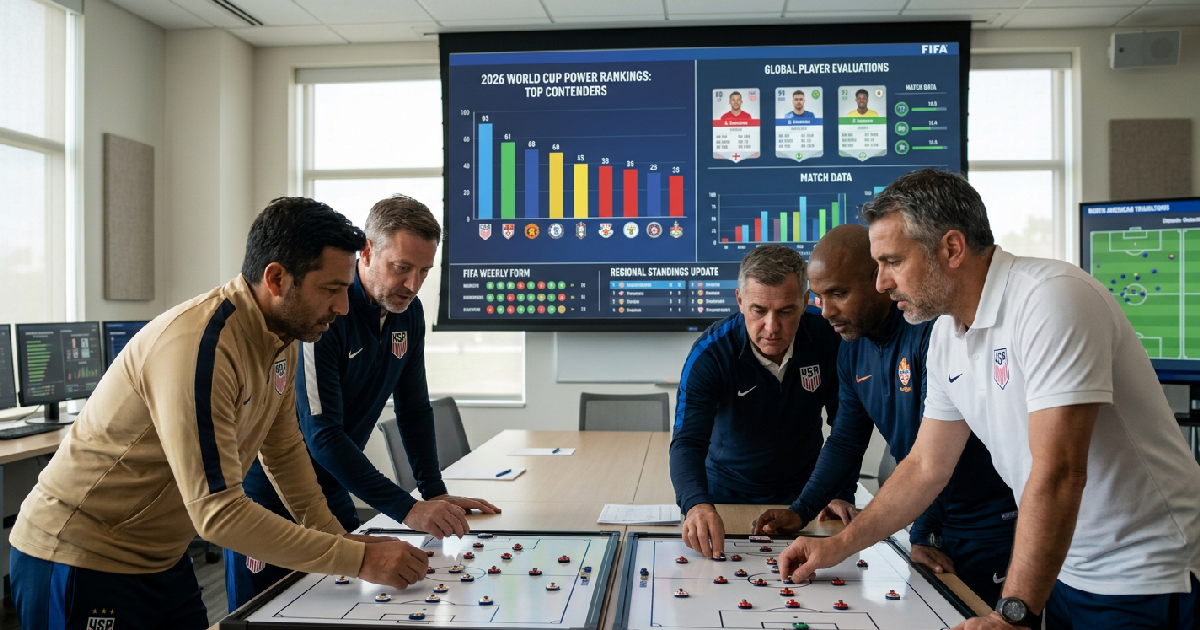
Potential contenders for the 2026 World Cup are beginning to take center stage as major sports analysts and media outlets release updated global power rankings. These assessments identify several national teams expected to dominate the upcoming tournament across North America, though the gap between traditional powerhouses and emerging squads appears to be narrowing significantly.
The current period marks a critical juncture for national team managers who are reportedly finalizing their rosters and tactical approaches. These power rankings serve as a barometer for regional form, often reflecting performance in friendlies and continental qualifiers. For fans and analysts alike, the lists highlight which nations have successfully managed the transition of aging stars and which are relying on a younger generation to carry them through the expanded format.
Expectations remain high for the defending champions, who reportedly maintain a high position on several expert lists. However, the period leading up to the opening match often brings challenges such as injuries or late-season fatigue that can affect even the most meticulous preparations. The logistical demands of a tournament spread across three nations also play a factor in how these teams are being evaluated by experts.
European Squads Featured Prominently in Global Standings
European representatives appear frequently in the upper echelons of current rankings, with several high-caliber squads from the continent positioned as favorites. These teams have reportedly benefited from a competitive qualification cycle that tested their tactical flexibility. Analysts point to the depth of talent available to certain managers, where rotation players often hold prominent roles in elite club competitions.
Recent momentum has played a major role in these shifts. Teams that performed well in recent continental competitions have seen their perceived stock rise, while others struggling with internal discord or tactical identity have slipped. This period of the calendar is often when the
influence of star players impacts transfer updates and national team morale simultaneously, as individual futures are often decided before the tournament begins.
South American Tactical Resilience and Growth
South American contenders remain a primary threat to European dominance in the lead-up to the event. The traditional powerhouses from the CONMEBOL region have shown consistency according to recent performance data. Their ability to adapt to varying climates and high-pressure environments makes them perennial contenders in global evaluations. Experts noted that several squads from this region have tightened their defensive structures while maintaining their signature attacking creativity.
The rankings also suggest that mid-tier South American teams are closing the competitive gap. These squads are often cited as potential “bracket busters” capable of causing disruption in the group stages. The presence of multiple South American teams near the top of these lists reflects a growing belief that the 2026 tournament could showcase a non-European finalist once again.
Rising Contingents and the Search for Success
The list of top contenders features several nations that have defied historical expectations in recent years. This shift is partly due to the increased professionalism of domestic leagues and the migration of top talents to elite European clubs. The power rankings acknowledge that a few of these sides are currently on strong runs of form, much like how the
Vietnam national team recently set records during their own international campaigns.
Potential home-field advantage for the host nations is another factor considered by analysts. While the hosts may not all occupy the highest slots, their familiarity with the venues and the local support provide an intangible advantage that is difficult for statistical models to quantify. History suggests that a host nation often outperforms its technical ranking once the group stage begins.
Assessing the Impact of Modern Scouting and Technology
Modern sports analysis has become more detailed, often using advanced data to help determine these rankings. Factors such as expected goals, successful high-press percentages, and player recovery times are now common metrics for reporters and analysts. Statistical models are increasingly visible as they attempt to forecast the outcome of a tournament that frequently features upsets.
Gaming and simulation technology have also contributed to the broader discourse among supporters and journalists. Many analysts use football simulations to run tournament iterations, which can influence where a team lands in various media power rankings. As the
latest gaming releases hit Steam and other platforms, fans are engaging in their own virtual debates regarding which squad is truly the favorite.
The 2026 World Cup is expected to be the largest iteration of the tournament in history, making squad depth as important as starting talent. Teams that rely heavily on a small core of players may face challenges as the tournament progresses and fatigue sets in. For now, the power rankings provide a snapshot of a global landscape preparing for one of the most anticipated events in international sports.