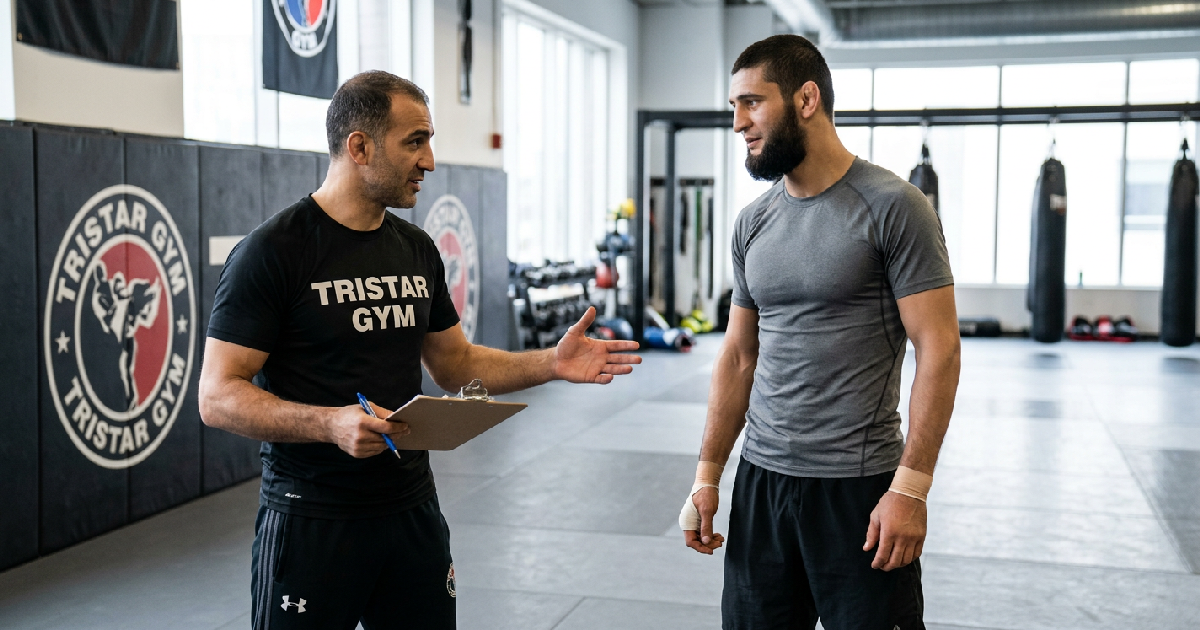
Firas Zahabi, the renowned head coach at Montreal’s Tristar Gym, has reportedly extended an open invitation to Khamzat Chimaev to join his stable following the fighter’s recent high-profile setback against Sean Strickland. The middleweight clash, which served as a focal point for the mixed martial arts community this month, saw Chimaev suffer his first career loss after appearing to struggle with fatigue in the latter stages of the bout. By offering his mentorship, the trainer who famously coached Georges St-Pierre believes he can rectify the conditioning issues that many observers feel cost the Chechen-born athlete his undefeated record.
Conditioning Concerns Arise in Middleweight Title Contest
The championship bout reportedly began with the signature aggression associated with Khamzat Chimaev, as he sought to impose his wrestling early on. However, as the rounds progressed, reports indicate that Sean Strickland was able to weather the initial storm and capitalize on a visible drop in the challenger’s output. Strickland, who has built a reputation on high-volume striking and defensive durability, was able to maintain his pace while Chimaev’s efficiency reportedly waned.
While the official scorecards reflected a closely contested battle, the narrative emerging from the event centered on the winner’s endurance versus the challenger’s lack of a sustainable gas tank. This performance has reignited long-standing debates regarding Chimaev’s training methods and his history of health setbacks. Just as
market volatility can force a change in investment strategy, this professional hurdle may necessitate a shift in how the elite wrestler prepares for five-round encounters.
Tristar Gym Offers Strategic Path Forward
Following the conclusion of the event in New Jersey, Firas Zahabi used his public platforms to suggest that a move to Canada could provide the discipline Chimaev lacks. The coach reportedly emphasized that the late-game exhaustion seen in recent performances would be addressed through a more scientific approach to cardiovascular training. Zahabi has been a long-time admirer of the fighter’s raw talent, previously drawing comparisons between his potential and that of former champions.
The offer from Tristar Gym is not just about physical fitness but also tactical evolution. Zahabi’s coaching philosophy often prioritizes footwork and pacing over raw aggression, a style that allowed his former pupils to dominate for years. This focus on longevity is becoming more common among elite athletes, much like how
star players in other sports often seek out specific technical mentors to refine their games during crucial career transitions.
Analyzing the Future of the Middleweight Division
For Khamzat Chimaev, the decision to potentially relocate his camp represents a significant crossroads. While he has remained loyal to his team in the past, the reality of a first professional loss often serves as a catalyst for growth. Analysts have noted that his current high-intensity style may be too taxing for the demands of the 185-pound championship rounds. A move to Montreal would align him with other elite grapplers who have sought the gym’s expertise in balancing wrestling dominance with striking efficiency.
Sean Strickland now finds himself in a position of significant leverage within the division. His victory over a previously undefeated powerhouse validates a fighting style that many dismissed as too simplistic. The contrast between his steady, metered output and Chimaev’s explosive but draining starts has sparked a wider conversation about fight intelligence. Some experts suggest that the current
downward trend for explosive starters indicates that endurance is becoming the most valuable asset in the modern octagon.
Tristar’s Pedigree and Coaching Philosophy
Tristar Gym remains one of the premier destinations for mixed martial arts, known for its intellectual approach to combat. The facility utilizes structured training principles that contrast with the culture of heavy sparring found in many other top-tier gyms. Zahabi has frequently stated his belief that Chimaev possesses all the physical tools necessary to hold a belt, provided he can manage his energy reserves across 25 minutes.
Whether the middleweight contender will accept the invitation remains unconfirmed. Taking a step toward a new environment requires a fighter to acknowledge their shortcomings, a difficult task for an athlete used to utter dominance. However, if Chimaev hopes to reclaim his status as the division’s most feared prospect and eventually secure the gold, the technical refinements offered in Montreal may be his most viable path forward.