

US Safety Protocols Could Force Delays at Miami F1 Grand Prix Amid Storm Forecasts
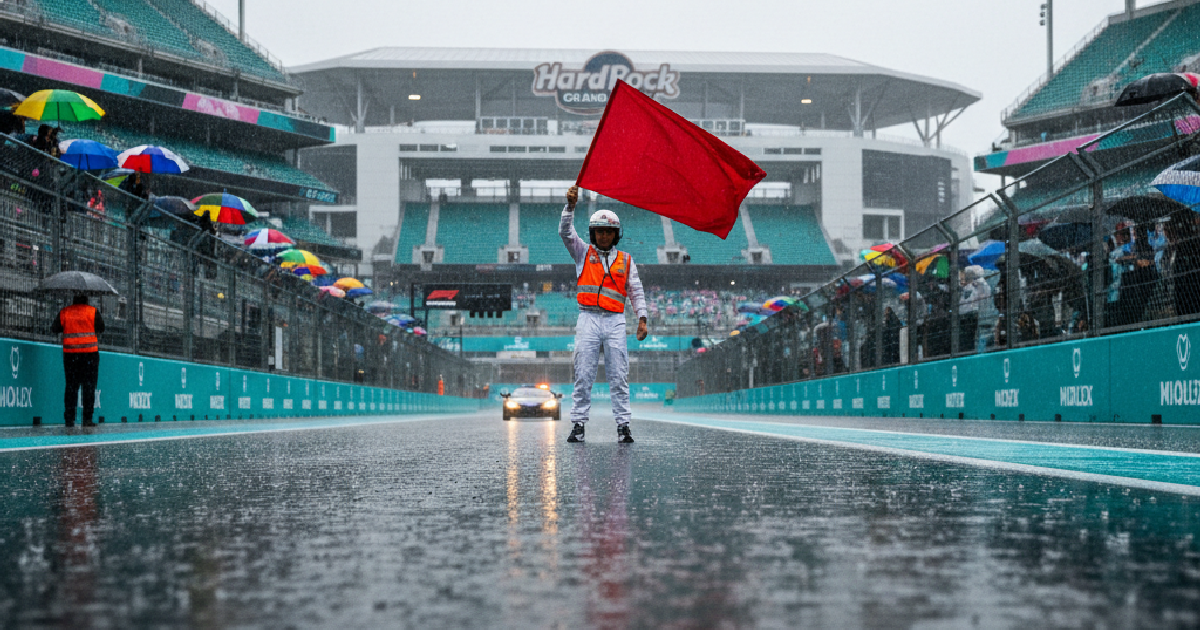
Local safety regulations and specific legal requirements regarding electrical storms could lead to a race suspension or a red flag during the upcoming Miami Grand Prix if forecast weather patterns move over the South Florida circuit. Given the region’s history of rapid meteorological changes, reporting suggests that the event may face a high probability of rainfall. Under United States safety protocols, major outdoor public gatherings are often subject to mandatory halts during periods of lightning activity to protect both personnel and spectators, a requirement that can override standard international racing procedures.
The primary concern for organizers involves the safety of fans in the expansive metal grandstands and the operational status of the medical helicopter. While Formula 1 drivers are highly skilled at competing in wet conditions, the presence of lightning within a certain radius typically triggers an immediate cessation of track activity. Officials have reportedly prepared for the possibility that if these conditions materialize, the session will be stopped, and spectators will be directed to seek shelter within the surrounding stadium complex or cooling structures.
This situation underscores the complexities of managing a global sporting tour in tropical environments where weather can shift in an instant. Just as the market in 2026 faces various uncertainties that keep analysts on edge, the F1 paddock is forced to prepare for the logistical challenges of a potential mid-race delay.
Specific Regulations for United States Formula 1 Rounds
Formula 1 has historically adapted its sporting regulations to align with the laws of host countries, and the American rounds in Miami, Austin, and Las Vegas are no exception. Normally, when a race is red-flagged internationally, cars are required to stay in the pit lane while teams work on them in the open air. However, adjustments to the regulations for events in the United States often account for the unique safety risks posed by lightning strikes.
Should the race director suspend a session due to an electrical storm, teams are generally permitted to move their vehicles out of the pit lane and directly into their garages. This allows mechanics to operate in a protected environment. This procedural nuance is a direct response to local safety standards, ensuring that team personnel are not exposed to high-voltage risks while handling metal tools or working near the sophisticated hybrid electronics found in modern power units.
Procedures for Managing Weather Delays
The protocol for managing a delay caused by lightning is strictly enforced to maintain competitive integrity. Once a suspension is signaled, all drivers must return to the pit lane. Following specific instructions from race control, teams move their cars into the garages. While indoors, only limited forms of maintenance are typically allowed, preventing any single team from gaining a performance advantage during the downtime.
When weather conditions improve and the race director confirms that it is safe to resume, the pit lane becomes a hive of activity. Teams usually receive a set warning period before the restart process begins. Much like how Arsenal targets specific talent following tactical victories, F1 teams must execute their return to the track with precision to ensure they are ready for the restart order.
Operational Constraints and Medical Safety Requirements
Beyond the immediate danger to spectators, the availability of the medical helicopter is a critical factor in whether a race can continue. FIA safety standards dictate that a medical helicopter must be capable of taking off and reaching a designated trauma center at all times during a live session. If electrical activity or severe winds ground the aircraft, the race is automatically halted, even if the track surface itself appears driveable.
In Florida, afternoon storms frequently lead to temporary flight restrictions. Without the guarantee of rapid aerial medical transport, continuing the race would violate the fundamental safety requirements of the international sporting code. Ground transportation is often considered a secondary and less desirable option due to the heavy traffic congestion that typically surrounds the Miami International Autodrome during major event days.
The atmosphere in the pit lane remains tense as strategists monitor local radar feeds. Similar to how Alcaraz learns from Nadal about maintaining focus during unpredictable high-stakes scenarios, race directors must navigate the pressure of a global broadcast schedule while prioritizing the safety mandates of local law.
The Future of Tropical Racing Schedules
The recurring threat of seasonal weather disruptions in Miami has led to a broader discussion regarding the most suitable timeframe for Florida-based events. As weather patterns become more volatile, the risk of the late-afternoon thunderstorms that characterize the region’s climate remains a significant logistical hurdle. Some observers have suggested that moving the event to a different period in the spring or autumn could mitigate these risks.
For the time being, the outcome of the race remains dependent on the elements. If the forecasted storm activity develops as anticipated, the event could focus more on weather management than on-track battles. Teams and fans alike are left watching the skies, knowing that the final decision rests with officials monitoring the safety of everyone on site.