

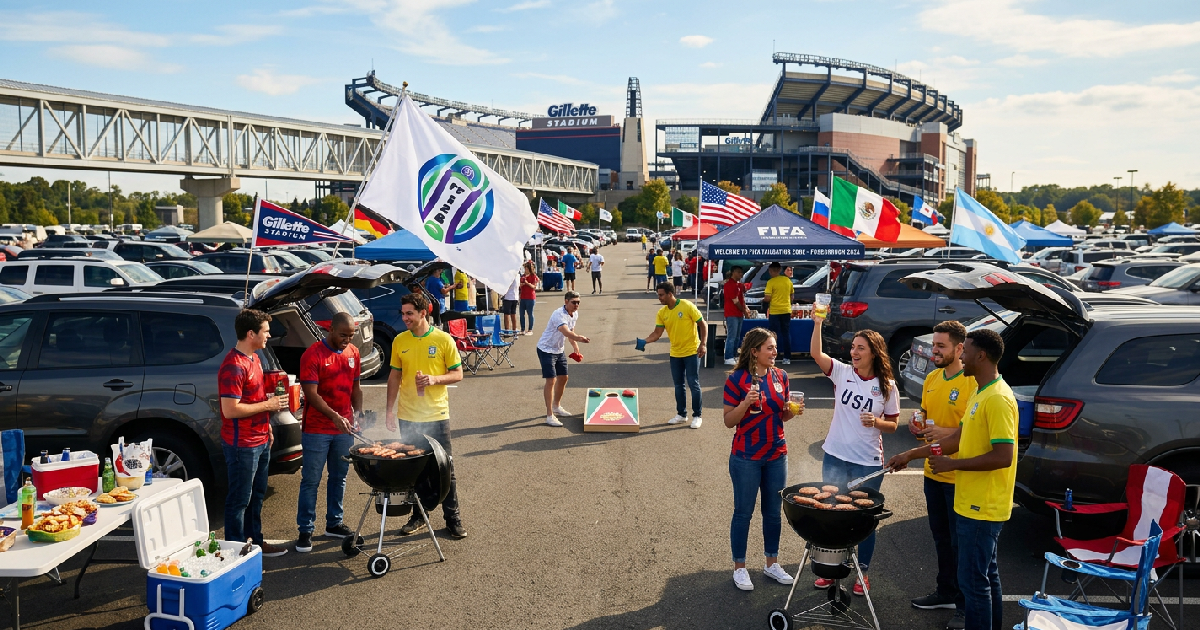
FIFA Greenlights Tailgating at Gillette Stadium for World Cup Matches
FIFA and World Cup organizers have reportedly reached an agreement to permit tailgating at Gillette Stadium during matches for the upcoming international tournament. The decision marks a significant shift in protocol, as the world governing body often enforces strict exclusion zones around stadium perimeters that typically prohibit traditional North American pre-match festivities. By sanctioning these fan gatherings, organizers are acknowledging the unique parking lot culture of New England and the logistical realities of the Foxborough venue.
The authorization provides needed clarity for local organizers who have long maintained that the stadium’s infrastructure is built specifically for vehicle-based hospitality. Gillette Stadium, the home of the New England Patriots, sits surrounded by expansive parking facilities distant from high-capacity urban transit. Without the ability to tailgate, managing the arrival of thousands of supporters who often reach the site hours before kickoff would present a major logistical hurdle. The agreement is expected to include designated zones for fan activities, though standard safety regulations regarding open flames and glass are likely to remain under local jurisdiction.
For FIFA, the move represents a departure from the centralized “Fan Zone” model utilized during previous tournaments in Qatar and Russia. The organization generally prefers controlled environments to manage security and protect official commercial interests. However, the sheer scale of the event across North America appears to have necessitated a more flexible approach. This strategic pivot mirrors the high-level adaptations seen in other sports, such as the way Carlos Alcaraz study strategies from legends to refine his performance on the court.
Logistics and Venue Management in Foxborough
The approval of tailgating at Gillette Stadium functions as a practical solution to regional transportation challenges. Unlike many stadiums in Europe that rely on dense rail networks, suburban American venues are optimized for car traffic. By allowing fans to remain at their vehicles until closer to match time, stadium management can effectively stagger the flow of people through security checkpoints, preventing dangerous bottlenecks at the turnstiles in the hour preceding the starting whistle.
Balancing Corporate Sponsorship with Fan Traditions
Protecting official tournament partners was a central point of discussion during the negotiations. Tailgating environments often involve a variety of brands not affiliated with the event, raising concerns about unofficial marketing. To address this, FIFA is expected to introduce mobile retail units and interactive sponsor activations within the parking areas. This hybrid approach aims to preserve the local atmosphere while maintaining the commercial integrity of the tournament. Such adaptability is also visible in the tech sector, where the Epic Games Store is evolving its mobile strategy to meet changing global demands.
As the tournament draws closer, digital integration will play a larger role in the fan experience. Organizers are looking to implement app-based solutions for parking management and real-time security updates. This ensures that even in decentralized tailgating lots, fans remain connected to the official match-day ecosystem and safety protocols.
Security Frameworks and State Regulation
While the green light has been given for pre-match celebrations, the environment will be far from unregulated. Massachusetts state laws and Foxborough local ordinances will dictate the behavior allowed on-site. Security teams are expected to establish monitored zones to ensure adherence to FIFA’s code of conduct. The primary challenge for local law enforcement involves balancing the festive energy of a major sporting event with the stringent security requirements mandated for global competitions.
Public safety officials have indicated that past experience with international friendlies and high-profile NFL games will guide their operations. The intent is to maintain a safe environment that does not erase the regional character of the venue. Ensuring stability in complex environments is a priority across many industries; for instance, crypto firms like BitGo have navigated financial fluctuations while maintaining growth, showcasing the importance of rigorous planning during high-stakes periods.
Impact on Other North American Host Cities
The decision regarding Gillette Stadium is set to influence how other host cities approach fan engagement. Venues in cities like Dallas, Houston, and Kansas City possess similar parking infrastructures and deep-seated tailgating traditions. If the Foxborough model proves successful and secure, it could establish a new standard for how international soccer tournaments are hosted in regions where suburban stadiums are the norm.
Local authorities are expected to release further specifics regarding parking passes and lot opening times as the event nears. For now, the agreement ensures that a core element of the New England sporting identity will be present when the eyes of the world turn to Foxborough. The focus now transitions to final infrastructure testing and transportation improvements to support the influx of global visitors.