

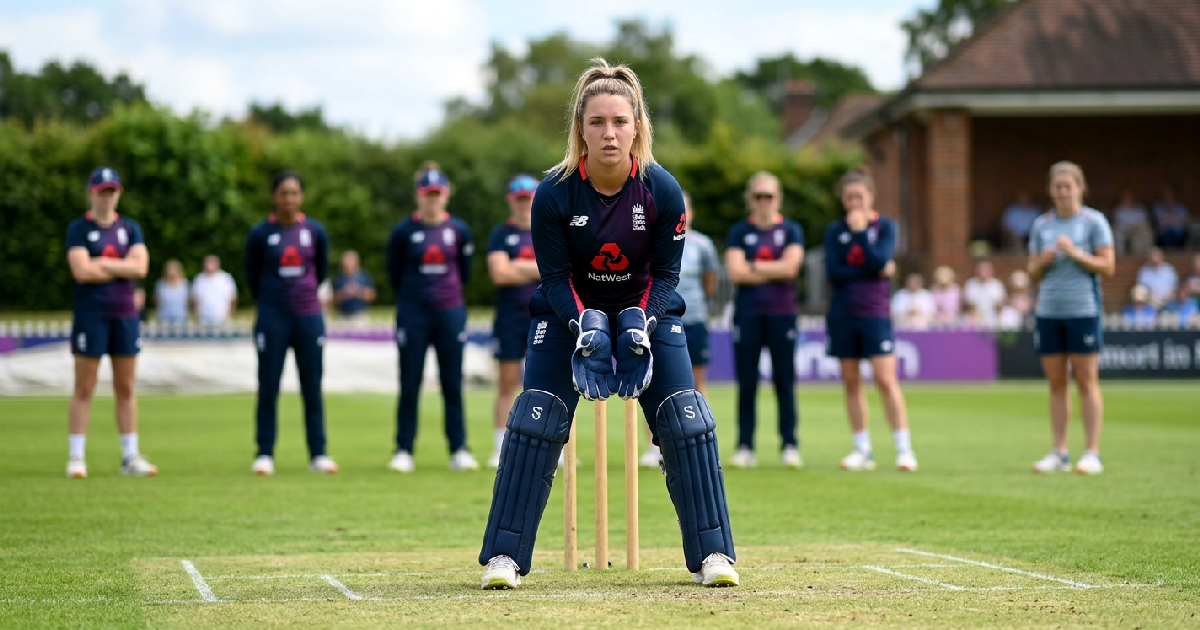
Alice Capsey Explores Wicketkeeping Role to Strengthen England Position
England all-rounder Alice Capsey is reportedly expanding her technical repertoire in a move that could redefine her role within the national side. While the young cricketer has established herself as an aggressive top-order batter and a handy off-spinner, recent developments suggest she is honing her skills as a wicketkeeper. This potential transition appears aimed at securing her long-term position in an increasingly competitive England lineup.
The tactical shift follows a period where Capsey has had to navigate the highs and lows of international cricket. Having debuted as a teenager to significant acclaim, she has occasionally faced the challenges of maintaining consistency at the highest level. By developing her ability to take the gloves, she is effectively building a “utility player” profile, which could prove invaluable as England prepares for upcoming major tournaments. In the modern game, adaptability is often the difference between a regular starter and a squad player.
There are indications that her position within the England batting order remains a subject of ongoing discussion among the coaching staff. While she has featured in several different roles, from the top three to the middle order, she remains ambitious about securing a permanent spot. However, with established veterans currently occupying key positions in the heart of the order, having the flexibility to keep wicket could offer a more consistent path to the starting eleven. This kind of tactical evolution is common among elite athletes who seek to remain relevant as their peers and predecessors continue to set high standards in their respective sports.
Strategic Versatility in the England Setup
Competition for places in the England T20I side is at its peak. The rise of several in-form batters has forced even the most talented players to find new ways to add value. While Capsey has demonstrated her quality in various domestic leagues—where her bowling has often been a standout feature—it is reported that her international batting momentum has seen some variance. Observers have noted that while her talent is undeniable, there have been recent periods where scoring has been more difficult.
By training as a wicketkeeper, Capsey provides the coaching staff with more aggressive options for team balance. A batter who can also handle wicketkeeping duties allows for the inclusion of an extra specialist bowler or an additional power-hitter. This flexibility is a hallmark of the world’s most successful teams, who often find ways to maximize their depth through multi-skilled players. However, this shift comes at a time of broader volatility in professional sports, where market sentiment and performance expectations can shift rapidly based on a few results.
The Physical and Mental Demands of the Gloves
Transitioning into a wicketkeeping role is a significant undertaking. Unlike bowling or batting in isolation, wicketkeeping is a specialist craft that requires unique physical conditioning and intense mental focus for every single delivery. For an all-rounder who is already expected to contribute with the ball, adding the physical toll of keeping would represent a major increase in her match-day workload.
Reports suggest that Capsey is embracing the challenge, but it is yet to be seen whether this is a long-term career change or a temporary strategic measure for the squad. The demands of a full international schedule leave very little room for error when learning such a technical discipline. If she can successfully balance these responsibilities without her batting performance suffering, she could become one of the most versatile assets in the international game.
Meeting the Demands of a High-Performance Culture
Since she first rose to prominence in domestic short-format cricket, the conversation around Capsey has often focused on her high ceiling. But high-level sport often demands immediate results over long-term potential. As England looks toward the next major global competitions, the emphasis is shifting toward finding a winning formula that can consistently compete with the likes of Australia.
Her recent efforts with the ball have been viewed as a positive sign, even as her batting figures have reportedly faced some downward pressure. This effort to diversify her skill set shows an awareness of the shifting demands of the international circuit. Much like teams that achieve record-breaking success through a mix of depth and tactical innovation, England is searching for an edge, and a multi-talented Capsey could provide exactly that.
As the international season progresses, the selection lists for upcoming series will provide the clearest indication of how the coaching staff views this experiment. If she is designated as a secondary or backup keeper, it would signal a distinct change in England’s tactical philosophy. For now, the focus is likely on the training ground, where Capsey will need to prove she can handle the gloves under pressure before being tested in a match environment.