

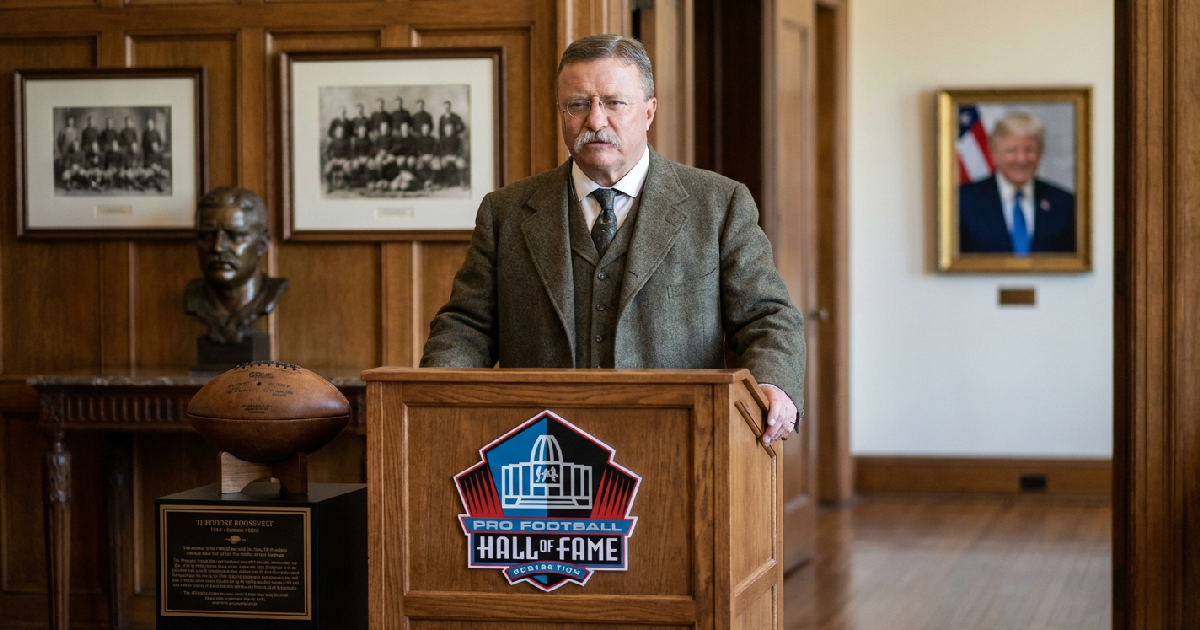
Trump backs Roosevelt for Pro Football Hall of Fame induction
The intersection of American politics and professional sports has rarely been as explicit as the recent push to honor Theodore Roosevelt within the Pro Football Hall of Fame. Donald Trump has voiced his support for the 26th President of the United States to be inducted into the Canton, Ohio, institution, citing Roosevelt’s role in preserving the sport during a period of existential crisis in the early 20th century.
While the Hall of Fame typically honors the statistical giants and tactical geniuses of the gridiron, the argument for Roosevelt is rooted in the preservation of the game itself. At a time when the brutality of early football reportedly led to widespread calls for its abolition, Roosevelt’s intervention provided a framework for the modern version of the sport that dominates the American cultural landscape today. The push reflects a broader trend of recognizing contributors who, while never wearing a helmet on a professional Sunday, were instrumental in the game’s survival.
Historical Context and the White House Summit
To understand why there is advocacy for a former president’s place in a sports hall of fame, one must look back to the early 1900s. At that time, football was a far more dangerous pursuit than the version played by the modern pros. Formations like the “flying wedge” and a general lack of protective equipment resulted in reports of numerous fatalities and severe injuries across the collegiate level. Public outcry reportedly reached a point where several major universities considered banning the sport entirely.
Roosevelt, a known advocate of the “strenuous life,” feared that losing the sport would deprive young American men of a tool for building character. History suggests he summoned leaders from elite universities to the White House to demand reform. This summit is widely credited with leading to the formation of governing bodies and the introduction of rules aimed at opening up the game, including the legalization of the forward pass. This intersection of tradition and leadership mirrors other areas of national interest where history is being re-evaluated, much like how David Sacks joins PCAST to influence modern technological policy under shifting political momentum.
Trump and the Politics of Professional Sports Honors
The push for Roosevelt is not just a history lesson; it carries the weight of modern political influence. Donald Trump’s involvement in the discussion brings a different energy to the Hall of Fame’s selection process, which is usually a quiet affair conducted by a committee of journalists and historians. By championing Roosevelt, Trump aligns himself with a figure often remembered for rugged individualism and reform-minded leadership.
It’s not the first time high-profile figures have used their platform to influence the legacy of sports icons. We see similar patterns in how modern stars navigate their own legacies. For instance, younger athletes often cite the giants who came before them as the reason for their success, a dynamic visible in how Alcaraz learns from Nadal while navigating the pressures of global fame. In the case of the NFL, the “pioneer” or “contributor” category is the most likely avenue for Roosevelt’s inclusion, a path previously taken by founders and early league commissioners.
The Selection Process and Canton’s Response
The Pro Football Hall of Fame is notoriously selective. For a non-player or coach to gain entry, they must pass through the Contributor Committee. This group evaluates individuals who have made what are deemed outstanding contributions to professional football in capacities other than playing or coaching. Critics might argue that Roosevelt’s impact was largely at the collegiate level, but supporters counter that without the collegiate innovations spearheaded during the Roosevelt administration, the professional league would never have had a foundation to build upon.
The debate also touches on the nature of what a Hall of Fame should be. Is it a museum of statistics, or a repository of the sport’s soul? If the latter, Roosevelt’s intervention is arguably among the most important non-gameplay developments in the history of the sport. His potential induction would serve as a bridge between the sport’s violent origins and its current status as a massive industry. It emphasizes the idea that the game survived not by accident, but through the deliberate intervention of national leadership.
Implications for the Pioneer Category
If Roosevelt were to be inducted, it would set a precedent for the inclusion of other historical figures who influenced the sport through policy or cultural promotion. This comes at a time when the business of sports is increasingly intertwined with broader economic shifts. Just as the global capital flow impacts stocks and crypto, the cultural capital of the NFL is managed through carefully curated legacies and historical brand-building.
Whether the committee in Canton will follow through on this recommendation remains to be seen, but the conversation itself has already forced a re-examination of the debt the game owes to the 26th president. As the sports calendar continues, the discussion regarding Roosevelt will likely remain a talking point among those who value the preservation of the game’s earliest records. It is a reminder that the foundational stories of the American gridiron still carry weight, even in an era of rapid digital evolution and shifting financial markets.