

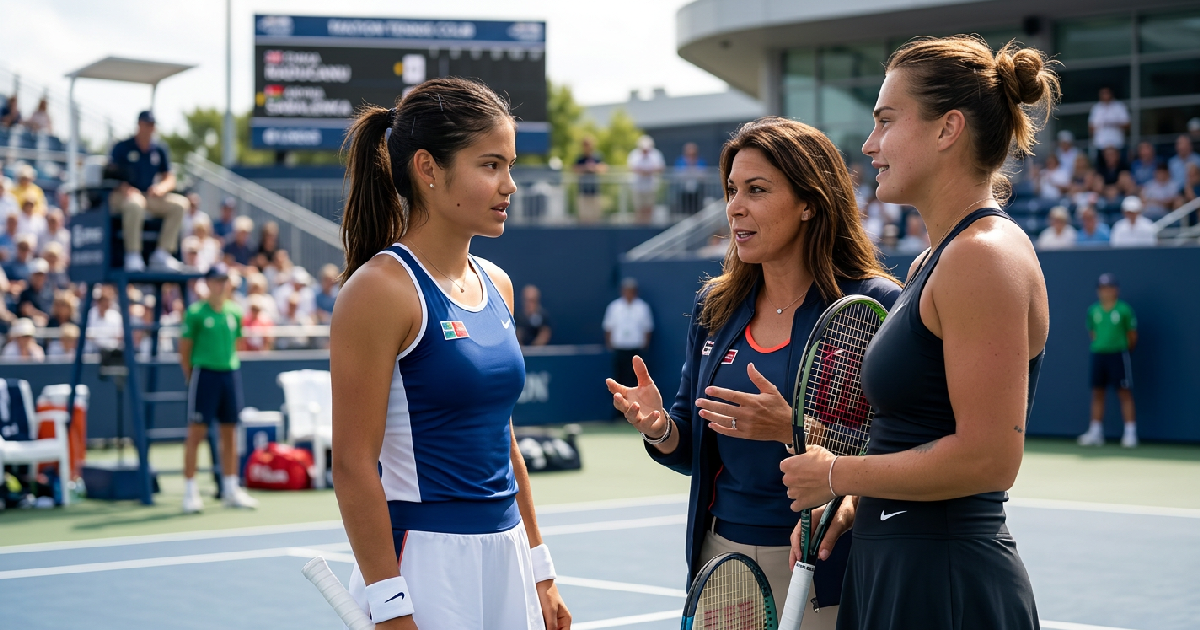
Marion Bartoli urges Emma Raducanu to mirror Aryna Sabalenka
The trajectory of Emma Raducanu remains the most debated topic in British tennis, a conversation fueled by her massive potential and the revolving door of coaches that has characterized her professional life since that historic US Open win. Now, former Wimbledon champion Marion Bartoli has weighed in, suggesting that Raducanu’s path back to the top should involve a radical rethink of her support structure.
Speaking to Sky Sports, Bartoli argued that Raducanu would benefit from following the blueprint set by world number two Aryna Sabalenka. For years, Sabalenka was known as much for her double-faults and emotional volatility as her power. However, her decision to commit to a long-term partnership with coach Anton Dubrov and a dedicated fitness team transformed her from a high-risk talent into a two-time Australian Open champion and a model of consistency.
The Sabalenka Blueprint for Stability
Bartoli’s assessment isn’t just about finding a new coach; it’s about the philosophy of the team. Since turning professional, Raducanu has worked with a string of high-profile names, including Andrew Richardson, Torben Beltz, Dmitry Tursunov, and Sebastian Sachs. Each departure has been met with scrutiny, sparking rumors of a “difficult” camp or a philosophy that prioritizes short-term tactical fixes over long-term development.
By contrast, Sabalenka stuck with her team even during a 2022 season where her serve completely collapsed. Rather than firing Dubrov, she doubled down on technical work and sports psychology. Bartoli believes this stability allowed Sabalenka to build the resilience required to win majors. And for Raducanu, who has struggled with both form and persistent injuries since 2021, that level of trust could be the missing piece of the puzzle.
Managing the Weight of Expectation
It is easy to forget that Raducanu is still building her physical base. Her 2023 was largely written off due to surgeries on both wrists and her ankle, a grueling reminder of the physical toll the WTA tour takes on a player who didn’t have the traditional years-long build-up through the junior ranks and ITF circuits.
But technical stability often breeds physical confidence. Bartoli suggests that constantly changing coaching voices can lead to “information overload,” where a player spends more time thinking about their technique than playing on instinct. Sabalenka’s power-hitting game relies on total conviction in her swing—something she only found once the noise around her coaching staff died down. Raducanu, a player whose game is built on timing and clinical ball-striking, needs that same mental clarity.
What Lies Ahead in the 2026 Season
As the clay court season approaches, the pressure on Raducanu to climb back up the rankings is mounting. She has shown flashes of her old self—crisp groundstrokes and that signature court coverage—but stringing together four or five wins in a single tournament remains the challenge.
The comparison to Sabalenka is a high bar, yet it serves as a reminder that the “chopping and changing” method rarely leads to sustained success at the elite level. If Raducanu can find a coach willing to commit to a multi-year project, and if she allows them the room to fail occasionally, she may finally rediscover the rhythm that shocked the world in New York.
Frequently Asked Questions
Who is Emma Raducanu’s current coach?
As of early 2026, Raducanu has been working within a more flexible structure, often utilizing LTA coaching resources alongside her childhood coach Nick Cavaday. However, the search for a permanent, long-term technical lead remains a frequent topic of discussion in the British media.
How does Aryna Sabalenka’s team differ from Raducanu’s?
The primary difference is longevity. Sabalenka has maintained a core group, led by Anton Dubrov, for several years. This has allowed them to work through deep-seated technical issues, such as her serve, without the fear of immediate dismissal after a bad result.
Can Raducanu return to the Top 10?
Most analysts, including Bartoli, believe the talent is there. The hurdles are primarily physical durability and finding a consistent tactical identity. If she can stay injury-free for a full season, a return to the upper echelons of the rankings is widely considered a matter of “when,” not “if.”