

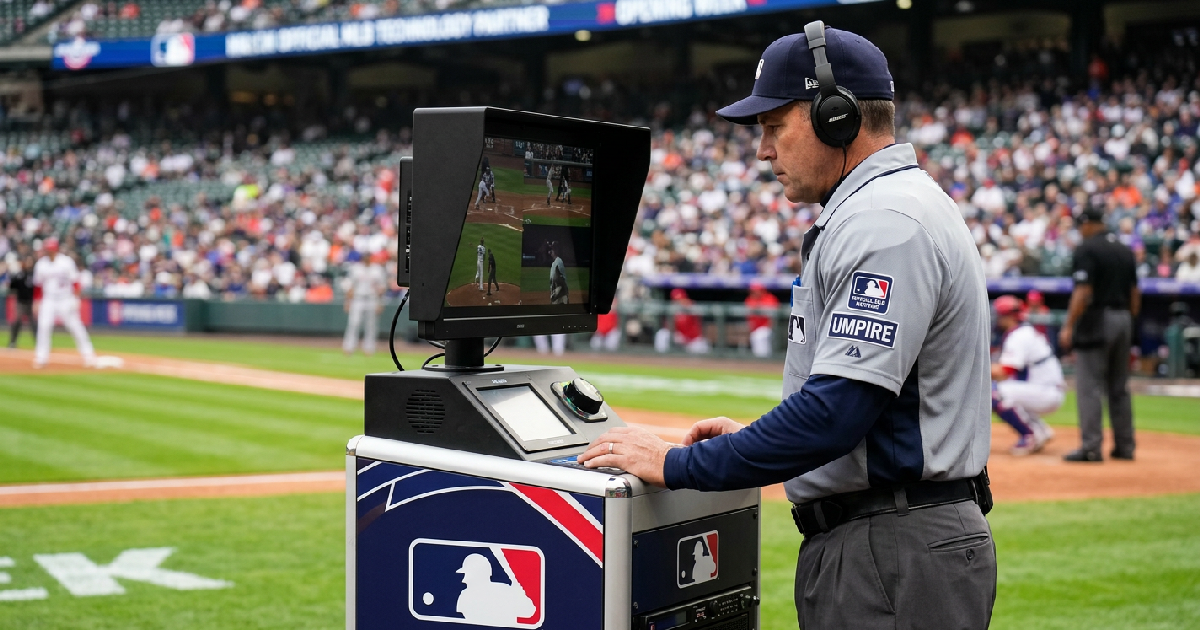
MLB umpire overturn rates revealed from Opening Week
Opening Week in Major League Baseball (MLB) is traditionally a time of optimism, but for the league’s umpiring crews, it has provided a stark statistical reality check. As the first full rotation of games concludes, newly compiled data on challenge success rates suggests that the central replay hub in New York has been busier than league officials likely hoped. The high frequency of overturned calls is already reigniting the debate over the implementation of an automated ball-strike system (ABS) at the major league level.
High Frequency of Corrected Calls Rattles Opening Slates
Data emerging from the first seven days of the 2026 season shows a notable trend in how often managers are successfully challenging on-field rulings. While specific percentage points vary slightly across different series, the early consensus indicates that a majority of reviewed plays are resulting in overturned calls. This isn’t just about close plays at first base; the data covers everything from catch-no-catch scenarios in the outfield to tags at the plate.
For managers, the high success rate of challenges is a double-edged sword. It proves the value of having a sharp replay coordinator in the clubhouse, but it also highlights a perceived lack of consistency from the veteran crews on the dirt. When more than half of challenged plays are being reversed, it creates a stop-start rhythm that MLB has been trying to eliminate through recent pace-of-play initiatives.
The Human Element vs. Technical Precision
Umpiring in the modern era is arguably more difficult than it has ever been. With increased pitch velocity and high-definition cameras capturing every blade of grass from twelve different angles, the margin for error has shrunk to almost zero. What used to be a “neighborhood play” is now scrutinized frame-by-frame, often revealing that a fielder’s foot left the bag a fraction of a second early.
Critics of the current system argue that these overturn rates suggest the game has outgrown human capability in certain high-speed moments. If the replay booth is constantly correcting the on-field official, the “human element” that purists often cite as essential to the game starts to look more like a liability. But the transition to a fully automated system remains a logistical and cultural hurdle that the league is hesitant to jump over entirely.
And yet, players are feeling the frustration. Baserunners who believe they beat a throw are more emboldened than ever to signal to their dugout for a review, knowing the statistics are currently in their favor. This creates a psychological shift where the umpire’s initial signal is treated more like a suggestion than a final ruling.
Implications for the Replay Challenge System
The volume of reversals early in the season puts pressure on the league’s operations department. If these rates hold through the spring, MLB may face calls to adjust the number of challenges allowed per team or to further refine which plays are eligible for review. There is a delicate balance between getting the call right and maintaining the flow of a game that has only recently found its footing with the pitch clock.
Beyond the diamond, these statistics are being closely watched by the sports betting industry. In an era where “umpire scouting reports” are a real factor in betting lines, crews with high overturn rates become a variable that professional bettors track with high scrutiny. If a specific crew is consistently seeing their calls flipped in New York, it impacts the perceived volatility of the games they officiate.
Looking Toward the All-Star Break
Historically, overturn rates tend to stabilize as the season progresses and umpires fall into a mid-season rhythm. However, the 2026 Opening Week figures have set a high benchmark for scrutiny. The league office typically reviews these metrics monthly, and sustained high rates could accelerate discussions regarding the “Challenge System” for balls and strikes—a hybrid model currently being tested in the minor leagues.
For now, the message to MLB managers is clear: if you think they missed it, you’re probably right to challenge. The data is currently on your side.
Frequently Asked Questions
How many challenges does an MLB manager get per game?
Under current rules, each manager starts the game with one challenge. If the challenge results in an overturned call, they retain that challenge. However, they can never have more than two challenges in a single game.
Are all plays reviewable in MLB?
No. While most “force” plays, tag plays, and home run calls are reviewable, certain aspects of the game—most notably balls and strikes—cannot currently be challenged at the Major League level, though this is being tested in the minors.
What happens if the replay is inconclusive?
If the video evidence does not clearly provide a reason to change the call, the on-field ruling stands. This is why the high current overturn rate is so noteworthy; it means the evidence is clear enough to prove the umpire was definitively wrong.