

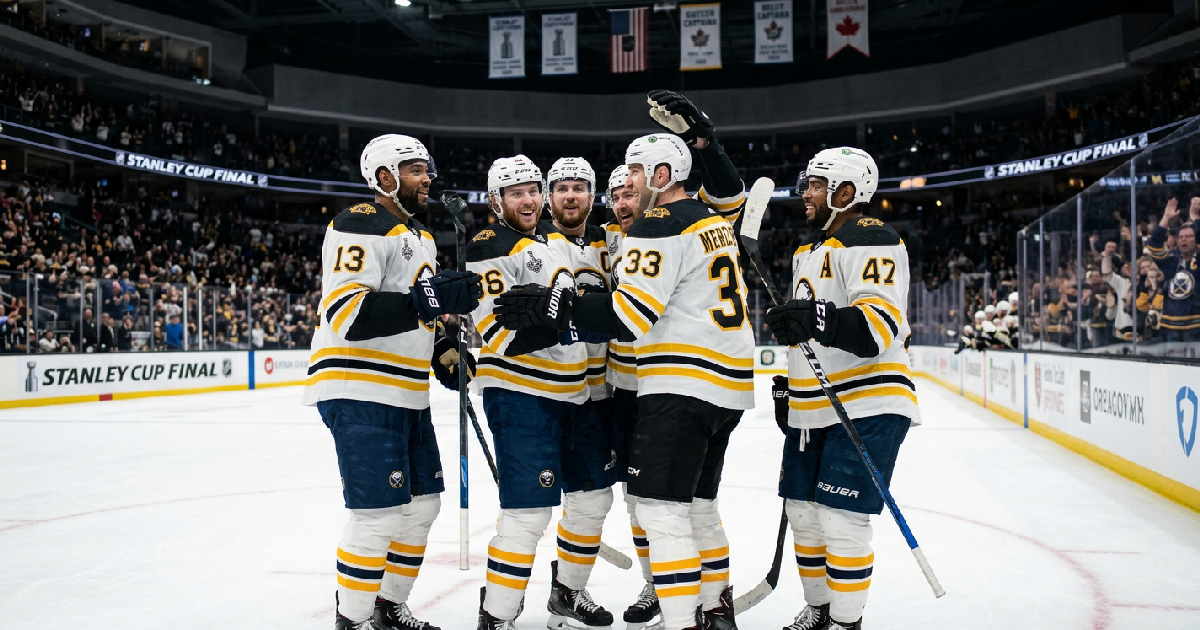
National Hockey League sees 12.5% of roster spots filled by non-draftees in 2025-26
The National Hockey League (NHL) is experiencing a shift in how teams build their rosters, with undrafted players playing a more prominent role in the 2025-26 season. Official opening-day figures show that 91 undrafted players secured spots among the 726 athletes on active rosters, accounting for 12.5% of the league.
Over the course of the 2025-26 season, this figure rose to nearly 15%, a group that included six players competing in the Stanley Cup Final.
Undrafted free agents now represent the third-largest demographic in the league, surpassed only by first- and second-round draft picks. In a recent single season, 157 undrafted players saw ice time, highlighting how critical this segment has become for organizations navigating the constraints of a hard salary cap.
This trend is a far cry from the league’s early decades; after the first draft in 1963, it took until 1970 for the system of sponsored junior teams to be fully eliminated, finally making all draft-age players eligible for selection.
The reliance on overlooked talent is a strategic move for front offices seeking cost-effective depth. Much like how the New York Mets select Cionel Pérez to address specific needs through roster flexibility, NHL teams use undrafted signings to fill gaps without exhausting draft capital. These players often arrive with higher levels of maturity, having spent extra years developing in college or professional circuits abroad.
Financial incentives and entry-level contract structures
Financial management is the primary driver behind the surge in undrafted signings. When a team recruits an undrafted free agent, the player must sign an Entry-Level Contract (ELC), which features strictly regulated salary caps. The maximum base salary for an ELC is currently $950,000 per season.
While performance bonuses can push the total cap hit to approximately $1.775 million, these players remain significantly cheaper than established veterans.
Contract duration is tied directly to the player’s age at the time of signing. Athletes aged 18 to 21 are required to sign three-year deals, while those aged 22 to 23 sign for two years. For 24-year-olds, the commitment is limited to a single season.
This structure allows teams to evaluate mature prospects with minimal long-term financial risk. High-performing players on these deals provide immense value, often delivering top-six forward or top-pairing defensive contributions at a fraction of market cost.
Beyond the primary roster, teams utilize American Hockey League (AHL) only contracts to park depth talent. These players do not count toward the NHL’s 50-contract limit unless they are signed to a two-way NHL deal. This allows organizations to maintain a “next man up” pipeline without administrative bloat.
It is a calculated approach to talent similar to how the Houston Astros sign LaMonte Aaron Wade Jr. to find production in players who have already navigated different professional levels.
Alternative pathways through NCAA and Europe
The NCAA has emerged as a major development hub for players who are bypassed in their initial draft years. College hockey provides a structured environment where players can refine their skills and physical strength until they are 22 or 23. This extended timeline is vital for “late bloomers” whose skating, decision-making, or defensive awareness might not have been NHL-ready at age 18.
European professional leagues offer another fertile ground for scouts. Playing against grown men in leagues like the SHL or Liiga helps prospects adapt to high-stakes competition earlier than they might in North American junior hockey. This pathway has been particularly successful for goaltenders and smaller skaters who rely on pace and intelligence over raw size.
Scouts now use sophisticated video and analytics to monitor these global markets, ensuring no talent is missed due to regional bias.
Advanced scouting and identifying overlooked traits
Modern scouting has moved past the era of the “eye test” to incorporate medical evaluations and psychological assessments. Scouts specifically look for players who show consistent growth across multiple seasons rather than those who had a single statistically outlier year. This data-driven approach helps identify players with the motor and intelligence required to succeed in a bottom-six or specialist role.
The unpredictability of the later draft rounds often results in high-potential players falling through the cracks. Because teams have different internal rankings, a player one team loves might go unpicked if that team runs out of selections.
These players are then invited to development camps or tryouts, giving them a second chance to earn a contract. This level of preparation mirrors the focus seen in esports, where Rory Jackson confirms team arrivals for major events well in advance to account for every variable.
The history of the NHL is filled with iconic figures who never heard their names called on draft day. While 15% has been the recent decade’s average for undrafted representation, the impact of these players is often disproportionate to their numbers.
The legacy of those who bypassed the draft entirely serves as a reminder that the draft is rarely a final verdict on a player’s professional potential.
- Wayne Gretzky: The league’s all-time scoring leader with 2,857 points, Gretzky bypassed the draft by signing a “personal services” contract in the WHA.
- Gordie Howe: “Mr. Hockey” leads all undrafted players with 1,767 games played and 1,850 career points.
- Ed Belfour: Signed by the Blackhawks in 1987, Belfour played 17 seasons and recorded 484 career wins.
Long-term trends in NHL roster construction
The share of undrafted players has fluctuated over the years, reaching approximately 20% in 2018. While that figure has hovered closer to 15% over the last ten years, the strategic value of these athletes remains a cornerstone of successful franchise management. In an era where a single massive contract can cripple a team’s depth, finding “diamonds in the rough” is no longer optional.
Teams that successfully mine the NCAA, European leagues, and the CHL for undrafted free agents gain a massive competitive advantage. These players fill specific needs, such as penalty killing or steady defensive play, without requiring the sacrifice of future assets. As the league continues to evolve, the ability to identify and develop late-maturing talent will likely separate championship contenders from the rest of the pack.