

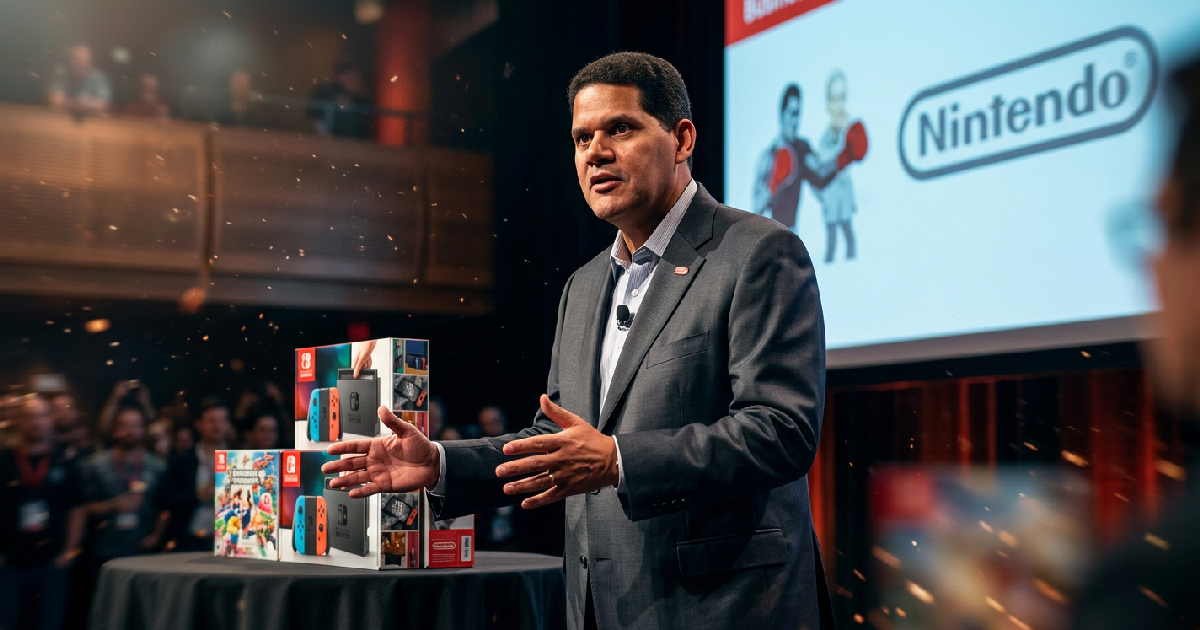
Reggie Fils-Aime Details Decision to Halt Nintendo Sales to Amazon
Reggie Fils-Aimé, the former President of Nintendo of America, reportedly disclosed during a recent lecture that the company previously suspended its retail relationship with Amazon. The move allegedly followed requests from the e-commerce giant that the gaming executive identified as potentially illegal. According to reports of his comments, Amazon pressured the company to provide financial subsidies that would facilitate aggressive price undercutting, a strategy that Fils-Aimé deemed a violation of established trade laws and ethical standards.
The reported friction developed during a period of significant market growth for Nintendo. Sources indicate that as Amazon sought to expand its footprint in the video game sector, it requested substantial financial support to maintain lower prices than its competitors. When the manufacturer refused to comply, it eventually led to a total halt of direct sales to the platform for a considerable time. This decision reportedly aimed to protect the value of the brand and maintain stable relationships across the wider retail market.
Defending business ethics in the retail sector
Fils-Aimé suggested that the decision to walk away was rooted in a commitment to long-term brand integrity over short-term sales volume. By resisting preferential treatment for a single platform, the company reportedly sought to establish that it would not be moved by predatory pricing demands. This stance is said to have built a level of corporate respect between the two entities, though it created a legacy of logistical hurdles for consumers looking to purchase hardware and software through the retailer.
The impact of this historical rift often appears in modern distribution patterns. While competitors frequently maintain smooth inventory flows with major online retailers, Nintendo products have occasionally faced availability issues or shipment delays that differ from the experiences of other manufacturers. This contrast is particularly evident when comparing retail logistics to how other giants manage their hardware, such as Sony’s recent pricing adjustments across international markets.
Platform competition and market distribution
The gaming industry continues to see power struggles between platform holders and distributors. As the Epic Games Store expands its mobile strategy to challenge mobile storefront dominance, the tension between Nintendo and Amazon serves as a case study for corporate independence. For the Japanese company, maintaining price parity and protecting the perceived value of its intellectual property has often taken precedence over the convenience of massive digital distribution networks.
Broader economic shifts are also forcing companies to re-evaluate their retail partnerships. Much like how market volatility has impacted the crypto space and other digital asset sectors this year, the gaming industry is currently navigating a period of stabilization. The decision to distance the company from Amazon shows that internal policy and legal boundaries can dictate distribution strategies for decades, even if it means missing out on the reach of the world’s largest marketplace.
Ongoing friction in the digital marketplace
While the two companies have found ways to cooperate on specific software launches in recent years, a sense of volatility reportedly remains. Amazon’s historical focus on the lowest possible price point often stands in direct opposition to a manufacturer’s goal of maintaining premium, stable market value. Reports suggest that these fundamentally different business philosophies continue to color the relationship between the two giants.
For fans and consumers, this means that first-party hardware and software may not always be as easy to find on Amazon as products from other publishers. The revelation from the former executive provides a rare look into the high-stakes negotiations that happen behind closed doors, proving that even the most powerful retailers can be held at arm’s length if they push too hard against a manufacturer’s core principles.