

The Top 5 Heavyweight UFC Fighters of All Time Ranked
Determining the greatest heavyweight in UFC history requires a delicate balance of title defenses, strength of schedule, and longevity within a division famously known for its high volatility. Stipe Miocic is widely regarded as the most decorated champion in the promotion’s heaviest weight class, joined by other high-profile figures such as Jon Jones and Daniel Cormier. Determining who holds the top spot often depends on whether a fan prioritizes historical longevity at 265 pounds or the impact of cross-divisional success from former champions like Cain Velasquez and Randy Couture.
The heavyweight landscape has historically been the most unpredictable in mixed martial arts. Unlike the lighter divisions where champions often compile lengthy reigns, the sheer power of heavyweight competitors means an individual can lose their position with a single mistake. This reality makes the achievements of the elite few even more significant. While some of these legends have transitioned into other ventures, including broadly following market trends in digital assets, their legacies were forged in the octagon through some of the most grueling rivalries in sports history.
And yet, the debate persists because the “greatest” label remains largely subjective. Is the best fighter the one who defended the belt the most times, or the one who possessed the highest peak of athletic performance? By analyzing career trajectories and the quality of opposition, a hierarchy emerges among the big men of the UFC that highlights various eras of dominance.
Stipe Miocic and the Benchmark for Heavyweight Consistency
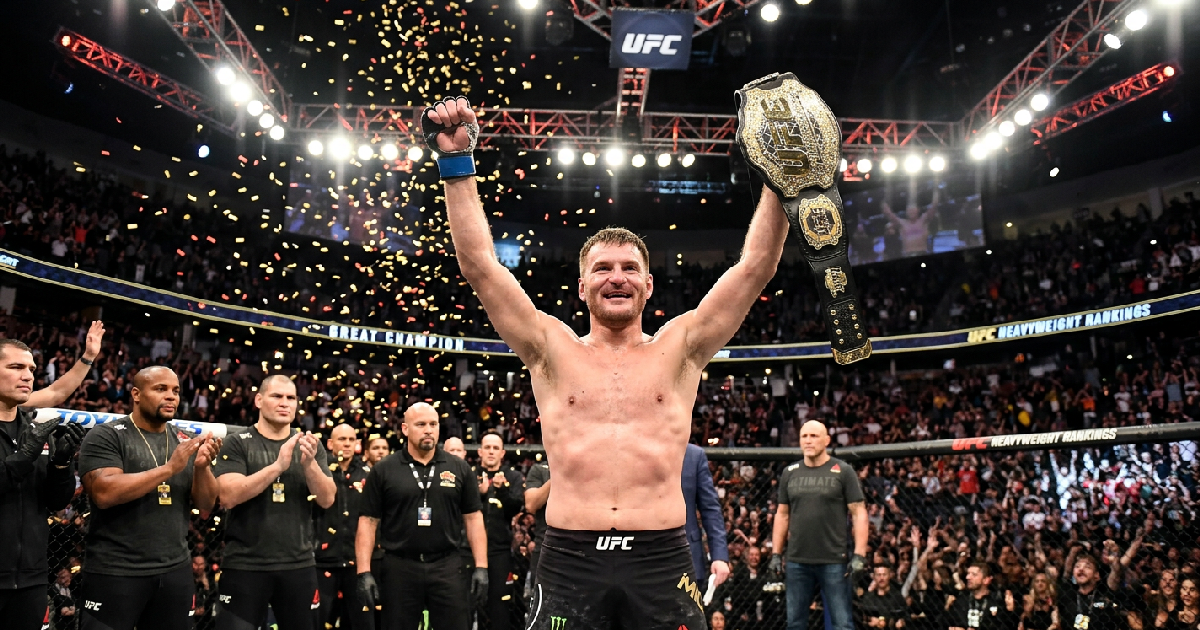
Stipe Miocic is frequently cited as a top-ranking heavyweight due to his level of consistency. The Ohio-based fighter earned acclaim for his ability to maintain his position at the top and holds what is reported to be the record for the most consecutive title defenses in the division’s history. His resume features competition against many of the era’s most prominent names, utilizing a style that blended high-level wrestling with technical boxing.
Miocic’s ability to navigate a division where others frequently faltered set him apart. His rivalry with Daniel Cormier is often viewed as a turning point for his legacy. While the series of matches saw momentum swing between both athletes, Miocic was noted for his ability to adapt his strategy over the course of multiple meetings. This adaptability is considered rare for heavyweights, who often rely on physical power over strategic evolution. Despite the rise of new talent, Miocic’s career remains a standard for any aspiring champion.
Daniel Cormier and the Move to Heavyweight
Daniel Cormier is a major figure in this discussion, largely due to his status as a champion in two different weight classes. While his light heavyweight career was legendary, his transition back to the heavyweight division allowed him to capture the title. Cormier’s wrestling background is often cited as a unique advantage, allowing him to neutralize opponents through elite positioning and clinch work. He was known for overcoming significant height and reach disadvantages during his tenure at the top of the division.
Jon Jones and Modern Dominance in the Heavyweight Class
Jon Jones entered the heavyweight conversation later in his career, but his impact was felt throughout the sport. By capturing the title in a performance that many analysts described as a smooth transition to the 265-pound limit, Jones proved that his skills remained effective despite the weight increase. While his tenure at heavyweight is shorter than others, his overall body of work within the promotion makes him a central figure in any GOAT debate.
The discussion surrounding Jones often revolves around his long-term success across different categories. Much like how observers might analyze price forecasts for various assets to understand market shifts, MMA historians must evaluate how Jones’ technical fight IQ compares to the physical peaks of past legends. His career is often defined by his ability to remain undefeated in the cage over many years of competition.
Cain Velasquez and the Peak of Athletic Performance
Many fighters and coaches argue that Cain Velasquez represented the most dangerous version of a heavyweight during his prime. Known for a relentless pace that was unusual for men of his size, Velasquez utilized constant pressure to wear down his competition. While injuries reportedly impacted the longevity of his career and his ability to accumulate defensive milestones, his peak performances are still regarded as some of the most dominant displays of skill ever seen in the division.
Randy Couture and the Legacy of a Master Strategist
Randy Couture stands out as a pioneer who competed at a high level well into the later stages of his career. Couture was known for winning the heavyweight title on multiple occasions, often overcoming being labeled an underdog by the media. His “dirty boxing” style and Greco-Roman wrestling allowed him to control the pace of a fight against larger strikers. His ability to reclaim the belt at an advanced age is frequently discussed as a landmark moment in the promotion’s history.
As the sport continues to evolve, the heavyweight division remains a primary attraction for fans and analysts alike. Newer stars are emerging, and the financial landscape of the sport is changing as well, with athletes more frequently exploring new financial opportunities and digital assets as part of their long-term planning. However, the names Miocic, Cormier, Jones, Velasquez, and Couture set a standard that remains difficult for the next generation to match.
What makes a heavyweight truly elite?
Success in this division is often defined by the ability to survive high-pressure moments. Top-tier heavyweights usually possess a foundational elite skill—whether it be wrestling, boxing, or exceptional cardiovascular endurance—that they can rely on when a match becomes difficult. Without such a specialty, heavyweights rarely maintain their position at the top of the rankings for long.
Frequently Asked Questions
Why is Jon Jones not always ranked as the number one heavyweight?
While Jon Jones is widely considered one of the greatest mixed martial artists overall, his heavyweight resume is currently limited in terms of match volume compared to Stipe Miocic. Rankers often prioritize those who spent the majority of their careers specifically defending the heavyweight title.
What separated Cain Velasquez from his peers?
Velasquez was characterized by his exceptional cardiovascular endurance. While many heavyweights are known to tire after the initial rounds, Velasquez reportedly maintained a high-volume pace for the duration of five-round fights, which was often cited as the deciding factor in his most prominent victories.
Is the heavyweight title defense record difficult to break?
The record for consecutive defenses has proven remarkably difficult to surpass in the heavyweight class. The nature of the division means champions must consistently avoid the power-punching threats of elite challengers while staying healthy enough to compete frequently, a feat that few have achieved.