

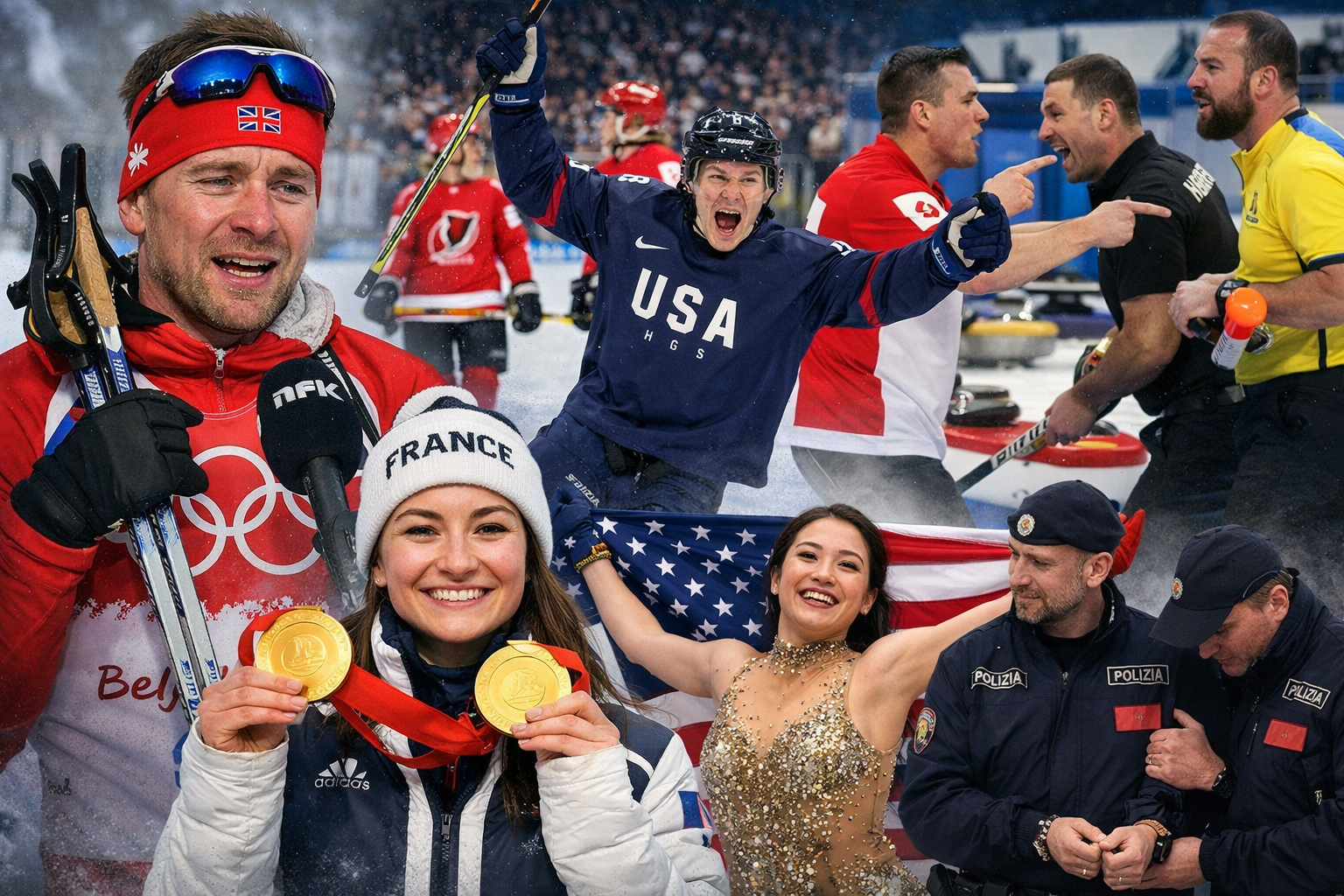
Winter Olympics 2026 Viral Moments Show How Scandal and Spectacle Now Shape Global Sport
Elite competition has always defined the Olympic Games.
But in Milan and Cortina, performance alone was not what captured the world’s attention.
The Winter Olympics 2026 unfolded as a rare convergence of sporting excellence, controversy, and deeply human unpredictability — the kind of moments that spread faster than official results ever could.
For global audiences, the Games became less about standings and more about stories.
The attention economy has changed what makes Olympic history
Olympic history used to be written through records, podiums, and national pride.
Today, visibility determines impact.
Unexpected incidents — whether personal confessions, officiating disputes, or strange off-field interruptions — traveled across social media at extraordinary speed, reshaping how the Games were experienced in real time.
Moments that had nothing to do with competition often became the defining memory of entire events.
When controversy competes directly with athletic achievement
Several of the most discussed episodes in Milan highlighted a growing tension inside global sport:
credibility versus perception.
Judging decisions sparked intense public scrutiny.
Allegations of unfair advantages circulated rapidly.
Athlete conduct outside competition became headline material within minutes.
Even when governing bodies defended official outcomes, public trust was not always restored.
The modern Olympic audience doesn’t simply observe — it evaluates, questions, and reacts instantly.

Athletes are no longer insulated from personal narratives
Another defining characteristic of the 2026 Games was the collapse of the boundary between athletic identity and personal life.
Emotional admissions, legal controversies, and interpersonal drama drew global attention equal to medal performances.
For many viewers, the emotional dimension made athletes more relatable.
For others, it blurred the meaning of sporting achievement.
Either way, personal narrative became inseparable from competitive legacy.
Viral moments now define national memory more than medal counts
Certain sporting achievements still unified audiences — dramatic finishes, historic victories, and breakout stars commanded enormous attention.
But what lingered longest in public memory were the unexpected disruptions:
unplanned intrusions
awkward misunderstandings
strange rumors
unscripted confessions
These moments spread beyond sports media and entered general cultural conversation.
The Olympics became not just an athletic event, but a global storytelling platform.
Institutions face a new reality: transparency is no longer optional
Every viral incident carries consequences beyond public amusement.
Each controversy tests governance systems.
Each rumor pressures regulators.
Each disputed result challenges institutional legitimacy.
Olympic authorities now operate in an environment where every decision is subject to immediate global interpretation.
Managing competition is no longer enough — managing perception is equally critical.
The Games revealed a shift in how global sport is consumed
The Winter Olympics 2026 demonstrated a clear transformation in audience behavior.
Viewers are no longer passive spectators tracking scores.
They are active participants in narrative creation.
Discussion, reaction, and reinterpretation occur continuously across digital platforms, often shaping the meaning of events faster than official reporting.
Sport is still competition — but it is also real-time global theatre.
Why the legacy of Milan and Cortina may extend beyond sport
In previous eras, Olympic legacy was measured in infrastructure, records, and medal tables.
In 2026, legacy may be measured differently.
The Games showed that reputation risk, narrative momentum, and public perception now operate alongside physical performance as central forces in elite sport.
Future Olympic hosts may need to plan not only for competition — but for the unpredictable power of global attention.
Performance still matters, but narrative now travels faster
The Winter Olympics 2026 delivered world-class competition.
But what truly defined the Games was the unpredictability of human behavior under global scrutiny.
Victory still earns medals.
But moments — strange, emotional, controversial, or extraordinary — earn permanence.
And in modern sport, permanence is power.