

Nintendo Reveals New Merch Inspired by Yoshi’s Food Shop in Mario Kart World
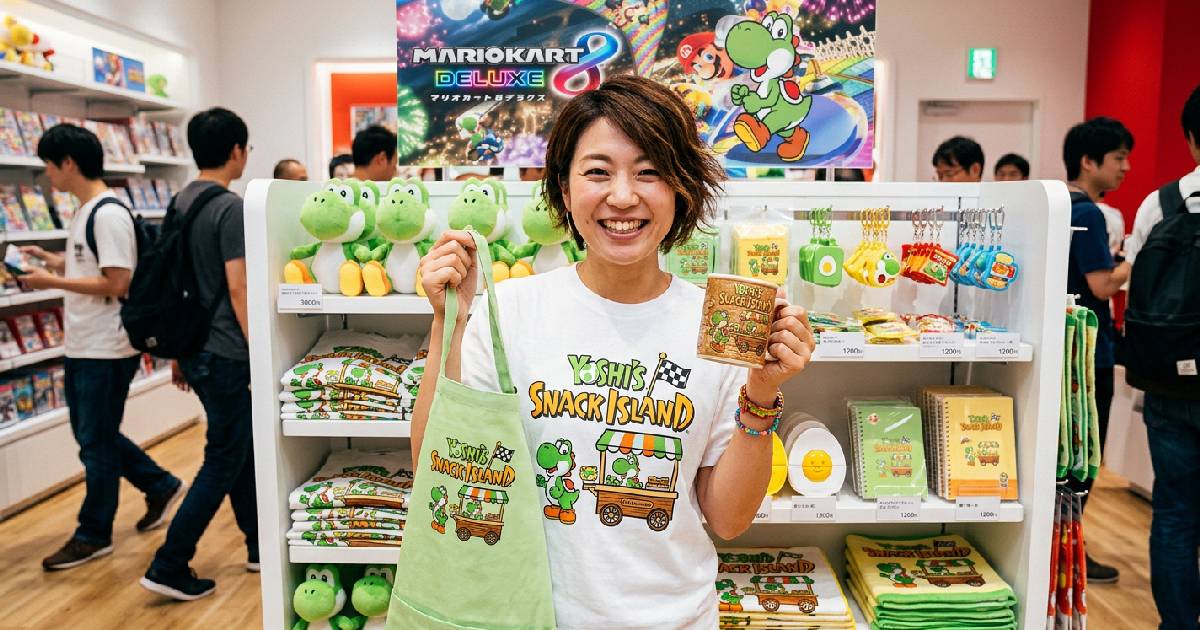
Nintendo has officially unveiled a new line of merchandise inspired by Yoshi’s Snack Island, the fictional food stand featured in the racing hit Mario Kart World. This collection will reportedly be sold exclusively through the company’s official retail storefronts in Japan. By translating a specific in-game location into a physical product line, the gaming giant is continuing its long-term strategy of turning digital assets into lifestyle branding for its global fanbase.
The product range focuses on apparel and kitchen-themed items that mirror the tropical aesthetic of Yoshi’s business within the game. Featured pieces include a themed bowling shirt, a kitchen apron, and a plush mascot designed after the Pukupuku Taiyaki snack. These releases allow the company to maintain a strong presence in the physical retail space, even as competitors adjust their hardware strategies. For instance, as Sony raises PS5 prices to combat economic shifts, Nintendo appears focused on maximizing the value of its first-party intellectual property through these high-margin collectibles.
And while the initial rollout is limited to Japanese locations like Nintendo Tokyo and Osaka, the demand for such items often ripples across the international market. Dedicated collectors frequently turn to import services or secondary markets to secure exclusive regional drops. This trend suggests that the Mario Kart World brand remains a potent driver for consumer spending beyond the software itself.
Detailed Design and Product Offerings for Yoshi’s Snack Island
The new collection utilizes a distinct design language that emphasizes the laid-back, island atmosphere found in the game. By using “Pukupuku” (Cheep Cheep) imagery for the taiyaki plush, the designers are tapping into decades of series lore. The lineup also includes various keychains and specific kitchenware pieces, though exact pricing across the entire range has not been finalized for all retail tiers. Reports suggest the pricing follows the company’s established structure for boutique lifestyle releases.
This approach to merchandising treats a single game as an expansive platform rather than just a software release. By creating tangible versions of items seen on screen, the company builds a deeper level of engagement with its audience. Just as the Epic Games Store has updated its strategy to reach wider mobile audiences, Nintendo is refining how it uses physical retail to anchor its digital worlds in the daily lives of its fans.
The exclusivity of these items often leads to a “must-have” status among the community. Because these products are rarely mirrored exactly in Western storefronts, they carry a sense of prestige. This creates a cycle where the software drives merch sales, and the merch, in turn, keeps the game’s branding relevant during breaks between major content updates.
Future Expansion of the Mario Kart World Retail Strategy
The timing of this merchandise launch is no coincidence, as the gaming industry increasingly looks toward cross-media monetization. While many developers have seen their titles arrive on PC via Steam to reach more players, Nintendo remains committed to its own internal ecosystem. This controlled environment allows them to launch specialized products like the Yoshi collection without competing for brand space with third-party licensees.
Success for this specific food-shop-themed line could set a precedent for future releases. If fans respond well to apparel and household items based on Yoshi’s fictional business, it is highly likely that other characters will receive similar treatment. Iconic figures like Wario or Donkey Kong have their own potential “businesses” within the game’s world that could easily be adapted for retail.
So, the Yoshi’s Snack Island collection serves as a bellwether for how the company intends to handle the Mario Kart World property in the coming years. By focusing on high-quality, character-driven items, they are ensuring that their retail locations remain a destination for fans. For now, Yoshi is the primary focus, proving once again that themed food and colorful aesthetics are a winning formula for the company’s merchandising arm.