

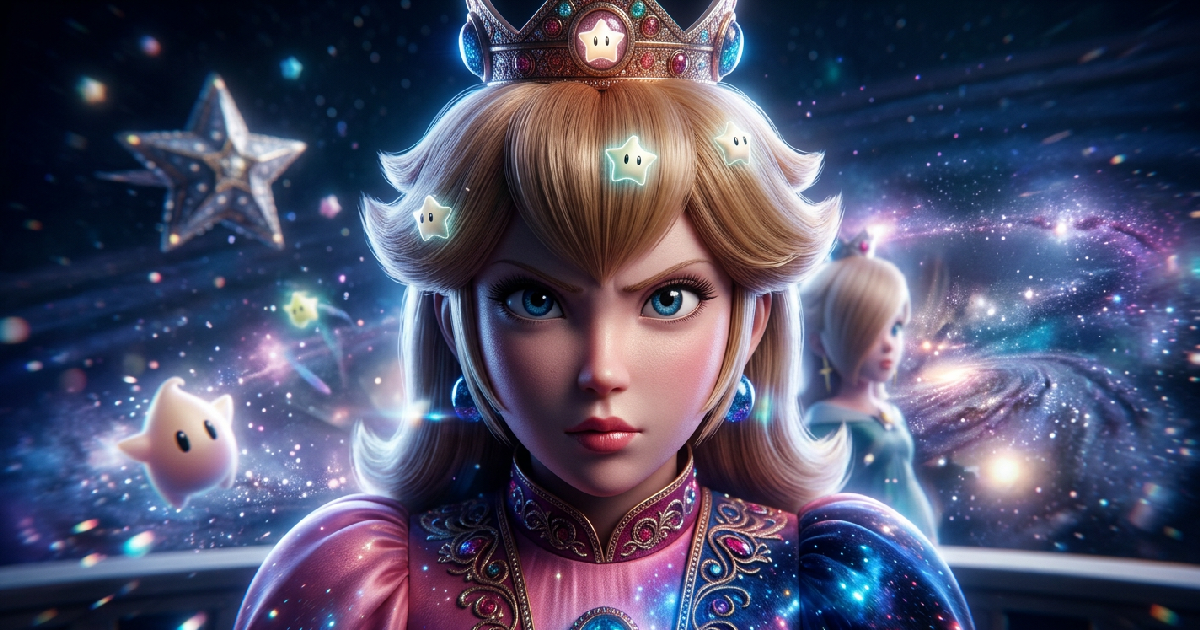
Nintendo Expected to Maintain Peach Movie Backstory in Future Game Development
Nintendo has long maintained a reputation for being protective of its intellectual property, often keeping narrative details and character origins shrouded in mystery to ensure maximum flexibility for future projects. However, a significant shift in this philosophy appears to be emerging following the release of the Super Mario Galaxy Movie. Reports suggest that Shigeru Miyamoto, the legendary creator of the Mario franchise, has indicated that the silver screen will now play a more foundational role in shaping the lore of upcoming video games.
The film, which has attracted substantial attention in theaters, reportedly introduced a major revelation regarding the lineage of Princess Peach. In a move that departs from years of vague hints and contradictory manuals, the movie reportedly establishes a familial connection between Peach and Rosalina. For a series that has historically prioritized platforming mechanics over family trees, this concrete piece of character history marks a departure from the traditional gameplay-first approach often associated with Nintendo’s development teams.
Shifting Stance on Game Narrative Continuity
According to reports regarding recent conversations with Japanese media, Miyamoto has historically avoided pinning his characters down to specific backstories. The reasoning behind this is largely considered to be pragmatic: having too many established rules or character settings can act as a constraint when developers are trying to invent new gameplay mechanics. If a character’s history dictates they cannot perform a certain action or visit a specific location, it limits the creativity of the game designers.
But the process of developing the Super Mario Galaxy Movie appears to have influenced his perspective. Miyamoto reportedly noted that expanding upon a character’s origins for the sake of a film was an engaging process, and there is now an expectation that these cinematic details will be preserved within the interactive medium. This suggests that the relationship between Peach and Rosalina is no longer just a detail for the big screen, but could become a part of the Mario canon that fans might see acknowledged in future software releases.
This development comes at a time when Nintendo is increasingly looking to leverage its characters across different platforms. Just as Epic Games has adjusted its mobile strategy to capture a wider audience, Nintendo is using high-profile media projects to build a more cohesive universe that rewards fans who engage with the brand outside of their consoles.
Impact on Future Princess Peach Titles
The decision to reportedly adhere to the movie’s backstory provides a glimpse into how Nintendo might handle its future development pipeline. While the company is unlikely to pivot toward heavy, dialogue-driven experiences for its flagship platformers, the acknowledgment of a kinship between major characters opens the door for unique gameplay opportunities. For example, a cooperative title featuring the two princesses as leads would now have a narrative foundation to build upon, rather than appearing as a random pairing.
Balancing Lore with Creative Freedom
The reported pivot is particularly notable given previous industry trends. For years, Nintendo was seen as avoiding movie adaptations because they didn’t want to be bound by stories they didn’t create specifically for a game. By embracing the movie’s lore, the company is effectively allowing different creative teams to influence the direction of the development teams in Kyoto.
This strategy reflects a broader trend of unified storytelling that we see in other sectors of the digital economy. Much like how new game releases on Steam often coordinate with wider marketing pushes, Nintendo is ensuring that their various divisions are moving toward a more synchronized narrative. If audiences see Peach and Rosalina together on the big screen, future games would logically reflect that established relationship to avoid confusion.
Potential Implications for Wider Franchises
While reports haven’t explicitly linked these changes to other major properties like Link or Zelda, it is difficult not to apply this logic to Nintendo’s other massive titles. With a live-action Legend of Zelda project in development, any backstory established for those characters on film might eventually make its way into a future entry in the game series. This represents a potential shift for a brand that has traditionally treated its timeline and lore as a flexible tapestry.
Commercial Success Influencing Narrative Direction
The reception of the Super Mario Galaxy Movie makes this strategic shift understandable. When a film reaches a massive global audience, the story told on screen often becomes a definitive version of that character in the public consciousness. Attempting to ignore the film’s events in the games could lead to consumer friction. The goal is likely to ensure that the millions of people who watched the film find a familiar world when they pick up a controller.
This commercial logic mirrors the way certain technologies or assets become market leaders through sheer volume of adoption. In the financial sector, major players often accelerate their acquisitions to cement their status once a certain direction is proven successful. Nintendo is applying a similar logic to its narrative assets, leaning into story beats that have already resonated with a global audience.
For long-term fans, the prospect of a more connected Mario universe is a significant change. While Peach is unlikely to become a lore-heavy character overnight, the shift suggests that her history now carries weight across different media. It points toward a future where the Mushroom Kingdom feels less like a collection of disparate levels and more like a world with its own consistent internal history.