

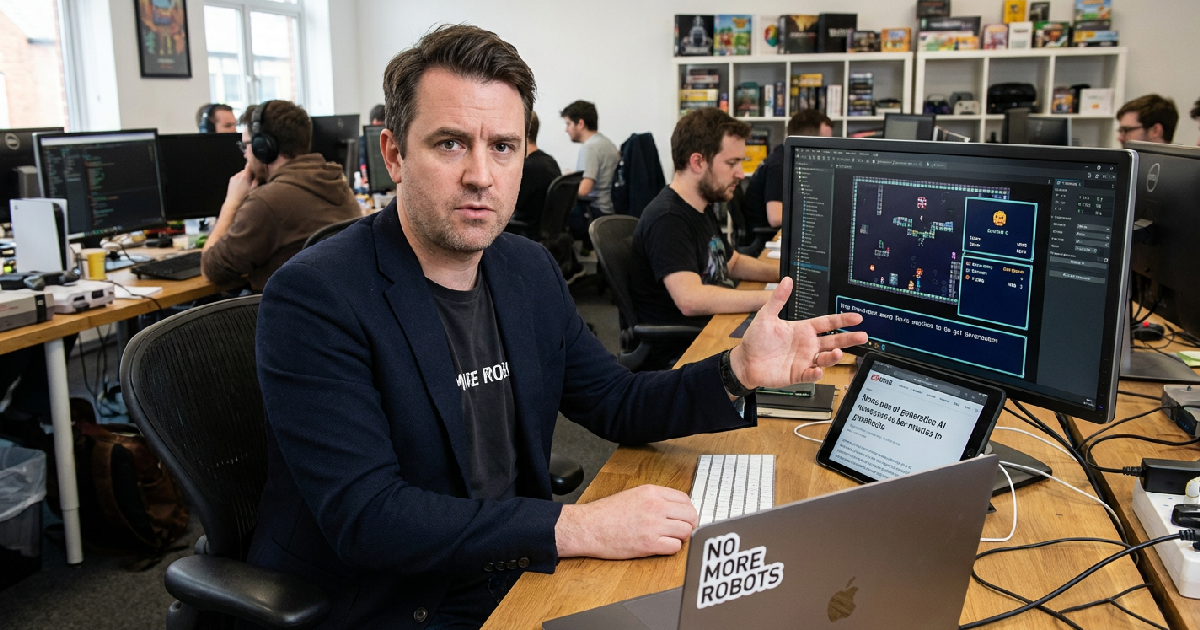
No More Robots Founder Issues Sharp Warning Over AI in Gaming
The tension between traditional game development and the rise of generative artificial intelligence has reached a point of open conflict. Mike Rose, the founder of indie publisher No More Robots, has emerged as a vocal critic of the technology, suggesting that the industry’s current trajectory could undermine the creative foundation of the medium. His recent remarks reflect a growing anxiety among developers who believe that automated tools risk stripping away the human touch that defines digital entertainment.
The Aesthetic and Ethical Debate
Rose’s recent commentary on the visual output of generative AI focuses on what he perceives as a lack of soul in automated assets. He described the look of AI-generated content in disparaging terms, echoing a sentiment shared by many in the independent scene who argue that the technology produces a generic, unappealing aesthetic. This critique isn’t just about appearance; it’s a fundamental disagreement over value. For publishers that have established themselves through distinct, human-led projects, the move toward automation feels like a move away from the art form itself.
The suggestion that the industry is “cooked” points toward a fear of a market flooded with low-effort content. As production costs rise, some major players appear to be looking toward these tools as a way to maintain margins. This shift occurs as distribution strategies evolve, with many creators looking to the Epic Games Store and similar platforms to reach audiences in an increasingly crowded marketplace. But for critics like Rose, efficiency should never come at the expense of original intent.
Indie Creators Favor the Human Touch
While larger corporations have signaled interest in using AI for NPC interactions, environment textures, and technical assistance, many independent studios are positioning themselves as the last bastions of handcrafted design. The argument is that if the industry begins to rely on the same sets of data to build its worlds, the variety that players have historically enjoyed will diminish. There is a concern that games will start to feel iterative and predictable rather than surprising.
This push for “human-made” content is becoming a point of branding. Much like how the release of major titles on Steam relies on community trust and recognizable quality, indie labels are banking on the idea that players will eventually tire of the “uncanny valley” associated with algorithmic generation. The fear is that the sheer volume of AI-assisted projects could make it harder for truly unique, labor-intensive games to find their footing.
Economic Pressures and Industry Sentiment
The debate over AI cannot be separated from the financial pressures currently weighing on the tech sector. Much like how fluctuations in the Bitcoin market can impact investor sentiment across the broader digital landscape, the trend toward AI is often seen as a response to shareholder demands for growth and cost-cutting. Rose’s skepticism suggests that prioritizing financial metrics over cultural value may lead to a loss of identity for the industry.
The following table illustrates reported trends in how different sectors of the gaming world are currently interacting with AI technology according to various industry observations.
| Market Sector | Primary AI Application | Reported Sentiment | Labor Impact Concern |
|---|---|---|---|
| Major Publishers | Procedural Generation | Profit-Oriented | High (Entry-level) |
| Independent Labels | Administrative Support | Strong Resistance | Moderate |
| Mobile Gaming | Asset Generation | High Integration | High (Graphic Art) |
| Esports | Data Analytics | Utility-Focused | Low |
Looking Toward the Future
The resistance from the indie community is likely to persist as generative tools become more sophisticated. The question is no longer whether AI can build a game, but whether it should. For the time being, publishers like No More Robots are sticking to the philosophy that players can discern the difference between a world created by a person and one generated by a prompt. Whether the market at large will prioritize human creativity over the lower costs offered by automation remains the central conflict of the modern era.
Frequently Asked Questions
How is “generative” AI different from traditional game AI?
Traditional AI, like enemy pathfinding, uses pre-set rules. Generative AI actually creates new art, music, or dialogue based on massive datasets, which critics argue replaces the role of human artists.
Why are indie publishers so skeptical of this technology?
Many believe that a reliance on these tools will lead to a “sameness” in gaming, where creative risks are ignored in favor of what an algorithm calculates is successful or efficient.
Will the use of AI lead to lower prices for gamers?
It is considered unlikely by many analysts. While studios might see a reduction in certain production costs, these savings are often reportedly redirected toward marketing or other corporate overhead rather than resulting in a lower retail price for the consumer.