

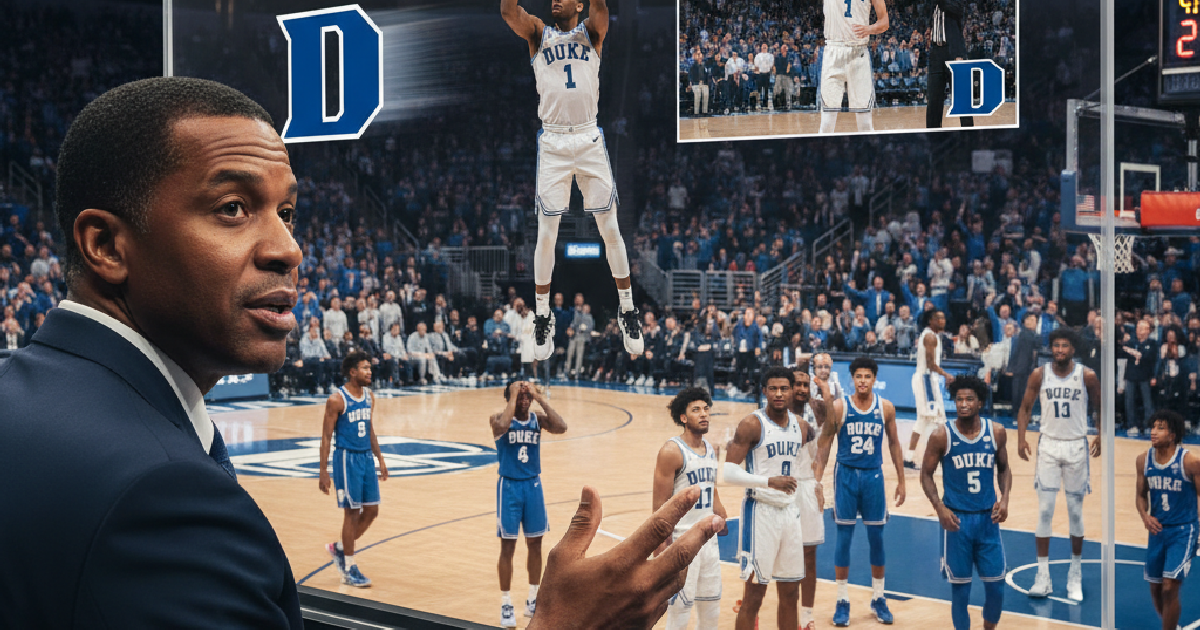
Grant Hill likens Braylon Mullins shot to Laettner as Duke falls
Grant Hill has seen enough high-pressure basketball to know a legendary sequence when he sees one. The Duke icon and Hall of Famer recently weighed in on the viral performance of Braylon Mullins, drawing a direct line between the prospect’s late-game heroics and the most famous shot in Blue Devil history. During a high-stakes matchup that saw Duke’s defensive composure crumble, Mullins delivered a performance that Hill described as the “new Laettner moment.”
Hill draws parallels to the 1992 East Regional Final
The comparison isn’t made lightly. When Hill refers to Christian Laettner, he is referencing the 1992 buzzer-beater against Kentucky—a shot set up by Hill’s own full-court pass. In the recent clash featuring Mullins, the atmosphere reached a similar fever pitch. As Duke struggled to maintain a late lead, Mullins took control of the floor, showcasing a level of confidence that veteran observers rarely see in collegiate-level prospects.
Hill, who was on the call for the broadcast, noted that the feeling in the building shifted the moment Mullins began his final run. Duke, typically known for a disciplined “Blue Devil” defensive identity, appeared to suffer a total systemic breakdown. Miscommunications on switches and a failure to protect the perimeter allowed Mullins to find the space he needed. But it wasn’t just the defensive lapses; it was the poise Mullins showed while “calling his shot” before the ball even left his hands.
Deconstructing the Blue Devil defensive collapse
For Duke fans, the “meltdown” wasn’t just about one player scoring. It was the manner in which the lead evaporated. Hill pointed out that the team’s late-game execution lacked the typical polish expected from a top-tier program. The defensive rotations were a step slow, and the intensity that defined the first half seemed to vanish under the pressure of Mullins’ momentum.
And yet, as Hill observed, sometimes great offense simply beats good defense. Mullins operated with a surgical precision, reading the floor and exploiting the gaps left by Duke’s panicking backcourt. By the time the final whistle blew, the comparison to the 1992 classic felt appropriate not just because of the scoring, but because of the psychological impact the moment had on both the crowd and the opposing bench.
The rising stock of Braylon Mullins
Mullins has been a name on the radar for many scouts, but this specific performance has elevated his status. Calling a shot in a high-pressure environment against a program like Duke is the kind of theatre that defines a season. Hill’s endorsement only adds fuel to the fire, as he remains one of the most respected voices in the sport regarding talent evaluation and “clutch” DNA.
The aftermath of this game leaves Duke with plenty of questions regarding their late-game reliability. While individual talent on the roster is high, the inability to close out against a hot hand like Mullins’ suggests that there is work to be done in the film room. For Mullins, the “Laettner” comparison will likely follow him as he continues to navigate a path that many expect will lead to the professional ranks.
Frequently Asked Questions
Why did Grant Hill compare this to the Laettner moment?
Hill saw a similarity in the sheer audacity and clinical timing of the play. Just as Laettner silenced a crowd in 1992, Mullins took over a game that Duke seemed to have under control, forcing a shift in the game’s narrative through singular individual brilliance.
What went wrong for Duke during the so-called meltdown?
According to Hill and other analysts, the primary issues were defensive communication and a lack of perimeter pressure. The team stopped being the aggressor and allowed the momentum to shift entirely toward Mullins, leading to a series of unforced errors and missed assignments.
Is Braylon Mullins considered a top NBA prospect?
While rankings vary, performances against high-profile teams like Duke significantly boost a player’s draft stock. Mullins has shown he can perform under the brightest lights, which is a key metric for NBA scouts looking for “big game” players.