

Yoshida Addresses Final Fantasy XIV Performance Hurdles on New Nintendo Hardware
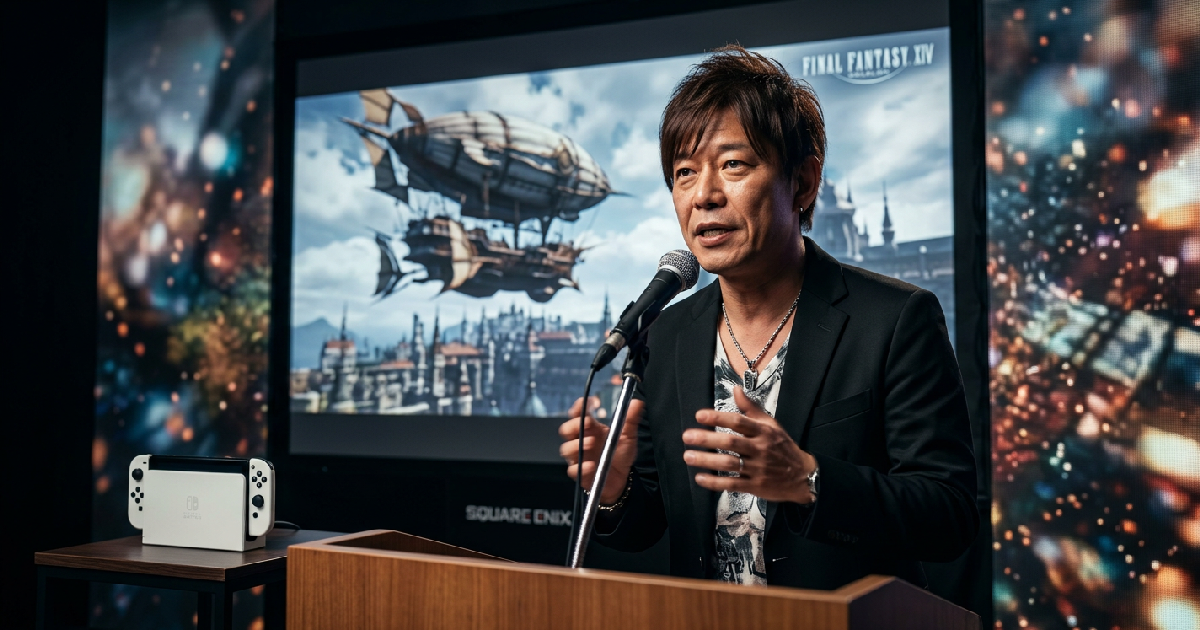
Square Enix producer Naoki Yoshida has addressed the technical performance of Final Fantasy XIV on Nintendo’s upcoming hardware, suggesting that while development involves navigating specific hardware limitations, the final product will remain highly playable. The producer, widely known among the community as Yoshi P, confirmed that the long-running MMORPG is being prepared for the next-generation Nintendo console. While early testing has revealed some fluctuations in smoothness, Yoshida indicated that players should not be concerned about the overall experience as the studio continues its optimization process.
The move to bring the sprawling world of Hydaelyn to a Nintendo platform follows years of technical hurdles that reportedly prevented a port to previous hardware. With the increased capabilities of the successor to the Switch, Square Enix appears to be aligning its flagship online title with a broader strategy of multi-platform accessibility. This shift reflects a wider industry trend where major publishers are seeking to capture diverse audiences, similar to how the Epic Games Store is expanding its mobile platform presence to reach more players across different devices.
Addressing Performance in Densely Populated Zones
The primary technical challenge for the development team involves managing “player density,” which refers to the number of character models and visual effects the system must render simultaneously. Yoshida noted that performance dips are most likely to occur in major social hubs and cities where hundreds of players gather at once. These environments place a heavy load on the system’s processing power, making them the most difficult areas to stabilize during the porting process.
To mitigate these issues, the studio is reportedly focusing on ensuring a consistent experience during critical gameplay moments, such as dungeons and raids. In these combat-heavy scenarios, the team aims to maintain a stable baseline performance to ensure that precise movements and timing remain responsive. While the game may face some struggles in crowded towns, the development priority is ensuring that high-stakes content remains functional and fluid for the player base.
Improving Accessibility Across Hardware
The upcoming version is expected to support various control methods, allowing for the same level of flexibility found on other platforms. This remains a core tenet for Square Enix as it attempts to unify its global player base. The game recently saw a launch on Steam and other PC platforms, and the addition of a portable Nintendo option further bridges the gap between different gaming ecosystems.
Optimization is currently a work in progress, with the dev team attempting to maximize the efficiency of the new hardware. Yoshida’s transparency regarding these technical hurdles is consistent with his history of managing expectations within the community. Having overseen the massive overhaul of the game following its difficult early years, his communication style often prioritizes realistic technical assessments over marketing polish.
The Strategic Value of the Nintendo Port
Bringing Final Fantasy XIV to Nintendo hardware represents a milestone for the franchise, offering access to a demographic that has historically been unable to play the title on their preferred console. The hardware capabilities in the new system finally provide the overhead necessary to run the full experience, including its various expansions, without compromising the core mechanics of the game. Even as the wider market faces economic headwinds, the expansion of a successful subscription-based service is seen as a strategic move to ensure long-term stability.
As the anticipated release window draws closer, further details regarding resolution and specific graphical modes are likely to emerge. For now, the focus is on a final round of polishing to ensure that the framerate issues mentioned by Yoshida are minimized before the software reaches the public. If the team can deliver the promised stability in combat zones, the Nintendo version will likely serve as a viable alternative for players who value portability and convenience alongside high-end content.