

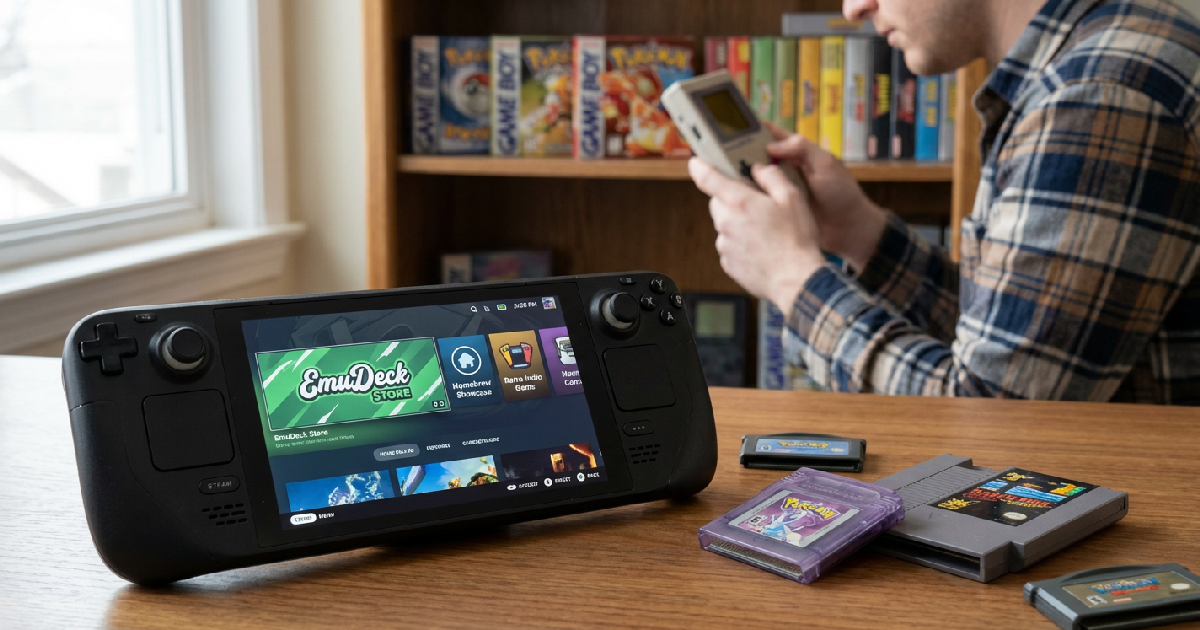
EmuDeck Store Launches to Showcase Retro Homebrew Games
The landscape for emulation and retro gaming has shifted again as EmuDeck, the popular software suite known for simplifying the complex process of setting up emulators on Linux-based devices, officially launches the EmuDeck Store. This move aims to provide a centralized hub for homebrew developers to showcase and distribute their work directly to players using handheld gaming consoles like the Steam Deck and various ASUS ROG Ally models.
For years, retro gaming enthusiasts have navigated a fragmented ecosystem of forums and niche hosting sites to find “homebrew”—original games developed for legacy hardware like the NES, Game Boy, or Sega Genesis. By integrating a dedicated store into its existing interface, EmuDeck is looking to bridge the gap between these creators and a growing audience of handheld gamers who may not have the technical inclination to hunt for ROM files manually.
Simplifying Homebrew Access for Handheld Players
The EmuDeck Store isn’t attempting to sell commercial titles or facilitate piracy. Instead, its focus is strictly on the homebrew scene—independent developers who are currently making new games for old systems. This platform offers these creators a way to get their titles in front of the Steam Deck community with a one-click installation process.
And it’s a strategic move for the EmuDeck team. By legitimizing the distribution of legal, original software meant for emulators, they are distancing themselves from the legal scrutiny that often plagues the emulation world. The store provides a curated experience, ensuring that the games listed are compatible with the EmuDeck configuration and optimized for the screen resolutions and control schemes of modern handhelds.
The initiative also helps solve a persistent problem in the retro community: visibility. While projects like the Analogue Pocket or the MiSTer have kept interest in legacy hardware alive, many developers struggle to find a player base outside of hardcore enthusiasts. A featured slot on a storefront that is already installed on hundreds of thousands of Steam Decks is a massive boost for an indie developer working on a 16-bit RPG or an 8-bit platformer.
The Technical Edge for Steam Deck and Retro Handhelds
The technical integration of the EmuDeck Store is its strongest selling point. Traditionally, adding a homebrew game to a handheld required downloading the file, moving it to the correct “roms” folder, scraping for metadata or box art, and then configuring the controls. The store automates this entirely. When a user downloads a title, EmuDeck handles the directory placement and Steam Library integration, making the game appear alongside AAA titles like Call of Duty or Overwatch.
This level of polish is what users have come to expect from EmuDeck, which has become the de facto standard for emulation on the Steam Deck. By pivoting into software distribution, the developers are signaling that EmuDeck is no longer just a configuration tool, but a comprehensive gaming platform in its own right.
But this expansion also comes at a time when the legal environment for emulation is tense. Following recent high-profile takedowns in the industry, focusing on legally-cleared homebrew content is a smart defensive play. It proves that the technology has massive utility beyond playing backups of retail titles.
Future Growth and the Indie Retro Scene
As the store grows, we can expect to see more sophisticated features such as user reviews, developer profiles, and potentially even paid homebrew titles. Currently, much of the content is free, but several “pro” level homebrew developers have expressed interest in a stable platform to sell their digital ROMs, much like they currently do on platforms like Itch.io.
The impact on the wider gaming hardware market is also worth noting. With PlayStation and Nintendo keeping their legacy libraries locked behind subscription walls, the open-source nature of the EmuDeck Store provides a compelling alternative for gamers who want to own their digital content and support small-scale creators directly. It reinforces the Steam Deck’s reputation as the ultimate “everything” device.
FAQ: Understanding the EmuDeck Store
Is the EmuDeck Store legal to use?
Yes. The store focuses exclusively on homebrew games and indie projects where the developer has granted permission for distribution. It does not host or distribute copyrighted retail games from Nintendo, Sega, or Sony.
Do I need a Steam Deck to access the EmuDeck Store?
While the store is optimized for the Steam Deck and SteamOS, it is part of the EmuDeck ecosystem which is also available on Windows and other Linux-based handhelds. If you have EmuDeck installed, you can typically access these features.
Are there paid games on the EmuDeck Store?
Currently, the store is primarily a hub for free homebrew projects. However, the framework allows for more robust distribution in the future, which could eventually include premium titles from the independent retro development scene.