

Review: Constance (Switch) – A Beautiful Metroidvania Tackling Burnout
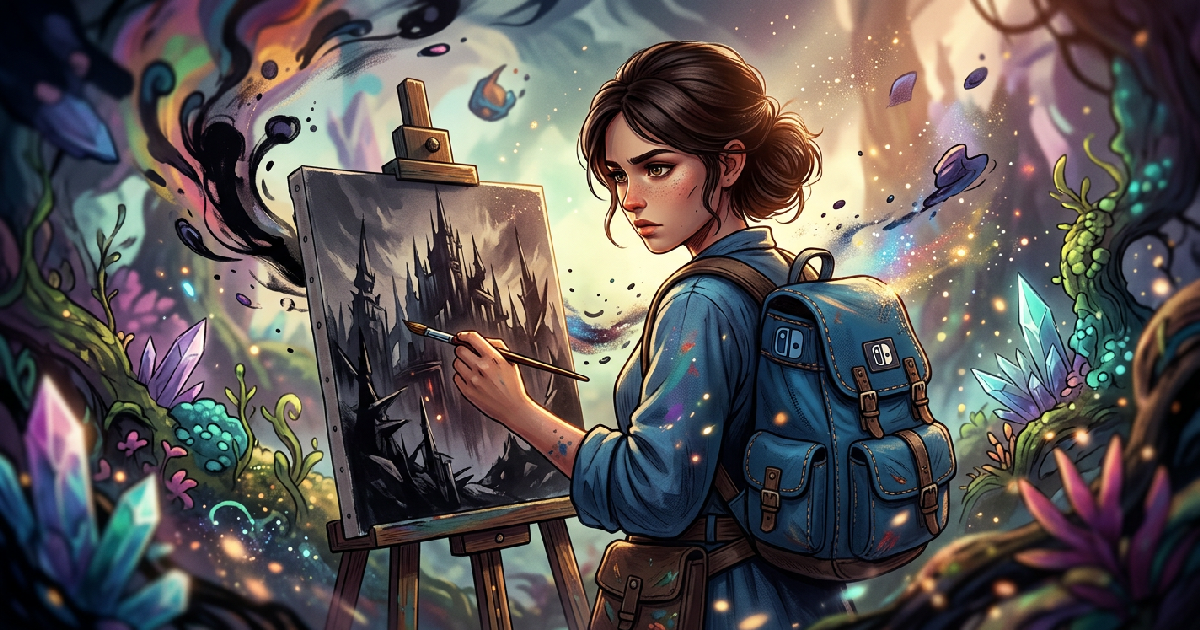
Blue Backpack and publisher btf have released Constance on the Nintendo Switch eShop, bringing a hand-drawn 2D Metroidvania to the platform that explores the heavy themes of burnout and mental health through the eyes of its titular artist protagonist. The game centers on Constance’s journey through a fantasy realm of her own making, serving as a mechanical metaphor for her desire to escape the crushing pressures of her professional life. While it adheres closely to the genre staples established by giants like Hollow Knight, it distinguishes itself through a unique paint-based combat system and a focus on disciplined gameplay.
The narrative framing is immediate and relatable. Players witness Constance’s reality fracturing under a barrage of work emails and looming deadlines before she is pulled into a vibrant, often treacherous dreamscape. This world represents both her creative sanctuary and the manifestation of her anxieties. By grounding the fantastical exploration in the mundane struggle of a working artist, developer Blue Backpack gives the traditional “ability gate” progression of the Metroidvania genre a fresh emotional weight.
For fans of the genre who might be waiting for the next major release, Constance offers a polished experience that fills a specific niche. As new games arrive on PC via Steam and eventually migrate to consoles, the Switch continues to be a primary home for high-quality indie titles that prioritize art direction and atmospheric storytelling. In a market often saturated with derivative clones, Constance attempts to elevate itself by demanding absolute concentration from the player.
Fluid Mechanics and the Cost of Creativity
Movement in Constance is built around the protagonist’s identity as an artist. Her primary weapon is a paintbrush, and her traversal abilities involve slinking into puddles of purple paint to bypass obstacles or scale walls. This “paint-meter” serves as a critical resource; when the meter is depleted, Constance’s hair and brush lose their color. Continuing to use special abilities in this state actively drains her health, forcing a risk-reward calculation that keeps combat tense.
This design choice creates a tactical loop where players must land specific moves, such as the Paint Stab, to replenish their vitality and resources. It isn’t just about reflex; it’s about resource management in the heat of battle. While the genre is often associated with high-performance platforms, Constance finds a comfortable rhythm on the Switch hardware, focusing on smooth animations rather than raw technical power. Even as Sony increases PS5 prices in certain regions, the indie scene on handheld consoles remains a competitive space for price-conscious gamers.
Flashbacks to Constance’s real-life struggles are presented as low-stakes minigames, such as designing a logo or completing a rhythm-based violin challenge. These segments provide necessary breathing room between intense platforming sections. They also reinforce the game’s message about the difficulty of maintaining a work-life balance in an increasingly connected world.
Performance and Technical Optimization
The game appears to be well-optimized for the current Nintendo Switch hardware. Despite the intricate hand-drawn assets and the “swooshing” particle effects of the paint abilities, the frame rate reportedly remains stable in both handheld and docked modes. Players using the latest iteration of Nintendo’s hardware will notice enhanced color depth, though the base experience remains intact for original Switch owners.
The game offers various visual modes, including Performance and Quality settings, though the “Balanced” mode appears to be the most common choice for users. This level of optimization is crucial during the more difficult boss encounters, where precise timing is required. While economic pressures influence hardware prices globally, the accessibility of the Switch eShop remains a vital pipeline for these smaller, focused projects.
Evaluating Narrative Challenge and Value
While Constance succeeds in its artistic and thematic goals, it does face some hurdles in its boss design and repetitive platforming. Some bosses fail to fully utilize the game’s more creative power-ups, such as the Aerial Boost, often defaulting to predictable patterns that lack multiple phases. These moments can lead to a slight dip in momentum during the campaign, which provides a substantial amount of content for a specialized indie title.
However, the overarching “focus” required by the developer prevents the game from feeling like a mindless crawl. By punishing players who take simple navigation for granted, Blue Backpack ensures that the gameplay reflects the mental state of the protagonist—an individual who must be entirely present to survive her own thoughts. It is a confident debut that proves there is still room for innovation within one of gaming’s most crowded genres.