

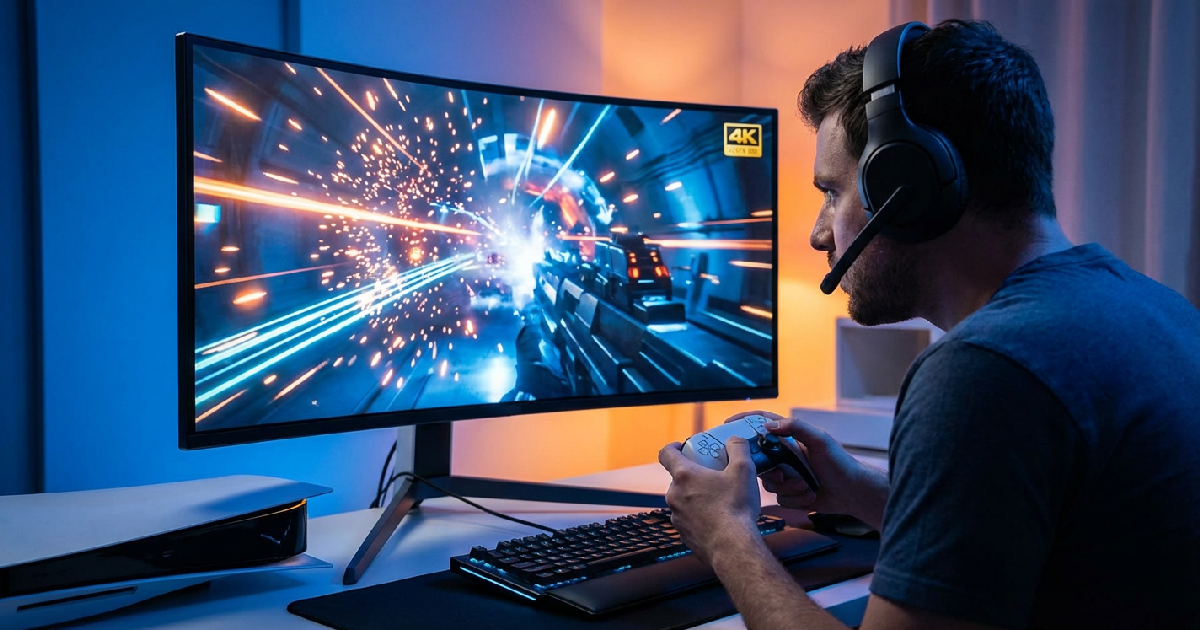
Optimized Gaming Monitors for PlayStation 5: Enhancing Your Visual Experience
Choosing a dedicated display for the PlayStation 5 has become a priority for many players who find that traditional living room televisions do not always meet the demands of competitive play. While the PS5 is designed to take advantage of large-format OLED TVs, the faster response times and ergonomic setups provided by monitors are increasingly popular for those seeking a more focused gaming experience. The hardware capabilities of the console, specifically its support for 4K resolution at high refresh rates and Variable Refresh Rate (VRR), have narrowed the field to a selection of high-performance panels that can handle the console’s output.
For enthusiasts looking to maximize their setup, the transition from a standard TV to a high-end monitor often involves balancing desk space with screen real estate. The shift reflects a wider trend in how users consume media, moving away from shared spaces toward personalized gaming stations. As manufacturers refine their HDMI 2.1 implementations, the gap between monitors and high-end televisions continues to close, offering console owners more flexibility than ever before. With Sony reportedly adjusting PS5 pricing in response to global economic shifts, many players are treating their display choice as a long-term investment in their gaming setup.
High Performance Features for Modern Consoles
The standard-setter for many in the console space remains the high-end gaming series that lead with OLED technology. These displays offer near-instantaneous response times that are physically impossible for traditional LCD panels to match. In fast-paced games where every frame matters, the motion clarity of an OLED monitor ensures that detail remains sharp even during rapid camera movements. This is particularly noticeable in titles that support high-frame-rate modes, where the fluidity of movement becomes a tangible advantage for the player.
Beyond the display tech itself, the inclusion of HDMI 2.1 is a critical feature for any modern console monitor. This interface allows for full 4K resolution alongside high frame rates, something older monitors simply cannot achieve simultaneously. Given the current market, players are increasingly making an investment in the ecosystem, making the choice of an optimized monitor a logical step to get the most out of the hardware’s graphical potential.
Balancing Resolution and Refresh Rates
While 4K is often considered the peak of visual quality, many players find that a 1440p resolution is a practical choice for 27-inch and 32-inch monitors. The PS5 officially supports 1440p output, providing a sharp image that is often indistinguishable from 4K at typical viewing distances. High-refresh-rate monitors in this category are often more accessible while still supporting the crucial VRR feature, which eliminates screen tearing by syncing the monitor’s refresh rate to the console’s frame rate output.
Specialized Displays and Ecosystem Integration
Sony’s own Inzone line represents a push toward vertical integration, offering monitors specifically tuned to work with the PS5. Features like Auto HDR Tone Mapping allow the console to recognize the specific monitor model and optimize its HDR settings. This removes the guesswork from calibration, a task that can often feel tedious on third-party displays. Some models feature full-array local dimming, which helps produce deep blacks and bright highlights that mimic a high-end TV experience in a smaller form factor.
As the market evolves, companies are exploring more flexible publishing strategies. For instance, reports suggest that the Epic Games Store is expected to expand its presence on mobile platforms, showing how the broader gaming world is shifting toward more cross-platform experiences. This flexibility extends to hardware, where monitors are now expected to serve dual purposes: a high-performance gaming screen by night and a productive workspace by day. Models from various manufacturers have gained traction by offering features like KVM switches, allowing users to move between the console and a PC with minimal friction.
Considerations for Audio and Multi-Platform Connectivity
One drawback of switching to a monitor is the often-lackluster built-in audio. Most monitors prioritize panel quality over speakers, meaning a dedicated headset or external speakers are almost always necessary. Additionally, for those planning for the long term, considering how a game is expected to arrive on PC via Steam alongside console versions might influence the choice of a monitor with better color accuracy for creative work or more robust ports for multiple devices.
Future Proofing the Visual Experience
Looking ahead, the focus for display manufacturers is shifting toward Mini-LED and improved HDR peak brightness. While OLED remains the leader for contrast, Mini-LED monitors offer a middle ground with high brightness levels that make HDR content truly stand out without some of the longevity concerns associated with other panel types. For console users who play for long sessions or in brightly lit rooms, this technology offers a viable alternative to more specialized panels.
The selection of a monitor ultimately depends on the specific genre of games favored by the player. Fighting game and shooter enthusiasts will always lean toward the lowest possible input lag, whereas those immersed in cinematic single-player adventures may prioritize resolution and color depth. As the console lifecycle matures, the abundance of high-quality, HDMI 2.1-enabled monitors means there are more options than ever to upgrade the visual experience.