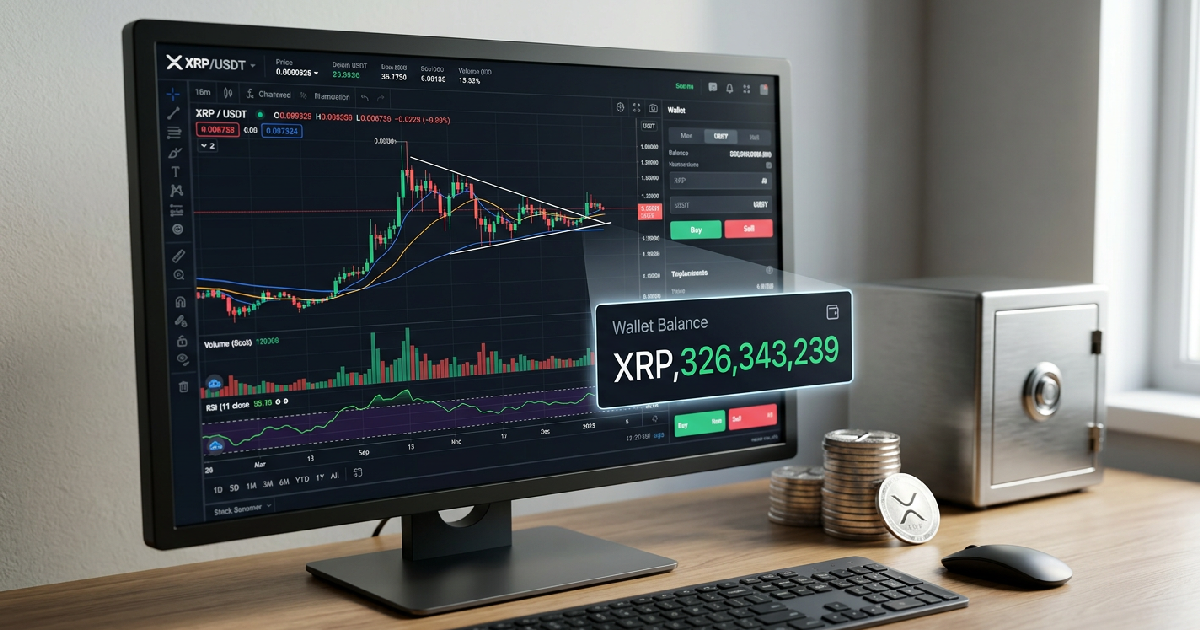
Large-scale cryptocurrency holders, commonly referred to as whales, have reportedly increased their XRP holdings to levels not seen in several years. Recent on-chain indicators suggest that wallets containing substantial amounts of the digital asset now control a vast majority of the circulating supply. Despite this aggressive accumulation by major private stakeholders, the price remains in a prolonged state of consolidation as institutional demand through United States exchange-traded products has reportedly slowed.
The current concentration of the asset among these major holders is said to be reaching highs comparable to multi-year peaks observed in the late 2010s. This cohort’s dominance suggests a level of long-term confidence from high-net-worth individuals that hasn’t yet translated into momentum for the broader market. This buying phase appeared to accelerate following the debut of regulated investment products, though the impact on the asset’s daily valuation has been muted.
Whale Dominance vs. Institutional Interest
While these major holders control a massive portion of the supply, their influence on immediate price discovery has been dampened by a lack of follow-through from retail traders and traditional institutional desks. This disconnect is particularly visible when comparing private holdings to the assets under management in specialized funds. In a similar vein,
MicroStrategy accelerates Bitcoin buys while other corporate entities remain cautious, reflecting a broader trend where the “big money” positions itself while the general public remains hesitant.
The sluggish price action throughout the current quarter can be traced back to cooling interest in Spot XRP exchange-traded funds (ETFs). While these U.S.-based products hold a substantial amount of assets, they represent only a small fraction of the total supply held by private whales. The correlation between fund inflows and price spikes was reported as strong during the initial product launches, but that momentum has largely subsided over recent months.
Market Sentiment and Liquidity Challenges
Market observers note that the demand for regulated crypto products tapered off significantly following the initial hype of early 2026. Without consistent buy pressure from institutional on-ramps, XRP has struggled to breach key resistance levels. This lack of volatility mirrors a wider trend seen in the sector where
Bitcoin dropped below key price thresholds as liquidity dried up across the industry. This drain has pulled the attention of major investors away from altcoins and back toward market leaders.
Projected Outlook for XRP Recovery
For the asset to escape its current range-bound structure, a fresh catalyst beyond simple accumulation by whales may be required. Sideways movement is expected to persist unless there is a renewed surge in ETF demand or a shift in the global macroeconomic climate that favors riskier assets. As
global capital flows shift between stocks, bonds, and digital assets, the high concentration of ownership could act as a double-edged sword—providing a floor for the price but also limiting the circulating supply needed for active trading.
Retail participation remains a missing piece of the puzzle. Historically, significant price surges in the XRP ecosystem have required a combination of whale accumulation and a surge in retail interest. In the current environment, the broader altcoin sector faces a period of stagnation, with many tokens trending lower as Bitcoin continues to dominate both investor interest and capital allocation. Whether this period is a temporary lull or a sign of deeper institutional indifference is the primary question facing investors through the remainder of the year.