

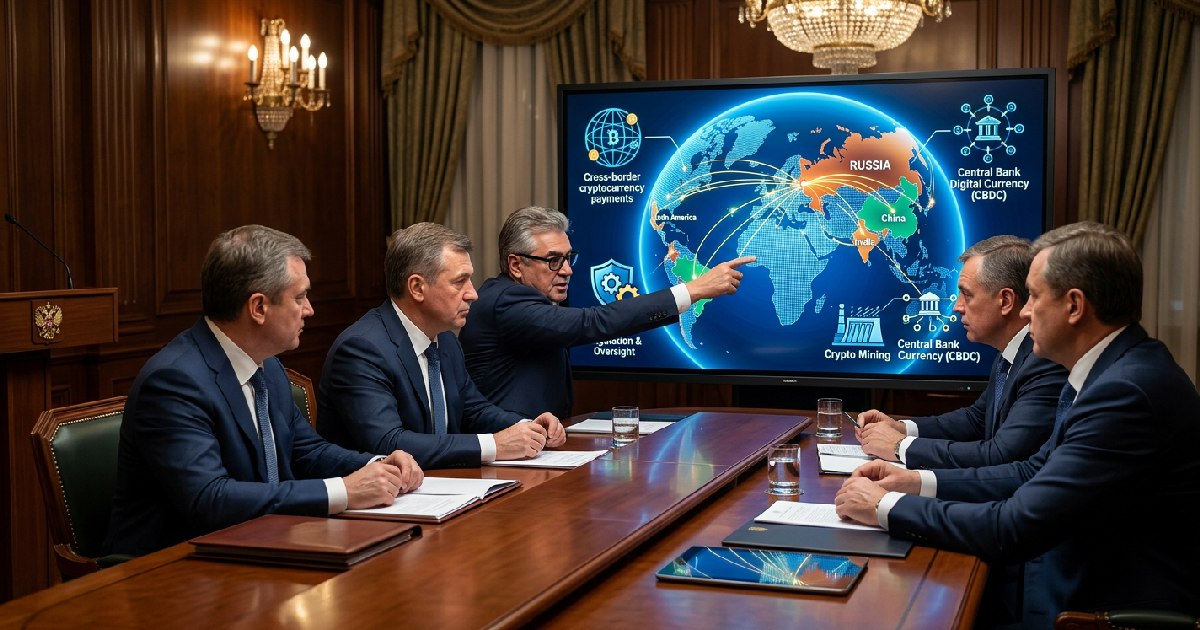
Russia Progresses Comprehensive Crypto Bill with Focus on Trade and Oversight
Russian legislators are advancing a comprehensive legislative package designed to integrate digital assets into the nation’s financial infrastructure. While presented as a move toward modernization, the details of the bill reveal a shift toward using cryptocurrency as a tool for settling international trades and potentially bypassing economic restrictions that have limited the country’s access to global markets.
The State Duma, Russia’s lower house of parliament, is currently refining the language of the bill which aims to create a legal framework for the circulation of digital currencies. This development follows a period of internal debate between the Central Bank of Russia and the Ministry of Finance regarding the risks of decentralization. However, the necessity of maintaining global trade has moved the needle toward a compromise that prioritizes strategic utility over traditional fiscal caution.
Establishing a Framework for Cross-Border Settlement
The core of the new legislation focuses on the creation of an experimental legal regime for the use of digital assets in foreign trade. Under this framework, Russian companies would reportedly be permitted to use cryptocurrencies to pay for imports and receive payments for domestic exports. This represents a departure from the country’s previous stance, which largely restricted the use of digital currencies within its borders for everyday payments.
This initiative is not just about streamlining business. The bill includes provisions that lawmakers suggest could help in navigating international trade barriers. By leveraging the decentralized nature of blockchain technology, the Russian government aims to maintain its flow of capital without relying solely on the SWIFT global messaging system. This strategic pivot comes at a time when global capital flows are being increasingly monitored by international regulators.
The Central Bank’s Evolving Role
Perhaps the most significant aspect of this advancement is the changing role of the Central Bank of Russia. Long an opponent of private cryptocurrencies, the bank is now expected to oversee a pilot program for cross-border payments. This reflects a pragmatic realization that traditional financial channels may no longer serve the state’s immediate interests. The central bank will likely manage a restricted list of approved participants, ensuring that while the technology is decentralized, oversight remains firmly with the state.
The move comes as the digital asset market continues to experience significant price swings. Assets like Bitcoin have recently seen downward pressure, highlighting the inherent risks in tying national trade to assets that can fluctuate in value over short periods. Despite these risks, the Russian legislative body appears focused on the benefits of a dedicated payment rail that functions outside of Western-led financial systems.
Mining Infrastructure and Domestic Controls
Beyond international trade, the sweeping bill establishes rules for the crypto mining industry. Russia has been a hub for mining due to its energy resources, but the industry has often operated without a clear legal status. The new provisions would formalize mining as a legitimate economic activity, subject to taxation and reporting requirements.
By bringing miners into the legal fold, the government likely hopes to create a steady domestic supply of digital currency that can be channeled into cross-border payment systems. This approach could minimize the need to acquire crypto through foreign exchanges, which are under increasing pressure to enforce international transparency and compliance standards.
Security and Regulatory Oversight
To mitigate the risks of money laundering and domestic capital flight, the bill introduces stringent oversight. Specialized entities will be authorized to facilitate the exchange of digital currencies, and they will be required to provide transactional data to federal tax and security agencies. While the bill facilitates external trade, it simultaneously tightens the grip on how the Russian public interacts with these assets internally.
The timing is relevant as other institutional players grapple with the volatility of the digital asset market. Some reports have indicated that firms managing digital assets have faced financial pressure due to drops in treasury valuations, illustrating that even seasoned players are susceptible to market movements. Russia’s strategy appears to assume that state-level necessity for liquidity is more critical than the balance-sheet stability of individual commercial entities.
Geopolitical Impact and Market Outlook
The international community is watching these legislative advancements with caution. If Russia successfully implements a system for trade through crypto, it could set a precedent for other nations facing economic isolation. This could lead to a fragmentation of the global financial system, where western-led traditional finance competes with state-monitored blockchain ecosystems.
As the bill moves toward its final readings and implementation, the global crypto market may face increased scrutiny. Regulators in the US and EU are already signaling a desire to close potential loopholes that could be exploited by sanctioned entities. Consequently, while the bill aims to provide a lifeline for Russian trade, it may also accelerate the push for more aggressive global regulation of the crypto sector.
The Kremlin’s current trajectory suggests that the era of viewing cryptocurrency as a mere speculative interest is ending. In the current geopolitical climate, blockchain is being treated as a vital tool of economic strategy and survival.