

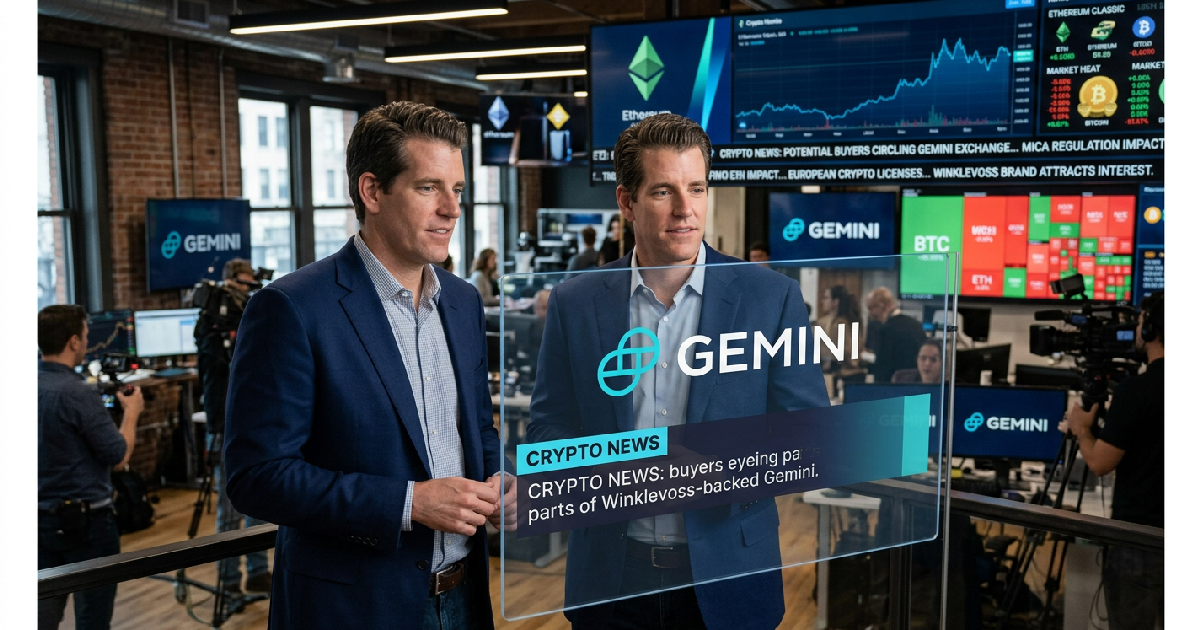
Buyers eye parts of Winklevoss-backed Gemini exchange
The landscape of the digital asset exchange market is shifting as reports emerge that several parties are exploring potential acquisitions within Gemini, the exchange founded by Cameron and Tyler Winklevoss. Rather than a wholesale buyout of the entire platform, the interest appears focused on specific divisions, signaling a new chapter for one of the industry’s most high-profile entities.
Industry insiders suggest that the primary draw for these prospective buyers is Gemini’s regulatory infrastructure. In an environment where obtaining licenses from scratch can take years of legal maneuvering and millions in capital, acquiring an existing footprint is often seen as the more efficient path to market dominance. This development comes as the liquidity shifts in the broader market continue to force consolidation among even the most established players.
Strategic focus on European regulatory licenses
The most significant interest reportedly centers on Gemini’s European operations. Despite the exchange having previously scaled back or shuttered portions of its presence in the region, the underlying regulatory authorizations it secured remain incredibly valuable to competitors. The European Union’s implementation of the Markets in Crypto-Assets (MiCA) regulation has made the continent a primary destination for firms seeking a clear legal framework.
By picking up these specific pieces of the Gemini business, a buyer could potentially bypass the arduous process of applying for new licenses under MiCA. It is a tactical move often seen in traditional finance: buying a “shell” with the right paperwork to gain immediate access to a lucrative jurisdiction. The Winklevoss-backed firm spent years building these bridges, and while the exchange faces its own set of internal strategic decisions, those assets haven’t lost their shine for outsiders.
The current climate has forced many firms to reconsider their treasury and operational strategies. We have recently seen instances where institutional players like BitGo have navigated treasury valuation drops while maintaining revenue growth, highlighting the volatile nature of balance sheets in this sector. For Gemini, offloading specific international branches could provide the capital and focus needed to double down on its core domestic products.
Consolidation in a maturing market
The interest in Gemini reflects a broader trend of “vulture” and “strategic” acquisitions. As the initial boom of the early 2020s fades, only a few exchanges remain with the brand recognition and compliance history of the Winklevoss twins’ platform. Buyers aren’t just looking for users; they are looking for the technical and legal plumbing that allows an exchange to operate globally without constant friction from local watchdogs.
This period of potential divestment follows a series of challenges for the New York-based firm. Gemini has spent much of the last year resolving disputes and navigating a market that has become increasingly hostile to retail-heavy business models. Some analysts believe that carved-out sales represent the best path forward for the founders to salvage value and streamline the organization. There is also the matter of market sentiment; as major assets face price corrections, the pressure to maintain lean operations becomes a necessity rather than a choice.
What the future holds for the Winklevoss twins
Cameron and Tyler Winklevoss have been among the most vocal advocates for the institutionalization of crypto. If they choose to sell parts of their empire, it may not be a sign of retreat, but rather a pivot toward the more profitable segments of the business, such as their custody services or institutional lending arms.
The coming months will likely reveal which firms have the appetite for Gemini’s assets. Traditional financial institutions looking to enter the digital space remain the most likely candidates, given their penchant for acquiring regulated entities rather than building them. For the Gemini team, the sale of European units could provide the necessary runway to weather any further market storms or reinvest in new technology, including AI integration or advanced trading tools.
And yet, the brothers remain a central fixture in the space. Whether they continue to operate the exchange as a full-service platform or transition into a more specialized service provider, their influence on the regulatory standards of the industry is already cemented. The “circling” by buyers is simply a testament to the fact that what they built has tangible, lasting value—even if the form of that business is about to change.