

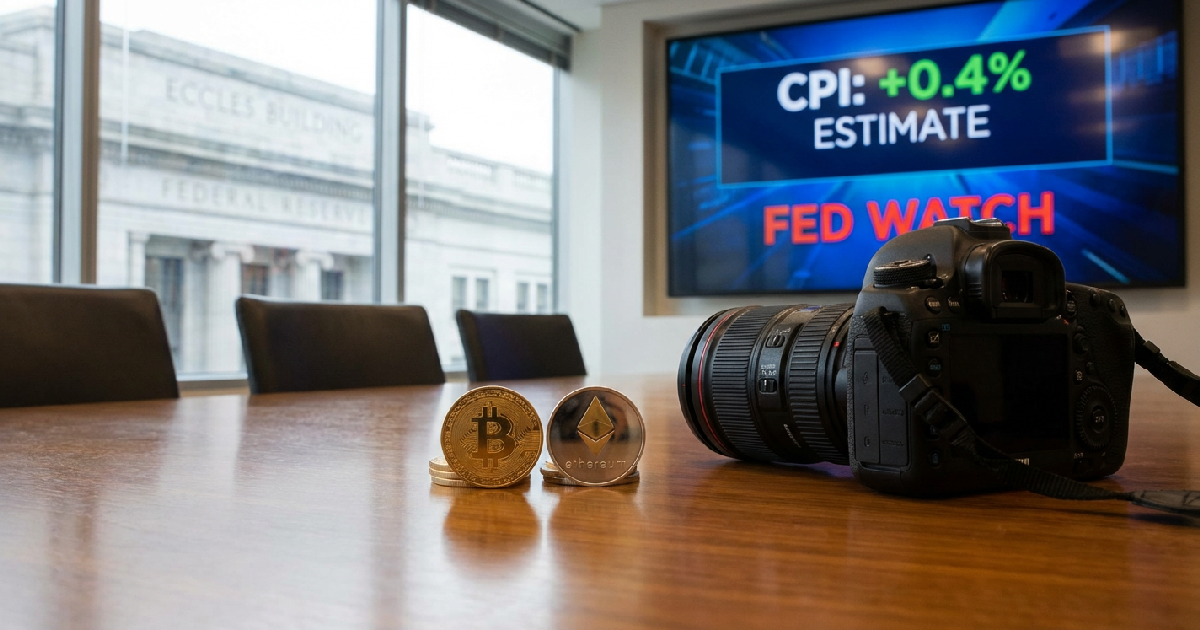
Inflation data takes center stage for Crypto Week ahead
Digital asset markets are bracing for a volatile stretch as fresh U.S. inflation data prepares to collide with a cooling crypto landscape. After months of being driven by institutional inflows and ETF hype, the dialogue has shifted back to the Federal Reserve’s favorite metric: the Consumer Price Index (CPI). With the next set of figures due in the coming days, the usual optimism surrounding “Crypto Week” is being tempered by a growing realization that high-interest rates might be sticking around longer than anyone anticipated.
For traders, the link between inflation and Bitcoin has never been more direct. In earlier cycles, crypto was often touted as a pure “inflation hedge,” but 2026 has increasingly shown that the asset class behaves more like a high-beta technology play. When inflation numbers come in hot, expectations for rate cuts evaporate, prompting investors to flee riskier assets in favor of the dollar and Treasury bonds.
Macroeconomic Pressure Meets a Weakening Rally
The timing of this inflation focus couldn’t be more precarious. Bitcoin has recently struggled to maintain its momentum, with analysts pointing toward a sharp correction risk as market signals begin to cool. If the upcoming inflation reports suggest that the cost of living is still rising at an uncomfortable pace, the probability of a May or June rate cut becomes slim. This would exert downward pressure across the board, affecting everything from blue-chip assets like Ethereum to more speculative decentralized infrastructure plays.
But the narrative isn’t just about Bitcoin. Other corners of the market, specifically those tied to AI and compute power, are watching these macro shifts with equal intensity. As seen in the recent pivot toward AI compute needs, decentralized networks are trying to prove they have real-world utility that can withstand a high-interest-rate environment. However, when capital becomes expensive due to persistent inflation, the “wait and see” approach usually wins out over venture-style bets on new technology.
Stablecoins and the Regulatory Shadow
While the market watches the CPI, Washington is making its own moves that could redefine how inflation-sensitive assets operate. The legislative environment is tightening, particularly around stablecoins—the primary vehicle for many users looking to protect their purchasing power. Recent developments, such as the Clarity Act blocking interest payments on these assets, mean that one of the most popular ways to “beat” inflation within the crypto ecosystem is being systematically dismantled.
Without the ability to earn yield on dollar-pegged assets, many retail investors may find themselves caught in a pincer movement: rising prices at the grocery store on one side, and a stagnating, yield-restricted crypto market on the other. This creates a psychological shift where “HODLing” becomes harder to justify if the underlying asset isn’t generating enough return to offset the eroding value of the dollar.
A Narrowing Window for Utility
The broader crypto market is currently moving through what many describe as a narrowing window for utility. As we move further into April, the market’s patience for speculative assets is wearing thin. If this week’s inflation data confirms a “sticky” inflation trend, we are likely to see a flight to quality. This usually means a rotation out of mid-cap altcoins and into Bitcoin, or even out of the crypto space entirely until the macro picture clears.
The coming days will act as a litmus test. If crypto can hold its ground despite a high CPI print, it would signal a decoupling that many have predicted but few have actually seen. If it tumbles, it confirms that digital assets are still very much under the thumb of the Federal Reserve’s policy decisions.
Crypto Inflation Week FAQ
Why does U.S. inflation affect Bitcoin specifically?
Bitcoin is priced in U.S. dollars and is treated by large institutions as a risk-on asset. High inflation usually leads to higher interest rates, which makes the dollar stronger and “risky” assets like crypto less attractive compared to safe returns like government bonds.
Is Bitcoin still considered an inflation hedge?
The “digital gold” narrative has taken a hit in 2026. While it may serve as a long-term hedge against currency debasement, in the short term, it tends to trade in the opposite direction of inflation surprises. When the dollar loses value quickly, the Fed raises rates, which typically pushes Bitcoin’s price down.
What happens to Altcoins if the CPI is higher than expected?
Altcoins generally experience higher volatility than Bitcoin. In a high-inflation scenario where the market expects “higher for longer” interest rates, liquidity often drains out of altcoins first, as investors move toward the perceived safety of Bitcoin or exit the market to hold cash.