

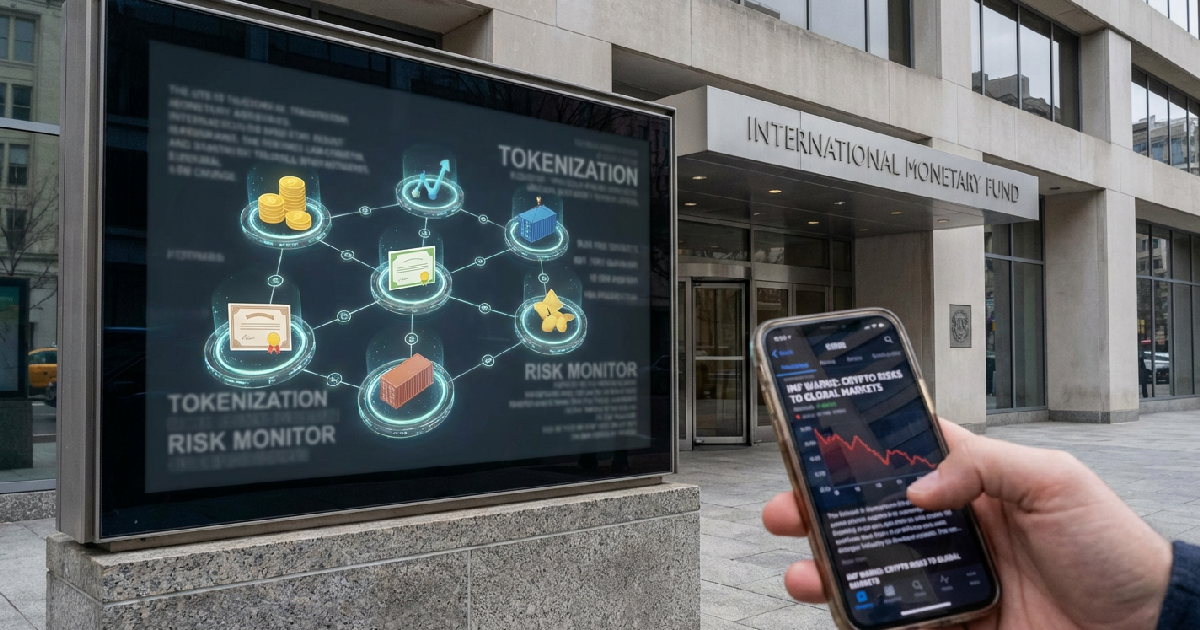
IMF warns tokenization brings crypto risks to global markets
The International Monetary Fund (IMF) has intensified its scrutiny of the burgeoning real-world asset (RWA) sector, warning that the mass tokenization of traditional assets could bridge systemic risks from the volatile crypto market directly into the global financial system. In a series of recent assessments, the Washington-based lender cautioned that while the efficiency gains of blockchain are clear, the lack of a standardized regulatory framework poses a mounting threat to financial stability.
For years, the crypto industry and traditional finance have functioned as largely separate ecosystems. However, the rise of tokenized treasury bills, real estate, and private credit is rapidly dissolving that barrier. The IMF argues that if these links deepen without rigorous oversight, a flash crash in the digital asset space could trigger a liquidity crisis in the broader economy.
The Growing Link Between Chains and Cash
Tokenization involves creating digital twins of physical or financial assets on a blockchain. This allows for fractional ownership, instant settlement, and 24/7 trading availability. While these features are highly attractive to institutional investors looking to slash operational costs, the IMF points out that they also introduce “interconnectedness risks” that are not yet fully understood by central banks.
One of the primary concerns centers on the speed of transactions. In a traditional market, “circuit breakers” and settlement delays provide a buffer during periods of extreme volatility. In a tokenized environment, contagion can spread at the speed of the network. If a major stablecoin de-pegs or a decentralized finance (DeFi) protocol suffers a massive exploit, the ripple effects could force the liquidation of the underlying traditional assets, putting pressure on legacy markets.
The IMF’s warning comes at a time when major financial institutions are already moving aggressively into the space. Firms like BlackRock and Franklin Templeton have launched tokenized funds that have attracted hundreds of millions of dollars in capital. But as these products grow, so does the risk that they become a gateway for crypto-native volatility to enter the portfolios of pension funds and retail savers.
Regulation Lags Behind Innovation
The central problem identified by the IMF is the current “regulatory patchwork.” Different jurisdictions have wildly different rules for how a digital token representing a bond or a house should be treated. This discrepancy creates opportunities for regulatory arbitrage, where firms set up shop in the most lenient regions while still offering services to a global audience.
There is also the issue of “run risk.” If investors in a tokenized real estate fund suddenly decide to exit en masse due to a scare in the crypto market, the fund manager may be forced to sell physical assets quickly to provide liquidity. This could lead to a downward price spiral that affects non-tokenized holders of similar assets. This scenario mirrors the traditional bank run but is accelerated by the efficiency of blockchain technology.
Related developments, such as the New Clarity Act, suggest that lawmakers are beginning to push back against certain crypto-native features like interest payments on stablecoins to prevent them from functioning like unregulated shadow banks. The IMF encourages more of this proactive legislation to ensure that the “plumbing” of the financial system can handle the transition to digital ledgers.
The Future of Global Asset Distribution
Despite the warnings, the IMF is not calling for a total ban on tokenization. Instead, it is advocating for a “same activity, same risk, same regulation” approach. This means that a tokenized bond should be subject to the same rigorous capital requirements and disclosures as a paper one. The challenge lies in enforcing these rules on decentralized, borderless networks that often lack a central point of accountability.
The next few years will likely be a period of “trial by fire” for tokenization. As the utility of digital assets moves from speculation toward real-world use cases, the friction between innovation and stability will only increase. Central banks are currently weighing whether to launch their own Central Bank Digital Currencies (CBDCs) to compete with private tokenization efforts, which could provide a safer, government-backed alternative for institutional settlement.
Frequently Asked Questions
What exactly is the IMF concerned about regarding tokenization?
The IMF is primarily worried that tokenization links the volatile crypto world and the traditional financial market. If something goes wrong in the crypto space—like a major hack or a crash—the IMF fears it could spill over and cause real-world financial instability because the two systems are becoming increasingly connected.
Is tokenization actually dangerous for the average person?
For now, most people aren’t directly exposed. However, as more banks and pension funds start using tokenized assets, the risks could indirectly affect your savings or retirement accounts. The IMF wants to make sure the “back-end” of the financial system is strong enough to prevent a crypto crash from hurting a regular bank account holder.
Will this stop companies from tokenizing assets?
It’s unlikely to stop the trend entirely because the cost savings are too significant to ignore. What it will likely do is lead to much stricter rules. You can expect more government oversight and perhaps more barriers for retail investors looking to get into complex tokenized products until the risks are better managed.